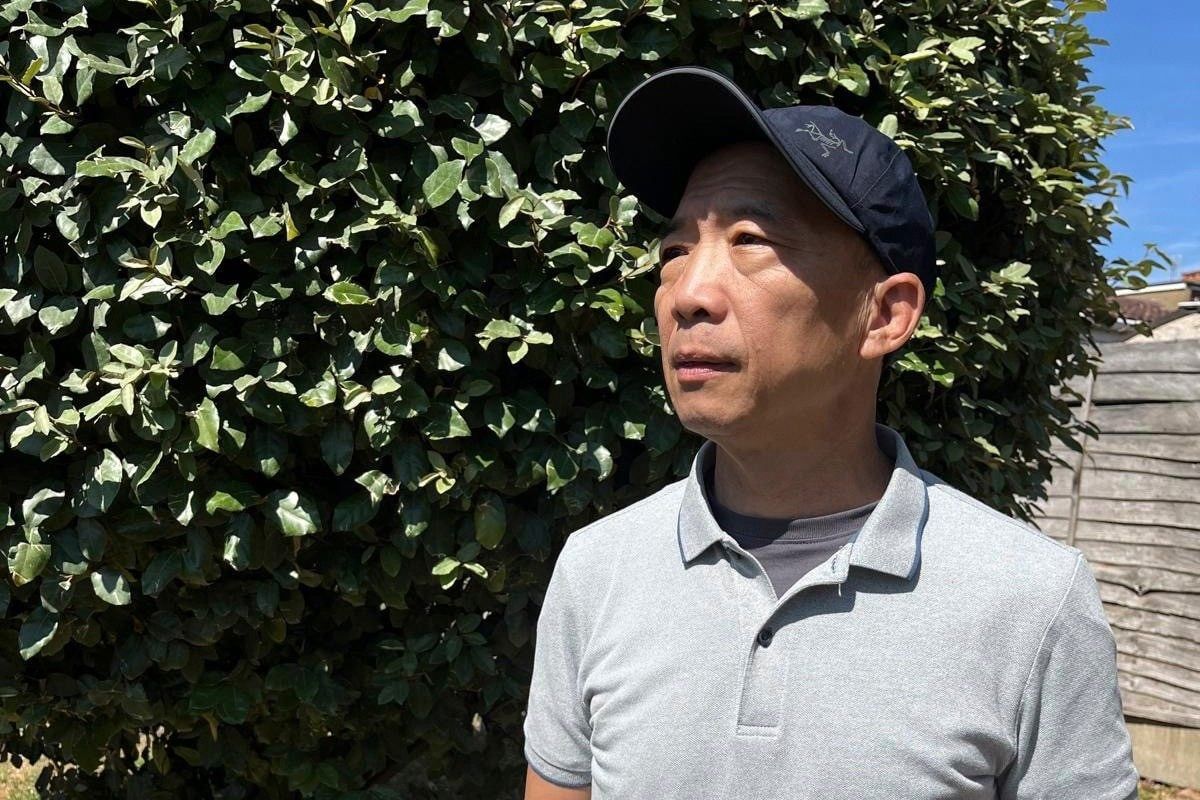
The United Kingdom has formally resolved the case of Wu Chi-wai, the former Hong Kong Democratic Party chairman who faced an unexpected entry denial at London Heathrow Airport earlier this month. UK Minister for Migration and Citizenship Jo White confirmed in a written parliamentary response that Wu has been granted permission to remain in Britain and will not face removal proceedings, marking a significant reversal after initial immigration complications.
Wu's situation highlights the complexities surrounding political asylum and the British National (Overseas) route that was specifically designed to offer a pathway to citizenship for eligible Hongkongers. When Wu arrived at Heathrow, he was initially refused entry before being granted seven days of temporary admission—a precarious status that raised concerns among civil rights advocates about whether political prisoners fleeing authoritarian regimes would be fairly treated under Britain's immigration system. The intervention of former Hong Kong governor Chris Patten, who publicly lobbied the Home Office to clarify its approach to politically persecuted individuals, appears to have prompted a policy review that broadened official guidance.
The 63-year-old opposition figure is one of the most prominent Hong Kong politicians to attempt resettlement in Britain following the crackdown on democratic movements. He had spent four years and five months imprisoned after being convicted under Hong Kong's national security law for his role in organising an unofficial primary election in 2020. That primary, which was an attempt by the pan-democratic opposition coalition to coordinate candidates and maximise their chances of gaining legislative seats, was subsequently ruled by Hong Kong's High Court to have been part of a scheme to "undermine, destroy or overthrow" the authorities. Wu pleaded guilty to conspiracy to subvert state power, alongside 44 other politicians and activists, though two defendants in the larger group were acquitted.
White's written response provides crucial clarity about how Britain will treat overseas convictions when assessing BN(O) applications—a matter of direct concern to tens of thousands of Hongkongers who have faced prosecution or harassment under the security law. She emphasised that immigration caseworkers have been given explicit guidance that convictions for offences not recognised under UK law, or offences carrying disproportionately severe penalties in Hong Kong compared to equivalent crimes in Britain, should not automatically result in application rejection. This flexibility is particularly important for individuals convicted under the security law, which has no direct equivalent in British criminal statutes.
The minister stressed that applications would be assessed on a case-by-case basis, with caseworkers instructed to consider evidence of political motivation or concerns about the fairness of conviction procedures. This approach represents a significant departure from rigid application of standard criminality rules, acknowledging that individuals fleeing political persecution should not be mechanically excluded from the scheme simply because they hold convictions that may appear serious on paper but were actually imposed for exercising democratic freedoms. For Southeast Asian observers, particularly those in Malaysia where political detention and security laws have similarly been used to constrain opposition figures, Britain's revised stance offers a potential model for distinguishing between legitimate criminal convictions and politically motivated prosecutions.
The BN(O) scheme itself, introduced in 2021, has become increasingly significant as Hong Kong's political environment has tightened following the 2019 pro-democracy protests and the subsequent imposition of the national security law. The route allows eligible Hongkongers and their family members to live, work, and study in the United Kingdom, with eligibility for citizenship after five years of continuous residence. Wu's case demonstrates that the scheme is functioning as intended for those who can navigate its complexities, though his initial airport denial raised questions about whether border officials had been adequately trained on the policy's political dimensions.
Wu's eventual success in securing entry and the promise of non-deportation also reflects broader international attention to Hong Kong's political situation. The involvement of Chris Patten, who served as Hong Kong's last colonial governor and remains a prominent advocate for Hong Kong's freedoms, underscores the degree to which the former British colony's politics remain subject to scrutiny from senior Western figures. Patten's intervention was not merely symbolic; his letter to the Home Office appears to have prompted substantive policy clarification that will benefit future applicants facing similar circumstances.
For Malaysian and other Southeast Asian readers, Wu's case carries several implications. First, it demonstrates that Western nations are taking seriously the claims of political persecution emanating from authoritarian crackdowns in the region, and are willing to adjust immigration procedures to accommodate individuals fleeing such circumstances. Second, it suggests that systematic advocacy from civil society and respected figures can successfully pressure governments to clarify their approach to politically sensitive cases. Third, it raises questions about whether Malaysia's own systems for handling political refugees and asylum seekers are adequately transparent and fair, particularly given the country's own history of using security legislation against political opponents.
The confirmation that Wu will not face deportation also removes uncertainty from the broader Hong Kong diaspora in Britain, many of whom are in similar circumstances or considering migration. Previously, uncertainty about how the Home Office would treat security law convictions could have deterred applications or created anxiety among those who had already relocated. White's reassurance that overseas convictions will be assessed contextually rather than mechanically should therefore encourage further BN(O) applications from individuals who might otherwise have feared automatic rejection.
Wu has indicated his intention to reunite with family members already living in Britain, and his case now opens a clearer pathway to do so. The fact that he entered initially as a visitor and can now pursue formal settlement demonstrates the flexibility that the immigration minister described, with individuals able to transition between different visa routes depending on their circumstances. This adaptability is particularly valuable for political refugees who may have fled their home countries suddenly without time to prepare comprehensive BN(O) applications in advance.
As Hong Kong continues to experience political restrictions, and as other jurisdictions in the region grapple with questions about how to treat political refugees and security law offences, Wu's case will likely become a reference point for how Western nations can balance security concerns with humanitarian obligations. The clarification provided by White's response suggests that Britain is willing to recognise that political convictions should not be treated identically to ordinary criminal offences, a principle that could influence broader international norms around asylum and refugee protection in the coming years.

