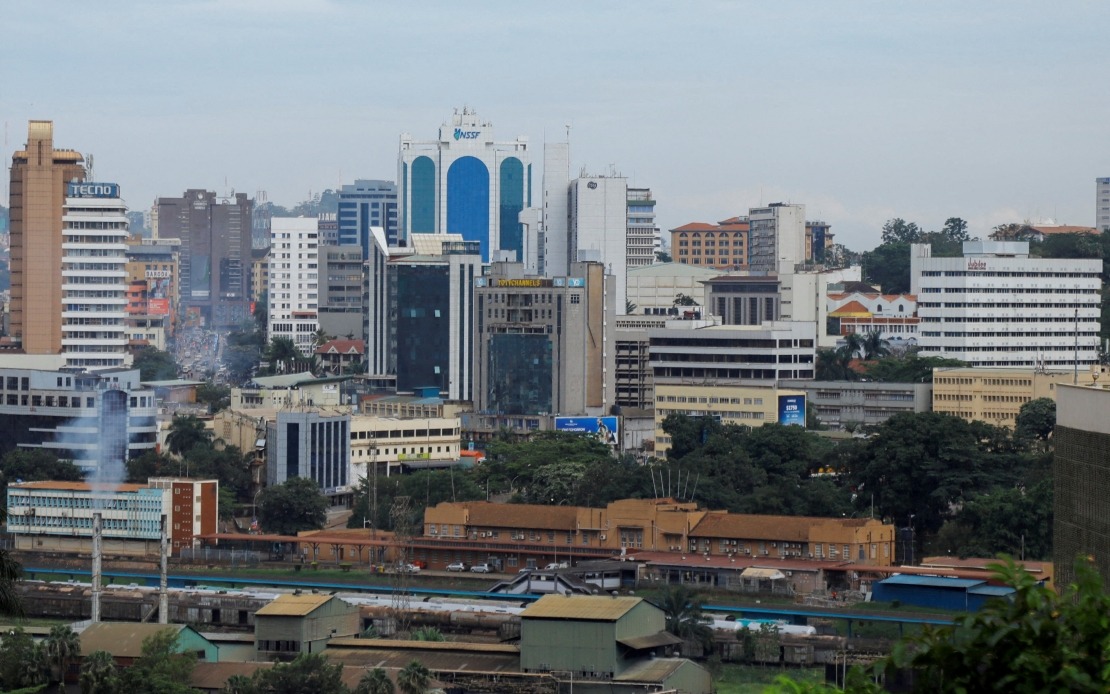
Uganda's government has initiated a large-scale evacuation of 746 of its citizens from South Africa, responding to months of intensifying xenophobic violence that has threatened migrant communities across the country. The announcement, made by acting Foreign Affairs Minister Haruna Kasolo on Sunday, represents a significant diplomatic intervention aimed at protecting Ugandan nationals who face mounting pressure from anti-migrant groups. The evacuation operation is expected to commence within the coming days, marking one of the largest repatriation efforts the East African nation has undertaken in response to regional instability.
The decision to evacuate reflects deepening concerns about the safety of Ugandan migrants in South Africa, where they form part of a larger diaspora community engaged in business, employment, and other economic activities. Xenophobic violence in South Africa has periodically erupted across various provinces, targeting foreign nationals and creating an environment of fear and uncertainty. The escalation over recent months has prompted multiple governments in the region to assess the security situation and take protective measures for their citizens, with Uganda now joining other nations in facilitating mass repatriations.
According to Kasolo's statement, Ugandan nationals wishing to return home have already completed registration procedures with the Uganda High Commission in Pretoria. The ministry is coordinating extensively with relevant government agencies and community leaders to ensure the evacuation process runs smoothly. This coordination extends to liaising with the Ugandan community in South Africa itself, whose leaders are helping identify those wishing to leave and providing on-the-ground support for the operation. The comprehensive approach demonstrates the government's commitment to managing what could otherwise become a chaotic or dangerous exodus.
The logistical framework for the evacuation encompasses several critical components designed to safeguard evacuees throughout their journey home. The Ugandan government will handle registration of returnees, arrange their transportation to designated safe assembly centers, issue emergency travel documents where standard passports may be unavailable or lost, and coordinate their departure from South African territory. This multi-stage process reduces vulnerability at each step and ensures that evacuees are not abandoned at any point in the pipeline. The emphasis on safety assembly centers is particularly important given reports of violence occurring at transport hubs and during transit.
Uganda Airlines, the country's national carrier, has been designated to operate the special charter flights that will transport evacuees back to Kampala. By utilizing its own airline rather than commercial carriers, the Ugandan government maintains greater control over scheduling, security protocols, and coordination with local authorities. Critically, the government has committed to bearing all costs associated with the evacuation flights, removing financial barriers that might otherwise prevent Ugandans from returning home. This financial commitment underscores the seriousness with which Kampala views the threat to its nationals and demonstrates a willingness to allocate substantial resources to their protection.
Minister Kasolo's public appeal for remaining Ugandans to register with the High Commission in Pretoria signals that the evacuation window may be time-limited. Some Ugandan nationals have reportedly already departed South Africa independently, apparently responding to an ultimatum issued by vigilante groups threatening violence against foreign nationals. This June 30 deadline, whether formally announced or circulated through community networks, has created urgency and psychological pressure that is driving self-directed migration even before the official evacuation begins. The existence of such threats underscores the immediate danger facing migrants and justifies the government's rapid response.
Tragedies have already marked the xenophobic violence, with Kasolo confirming that at least one Ugandan national was killed during anti-migrant attacks in KwaZulu-Natal Province. The repatriation of the deceased individual's body has been arranged, representing both a humanitarian gesture and a symbolic demonstration of the government's commitment to honoring those harmed by the violence. The loss of life reinforces the gravity of the situation and provides a sobering reminder of the stakes involved in delayed evacuation. Such fatalities often serve as catalysts for wider community panic and urgency among those considering whether to remain or leave.
The Ugandan government continues diplomatic engagement with South African authorities to seek assurances regarding the safety of nationals who choose to remain in the country after the evacuation period concludes. This dual-track approach—facilitating exit for those who wish to leave while simultaneously pressing for improved security conditions for those who stay—reflects a nuanced understanding that not all Ugandans may wish to leave permanently. Some may have deep economic or family ties in South Africa that make departure impractical. By maintaining pressure on South African officials to enforce law and order, Uganda attempts to preserve the option for future return or continued residence for those who decide to stay.
The evacuation carries significant implications for regional migration patterns and for how African governments respond to xenophobic violence. Unlike some previous instances where evacuations occurred quietly or on a smaller scale, Uganda's large-scale operation signals that governments are increasingly willing to publicly challenge the security situation in destination countries and remove their nationals en masse. This approach may encourage other countries with citizens in South Africa to consider similar evacuations, potentially creating momentum for broader regional conversations about xenophobia and migrant protection. For Malaysia and Southeast Asian nations with diaspora communities in southern Africa, the Ugandan evacuation serves as a reminder to maintain robust diplomatic capacity and contingency planning for rapid repatriation if circumstances deteriorate.
The broader context of South African xenophobia extends beyond recent violence to underlying tensions regarding competition for jobs, housing, and resources between local populations and foreign nationals. Economic hardship, unemployment, and inequality have historically fueled resentment toward migrants perceived as taking opportunities from South African citizens. Addressing xenophobia therefore requires not only immediate security measures but also longer-term socioeconomic policies that reduce perceived competition and build social cohesion. However, such structural solutions typically unfold over years, making immediate protective measures like evacuation necessary to prevent further loss of life in the interim.
For the Ugandan community in South Africa, the evacuation represents both a lifeline and a potential loss of livelihoods for those who depart. Many Ugandans have built businesses, established employment, and created social networks over years or decades in South Africa. Choosing evacuation means abandoning these investments and starting anew in Uganda, where economic opportunities may be more limited. Yet for many, the psychological and physical toll of living under threat of violence outweighs the financial costs of departure. The evacuation ultimately reflects an individual calculation by hundreds of Ugandans that their security and wellbeing are better assured at home than in a country where their foreign status has become a liability.
The timeline for completing the evacuation remains to be finalized, though the government's stated intention to begin within days suggests operations could extend over weeks depending on flight capacity and the rate at which evacuees reach assembly centers. The coordination challenges are substantial, encompassing visa processing for re-entry to Uganda, medical screening if necessary, documentation of personal effects being transported, and communication with families about departure schedules. Success will require sustained cooperation between multiple government agencies and the airline, maintaining momentum even as media attention potentially fades. The operation will serve as a test of Uganda's capacity to execute large-scale logistical undertakings under time pressure and difficult circumstances.

