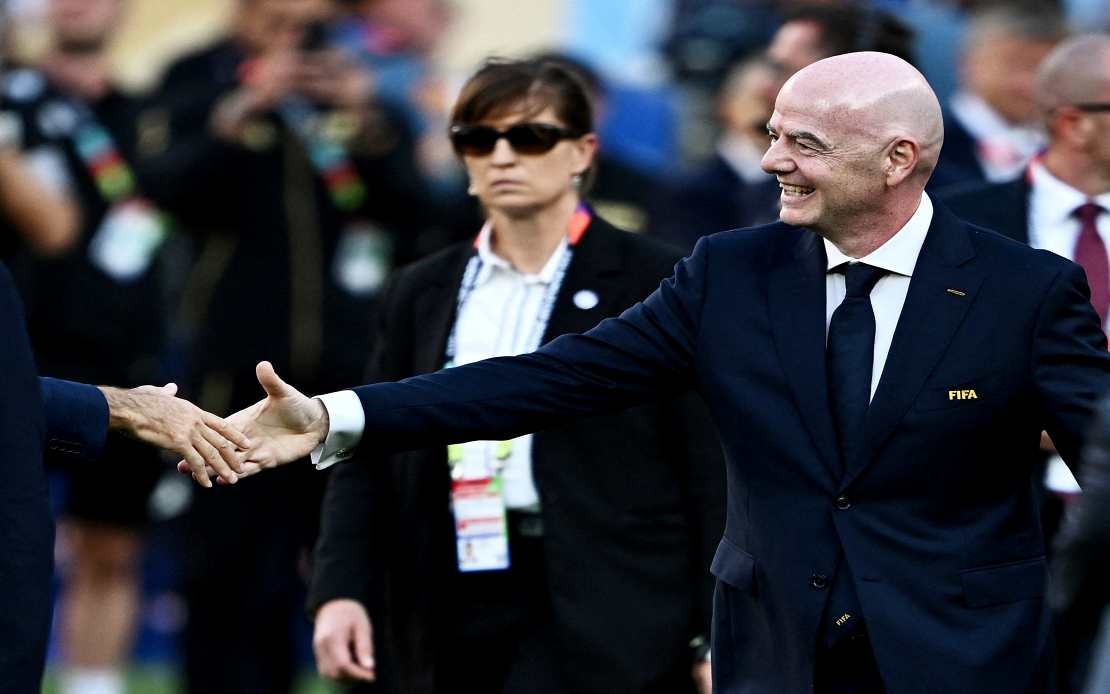
The Union of European Football Associations has escalated its dispute with FIFA by formally notifying President Gianni Infantino in writing that it is considering legal proceedings over the federation's attempt to monetise its commercial and media rights. The written notice, which demands immediate preservation of all documents and electronically stored information held by either FIFA or Infantino personally, represents a significant hardening of UEFA's position following the international outcry that ultimately forced the plan's withdrawal.
FIFA had announced in early August its intention to raise approximately US$4.2 billion through the sale of roughly 20 per cent of a newly created entity designed to manage the organisation's media and commercial operations. This restructuring would have encompassed rights to broadcast and commercialise football's premier global tournament, the FIFA World Cup, alongside other international competitions overseen by the federation. Industry observers noted that the proposal had attracted interest from investors connected to prominent American business circles, with media reports identifying potential bidders linked to Joshua Kushner, brother of Jared Kushner, whose prominence stems partly from his family connections to the Trump administration.
The commercial arrangement carried significant implications for FIFA's leadership compensation structure. Analysis of the proposal revealed that the restructuring would have substantially increased Infantino's personal remuneration package, potentially escalating his annual salary from the then-current three million euros to thirty million euros. This financial dimension of the proposal drew particular scrutiny from European football authorities, who viewed it as emblematic of broader governance concerns within the global football federation.
European football's governing body responded swiftly and decisively to the announcement. Within days of FIFA's disclosure, UEFA declared that all its member associations would boycott FIFA competitions unless the sale proposal was entirely withdrawn. The scope of this threat underscored the severity with which European football viewed the matter, given that UEFA members represent a substantial portion of FIFA's organisational footprint and commercial value.
Infantino capitulated to the pressure within a matter of days, announcing on Saturday evening that FIFA would abandon the commercial rights sale plan entirely. However, this reversal has not resolved the underlying tensions between the continental confederation and the world football body. Instead, it has opened a new phase of confrontation focused on accountability and organisational governance.
UEFA's formal letter, disclosed to media including The Telegraph, articulates the confederation's legal intentions with considerable precision. The correspondence states that UEFA is "actively considering legal action, arbitration, and/or regulatory complaints arising out of and in connection with the FFE plan proposed by Fifa and all related matters." This formulation establishes a broad foundation for potential proceedings that extends beyond the specific commercial transaction to encompass the broader context and decision-making processes that generated the proposal.
The document preservation demand carries substantial legal significance, as it establishes a record of FIFA's compliance or non-compliance with basic litigation protocols. By requiring FIFA and Infantino to "take immediate steps to identify, locate, and preserve all documents and electronically stored information" relevant to the proposal, UEFA is positioning itself for potential discovery disputes should formal proceedings commence. Such preservation obligations prevent the destruction, deletion, or loss of evidence that might prove crucial in establishing the decision-making process and rationale underlying the controversial plan.
For football observers across Southeast Asia and the broader Asia-Pacific region, this dispute carries practical implications regarding FIFA's governance framework and the federation's capacity to implement major structural changes without broader consensus. The swift reversal of the commercial rights plan demonstrates that concentrated power within FIFA's leadership remains subject to collective pressure from confederations with substantial leverage. However, the threat of continued legal conflict signals ongoing instability within football's international governance structures.
UEFA has reinforced its broader criticisms of FIFA's leadership by announcing a formal loss of confidence in the organisation's governing administration. The confederation has explicitly stated its intention to hold responsible those individuals deemed culpable for designing and advancing the commercial rights proposal. This language suggests that UEFA views the matter as reflecting systemic governance failures rather than isolated misadventure.
The episode illuminates tensions inherent in FIFA's dual nature as both a regulatory body and a commercial enterprise. The federation's dependency on broadcasting and sponsorship revenues creates persistent incentives for revenue expansion, yet such expansion frequently encounters resistance from confederations concerned about governance legitimacy and equitable distribution of football's commercial value. The failed commercial rights sale demonstrates these tensions in acute form.
For Malaysian football stakeholders and Southeast Asian football governance structures more broadly, the UEFA-FIFA conflict underscores the importance of confederal coordination in addressing decisions by international sporting bodies. The success of UEFA's boycott threat suggests that collective action by confederations with substantial commercial and competitive significance can constrain unilateral decision-making by international federations.
The preservation demand and threatened legal proceedings now establish the framework for extended institutional conflict between Europe's most powerful football confederation and global football's peak body. Whether formal litigation materialises, the episode has already reshaped power dynamics within FIFA's governance structure, demonstrating that proposals affecting major commercial interests require consensus-building rather than executive imposition.

