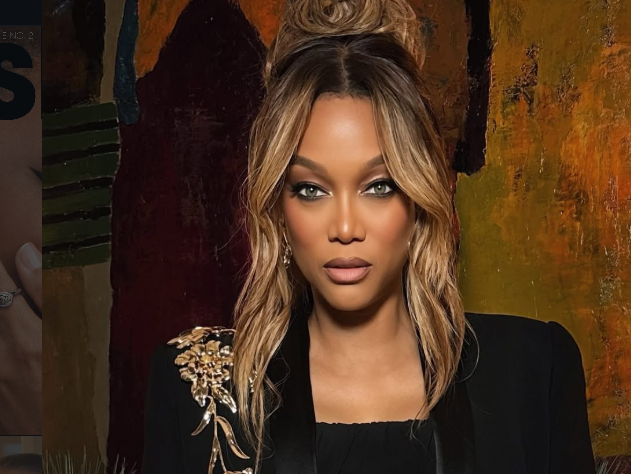
Tyra Banks, the creator and former host of the long-running reality television series 'America's Next Top Model,' has initiated legal action against Netflix and the producers of a recent docuseries exploring the show's contested legacy. The defamation suit was filed Saturday in Los Angeles federal court and names Netflix, directors Daniel Sivan and Mor Loushy, and production company EverWonder Studio as defendants. Banks is seeking monetary damages and an injunction to prevent the use of her image in connection with the docuseries' accompanying soundtrack album, which was released commercially following the documentary's premiere.
At the heart of the legal dispute is Banks' contention that the filmmakers engaged in what she characterises as journalistic misconduct. According to court documents, the defendants employed "selective editing, deliberate omission, and surgical manipulation of continuous footage" to construct a narrative suggesting that Banks permitted a contestant to experience sexual assault on set, subsequently exploited the incident for ratings, and feigned amnesia when confronted about it during interviews. Banks' legal team argues that this portrayal is fundamentally false and damaging to her reputation and business interests.
Central to Banks' defence is the claim that she was never actually informed about or questioned regarding the sexual assault allegation during her filmed interviews with the documentary makers. The lawsuit states that Netflix editors manipulated footage to create the false impression that Banks was consciously aware she was being questioned about the incident and deliberately attempted to evade the discussion. This distinction—between being asked about an allegation and being presented with footage edited to suggest evasion—forms the backbone of her defamation claim and speaks to fundamental questions about editorial responsibility in documentary filmmaking.
The documentary series represents part of a broader cultural reckoning with 'America's Next Top Model,' which debuted in 2003 and sustained a remarkable 24-season run across two decades. In recent years, the program has undergone intense scrutiny from critics and former participants who have raised serious allegations including systematic body shaming of contestants, psychological manipulation, and participation in photoshoots with deeply problematic cultural implications. Banks herself has publicly acknowledged these criticisms in previous statements, admitting to "the insensitivity of past ANTM moments" and acknowledging "some really off choices" made during the show's production.
What distinguishes this lawsuit from typical celebrity defamation cases is Banks' specific grievance about the documentary production process itself. She contends that she was afforded minimal transparency and no meaningful editorial oversight. Banks was not permitted to review the completed docuseries until a single day before its February 16 release date, according to court filings. Furthermore, she was never contacted for fact-checking purposes following her interviews, nor was she given an opportunity to respond to accusations from other former judges and contestants who participated in the documentary.
Another significant concern raised in the lawsuit involves potential conflicts of interest in the documentary's production. Banks' legal team highlights that certain former judges from 'America's Next Top Model' served as consultants on the Netflix series, shaping its editorial direction. The lawsuit notably references one judge whom Banks' lawyers contend harbours personal animosity toward her. The legal documents suggest that had Banks been aware of these individuals' deep involvement in formulating the narrative against her, she would have declined to participate in the documentary altogether, recognising what she perceived as a coordinated effort to present her in the most damaging light possible.
Following the documentary's release, Banks sought to address her concerns directly. In March, her legal representatives requested that Netflix and EverWonder Studio provide access to the complete, unedited footage of her interviews. Both entities declined this request, according to the lawsuit, effectively preventing Banks from demonstrating the lack of context around her responses or the editorial decisions that created the misleading narrative.
The professional and personal ramifications for Banks have been swift and substantial. Public reaction to the documentary has been intensely negative and specifically targeted at Banks personally, the lawsuit contends. The reputational damage has extended beyond traditional media discourse into the commercial sphere. SMiZE & DREAM, an ice cream establishment Banks operates in Sydney, Australia, has experienced review bombing on Google and other platforms, with negative reviews apparently motivated by viewer reaction to the documentary rather than actual customer experiences.
Banks' legal team emphasises that the lawsuit represents her formal response to what she views as a coordinated effort to silence her narrative. In their filing, her attorneys wrote: "Every other conversation about ANTM's legacy—including the candid reflection Ms. Banks came prepared to have—is now drowned out by an accusation she was never given the chance to answer. This lawsuit is that answer—particularly after her efforts to resolve the matter directly with Netflix and the producers were refused." This framing positions the legal action not merely as a damages claim but as Banks' mechanism for reclaiming narrative control in a story shaped by others.
The case raises broader questions about documentary ethics and editorial responsibility in the streaming age. As platforms like Netflix increasingly produce prestige documentary content examining cultural reckoning with past television programming, questions emerge about whether subjects deserve editorial input, fact-checking opportunities, and the right to review how their statements will be presented in final form. Banks' lawsuit will likely influence how future documentary subjects negotiate participation agreements and editorial safeguards with major streaming platforms and independent producers.
For Malaysian and regional audiences, the case offers insights into celebrity litigation trends in the entertainment industry and the growing power of documentary storytelling to reshape public perception of cultural figures and institutions. The dispute also underscores how streaming platforms' global reach amplifies reputational damage across multiple jurisdictions and business ventures, as evidenced by the impact on Banks' Australian ice cream business from content consumed by international viewers.