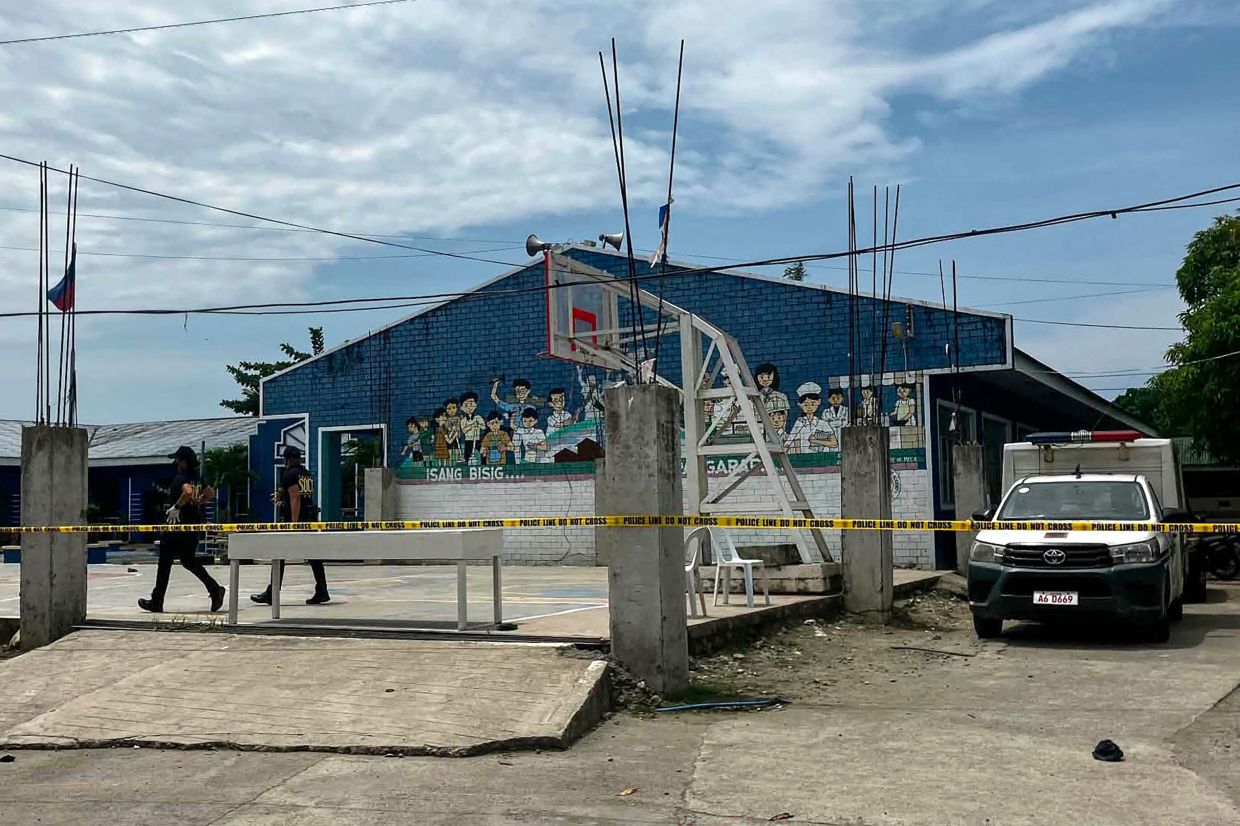
A school shooting in the central Philippine city of Tacloban has claimed three lives and left seven others wounded, with authorities now holding two teenage gunmen in custody as the nation grapples with shock over the violence. The incident unfolded on Monday morning at San Jose National High School, where students aged 14 and 15 allegedly entered the campus armed with handguns and opened fire on their peers. Regional police chief Brig. Gen. Jason Capoy confirmed that both suspects were apprehended, with one arrested at the school immediately after the attack whilst the second fled to a nearby house before being located by officers responding to tips from residents.
The shooting has ignited urgent questions about school security and the underlying causes that prompted two young students to resort to such violence. During preliminary questioning, the pair claimed they had experienced bullying at the school, though Capoy did not elaborate on the specifics or duration of their grievances. The revelation that bullying may have motivated the attack resonates deeply in Philippine society, where concerns about school harassment and mental health support in educational institutions have grown increasingly prominent. The suspects held no prior criminal records, suggesting they were previously unknown to law enforcement, yet they managed to gain access to firearms through troubling means that underscore broader security vulnerabilities.
The weapons used in the rampage trace back to a troubling breach in firearm custody. One of the teenage shooters obtained a 9 mm pistol from his aunt, a police officer, who now faces investigation for allowing unauthorised access to her service weapon. The second suspect carried a calibre 38 revolver. That both weapons made their way into the hands of minors at a school with more than 1,500 students points to serious lapses in personal responsibility among firearms holders and inadequate security protocols at the educational institution. Capoy noted that the campus had insufficient security coverage, with only a single guard stationed to monitor multiple entrance and exit points, a staffing level wholly inadequate for a school of that size.
The violence itself unfolded with chilling tactical deliberation. After the initial shooting in one classroom, students fled in panic, prompting the gunmen to pursue victims into a second room where additional shots were fired. Investigators recovered at least 40 shell casings from the scene, providing forensic evidence of the sustained nature of the attack. Most of those killed and wounded were female students, according to police accounts. Video footage captured by students during the attack, later shared online, documented the terror inside classrooms where children huddled beneath desks, screaming and crying as gunfire erupted outside their sanctuary. Some students can be heard calling out to their mothers whilst others are seen desperately fleeing the campus, clutching one another in shock.
The arrest of one suspect at the school itself and the subsequent apprehension of his companion within hours demonstrates the rapid police response, yet also highlights how quickly circumstances could have escalated further had the suspects remained at large. The decision by the second shooter to hide in a residential area rather than continuing violence suggests either a moment of hesitation or awareness that the rampage had reached its conclusion, though investigators have not yet determined the precise psychological or situational factors that ended the shooting.
President Ferdinand Marcos Jr. has directed a comprehensive investigation into the incident and ordered enhanced security measures across all schools, workplaces and public spaces nationwide. Through Communications Undersecretary Claire Castro, the president expressed deep sorrow over the tragedy and acknowledged the profound grief and fear now gripping the parents of victims and the broader school community. The presidential intervention signals the severity with which the national government views this breach of school safety and the urgent need for systemic responses.
The handling of the teenage suspects themselves navigates Philippine law regarding juvenile offenders. Under the 2006 Juvenile Justice and Welfare Act, the 14-year-old perpetrator may be exempt from criminal prosecution, as the law establishes age 15 as the minimum threshold for criminal liability. However, even minors above that age can avoid prosecution if authorities determine they lacked clear comprehension of the crime or its consequences. Both suspects are scheduled for transfer to government welfare officers following the investigative phase, placing them within the juvenile justice system rather than adult criminal courts. This legal framework, whilst designed to protect young offenders, has drawn scrutiny in cases involving serious violent crimes.
The Philippines has long struggled with widespread firearm-related crimes, a problem compounded by the circulation of thousands of unregistered and illegally held weapons throughout the archipelago. However, school shootings remain comparatively uncommon, making this incident particularly alarming to a public accustomed to isolated incidents rather than systematic patterns of campus violence. The rarity of such attacks underscores the uniqueness of Monday's tragedy and raises concerns about whether this represents an anomalous event or a harbinger of emerging security threats to Philippine educational institutions.
Historical context offers little reassurance. In 2022, a gunman armed with multiple pistols opened fire at an upscale Manila-area university during graduation proceedings, killing a former town mayor with whom he harboured a long-standing personal dispute, along with two others in the brazen daylight attack. That incident similarly shocked the nation and prompted security reviews, yet preventive measures apparently proved insufficient to stop Monday's tragedy. The recurring nature of high-profile shooting incidents, despite intervening years and supposed security enhancements, suggests that addressing the root causes of gun violence in Philippine society requires solutions extending far beyond campus gates.

