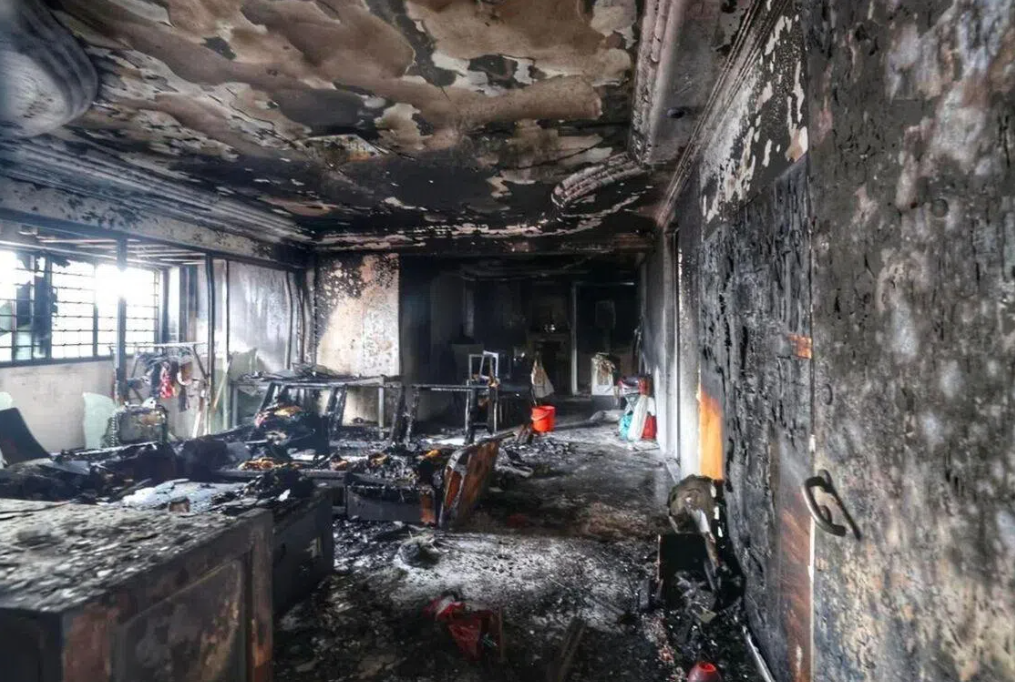
An early-morning electrical fire at Block 842 Jurong West Street 81 in Singapore has highlighted the dangers of residential electrical hazards and the critical importance of neighbour awareness in high-density housing. The blaze, which erupted around 3.35am on June 17 in a 13th-storey unit, required the intervention of the Singapore Civil Defence Force (SCDF) to rescue two residents and has prompted fresh safety warnings from authorities.
When firefighters arrived at the scene, the living room was already engulfed in flames, with thick smoke filling the residential space. SCDF personnel entered the smoke-logged unit and swiftly deployed water jets to suppress and extinguish the fire, preventing it from spreading to adjacent units. The rapid response proved crucial in limiting the scale of the incident. Investigation into the fire's origin has centred on electrical equipment within the living room, suggesting that an appliance malfunction or electrical fault ignited the blaze.
The family of four living in the affected unit all required medical attention, with all members transported to Singapore General Hospital following their rescue. The extent of injuries ranged from smoke inhalation to thermal burns, with eyewitnesses describing visible burn marks on two of the residents. Approximately 40 residents from neighbouring units were evacuated from the block as a precautionary measure, though the fire remained contained to the single unit.
The incident's discovery and the subsequent evacuation owed much to the alertness of an 18-year-old neighbour living directly above the affected flat. The student, who had been awake during the early morning hours engaged in gaming, detected smoke drifting upward from the unit below. Rather than ignoring the warning signs, he took immediate action by descending to investigate and checking the temperature of the affected unit's door. Finding it dangerously hot, he urgently knocked on neighbouring doors to alert residents of the danger.
Having raised the alarm among neighbours, the teenager returned to his own flat to alert his family to evacuate immediately. His mother subsequently contacted emergency services, ensuring that professional firefighting and rescue resources were mobilised at the earliest opportunity. The student's actions during those critical minutes likely prevented casualties and contributed significantly to the orderly evacuation of the block. He also recounted an encounter with a young woman from the affected unit who had briefly come to his door seeking towels, having suffered visible burns and singed hair from the fire.
Local media reports paint a vivid picture of the fire's aftermath. Journalists who visited the scene later in the morning documented extensive damage to the unit, with walls and ceiling heavily blackened by smoke and soot, windows blown out by the intensity of the flames, and furnishings reduced to charred remains. The scale of destruction underscored the ferocity of the electrical fire and the speed at which such incidents can escalate in residential settings.
The SCDF has seized upon the incident to reiterate critical fire safety practices for residential dwellers. Authorities specifically warned against overloading electrical outlets with multiple appliances, a common practice in space-constrained flats. Residents are advised to switch off electrical devices when not in use rather than leaving them in standby mode, and crucially, never to leave batteries or electronic devices charging unattended, particularly overnight or for extended periods.
Equally important in SCDF's guidance is the insistence that residents use only appliances and electrical plugs bearing the Safety Mark, a certification issued by Singapore's Consumer Product Safety Office. This requirement ensures that devices meet minimum safety standards and have undergone rigorous testing. Non-certified or counterfeit electrical equipment poses substantially elevated fire risks and should be avoided entirely.
The incident arrives amid concerning trends in residential fire incidents across Singapore. According to SCDF's latest annual statistics released in February, the overall number of fires has increased by 3 per cent, rising from 1,990 incidents in 2024 to 2,050 in 2025. More troubling is the breakdown of these figures: residential buildings accounted for 1,051 of the 2,050 fires, representing more than half of all fire incidents and underscoring the particular vulnerability of densely populated residential areas to electrical and other fire hazards.
For Malaysian readers, the Jurong West incident carries particular resonance given the prevalence of high-density public housing across Malaysia's urban centres. Public housing residents in cities such as Kuala Lumpur, Penang, and Selangor face comparable risks, with ageing electrical infrastructure, overcrowding, and outdated appliances creating fire hazards. The incident underscores the need for similar awareness campaigns across Malaysian residential communities, coupled with regular electrical safety audits in older housing complexes.
The teenager's role in preventing a potential tragedy also highlights how community vigilance and neighbourly awareness can compensate for the limitations of automated safety systems. In multi-storey residential complexes throughout Southeast Asia, where residents may have limited familiarity with one another, the instinct to respond to potential dangers remains fundamental. Public education campaigns emphasizing personal responsibility for community safety could significantly reduce residential fire casualties.
As electrical appliance ownership continues to surge across Southeast Asia, and as ageing housing stock accumulates more devices and extensions on existing electrical infrastructure, the risks of electrical fires are likely to intensify. The Jurong West incident serves as a stark reminder that even in developed urban settings with robust emergency response systems, residential electrical safety remains a matter requiring constant vigilance and collective responsibility.