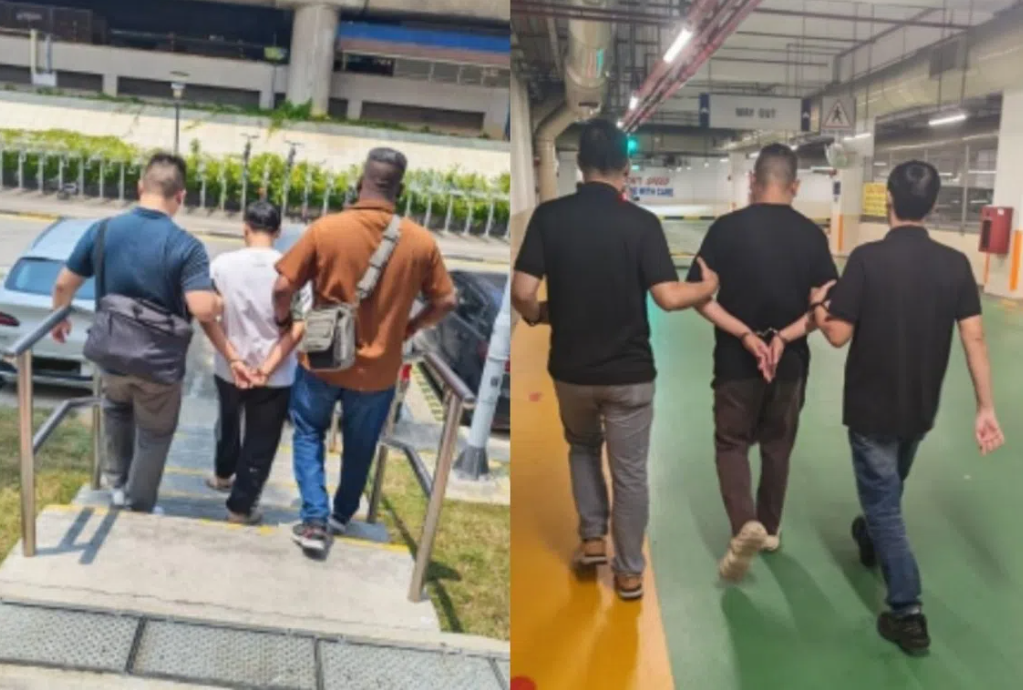
Singapore authorities have arrested two Malaysian nationals employed at mobile phone retail outlets on suspicion of masterminding an elaborate fraud scheme that weaponised compromised Singpass accounts to generate fake e-payment profiles for money laundering purposes. The suspects, aged 25 and 47, were taken into custody on Tuesday, August 25, following an investigation that uncovered their exploitation of customer personal data to gain unauthorised access to government authentication systems.
The operational mechanics of the scheme reveal a calculated approach to identity theft. The arrested men systematically obtained Singpass login credentials from their customers under the guise of providing legitimate assistance. In at least one documented case, when a customer approached to purchase a SIM card, one suspect leveraged the transaction as an opportunity to request Singpass authentication details, ostensibly to update the customer's account information. This pretence masked the true intention: using stolen credentials to establish LiquidPay digital wallet accounts without any knowledge or consent from the account holders. LiquidPay, operated by Singapore-based fintech entity Liquid Group, became the vehicle for receiving illicit proceeds from various scam operations across the island nation.
The investigative reach of this case extends far beyond the two arrested individuals. Police uncovered evidence implicating more than 170 Singaporean citizens and foreign workers whose Singpass authentication credentials had been similarly compromised and misused. These breached accounts facilitated the registration of over 160 fraudulent LiquidPay wallets, each activated without legitimate owner awareness. The sheer scale of account compromise suggests a sophisticated operation with multiple vectors of credential harvesting, likely extending beyond the retail environment where the two suspects worked.
The financial impact quantifies the scope of criminal activity enabled by these fraudulent accounts. Since March 2026, at least 20 Singapore citizens and work permit holders have been formally investigated for their involvement in operating these illegitimately registered LiquidPay accounts. These compromised digital wallets collectively received approximately $110,063 originating from various scam operations—funds that moved through the system under the identities of unwitting Singaporeans and migrant workers who had no awareness their credentials were being weaponised for money laundering.
The investigation itself represents a sophisticated law enforcement coordination effort. Singapore's police Cyber Command unit, traditionally focused on digital crime investigation, partnered with the Singpass Trust & Safety division operating within the Government Technology Agency of Singapore. This interagency collaboration proved essential for tracing the digital footprints of account compromise, identifying patterns of fraudulent wallet creation, and ultimately establishing the operational link between the two Malaysian suspects and the broader syndicate infrastructure. The partnership reflects growing recognition that identity theft and financial fraud increasingly require institutional coordination across technical and law enforcement domains.
For Malaysian readers and regional observers, the case carries substantial implications for cross-border cooperation on cybercrime. The suspects, working in Singapore but maintaining Malaysian nationality, operated within a permeable ecosystem where customer data vulnerable to exploitation could be harvested retail environments and monetised through digital payment platforms. The incident underscores how regional labour mobility—with hundreds of thousands of Malaysian workers employed in Singapore—creates vulnerability surfaces where local employment can be weaponised for transnational fraud schemes. The question of whether these two individuals operated independently or maintained connections to broader criminal networks in Malaysia remains central to ongoing investigations.
The legal consequences established by Singapore authorities carry substantial deterrent weight. The arrested men face charges of assisting another to retain benefits from criminal conduct, a serious offence carrying imprisonment up to 10 years, fines reaching $500,000, or both penalties combined. This elevated charging standard reflects the gravity with which Singapore's legal system treats organised identity theft and money laundering facilitation, particularly when perpetrators exploit government authentication systems designed to protect citizen privacy and financial security.
Parallel investigations continue into Singaporean Singpass account holders who voluntarily surrendered their authentication credentials. This secondary inquiry addresses a crucial vulnerability: the willingness of some individuals to share government login information in exchange for monetary compensation or under coercion. These individuals face potential prosecution under separate statutes, with maximum penalties of three-year imprisonment and $10,000 fines. The existence of this secondary investigation suggests that credential compromise operated through multiple channels—some involving active deception by the retail workers, others involving direct purchase or coercion of willing participants.
The case highlights critical vulnerabilities within the fintech ecosystem. Digital payment platforms like LiquidPay, designed to provide convenient financial access, become effective money laundering channels when integrated with compromised identity verification systems. The incident raises questions about account verification protocols, real-time fraud detection capabilities, and coordination between payment service providers and government authentication agencies. Singapore's integrated digital identity infrastructure, while generally secure, contains friction points where motivated criminals can exploit the intersection between government systems and commercial platforms.
For Southeast Asian policymakers and financial regulators, the investigation offers important lessons about cross-border fraud prevention. The movement of fraudulently obtained funds through digital wallets transcends national boundaries, yet investigative and prosecutorial authority remains jurisdictionally limited. The successful coordination between Singapore police and government technology agencies demonstrates effective domestic integration, but addressing the regional dimension—preventing Malaysian-based networks from targeting Singapore's financial infrastructure—requires deeper bilateral cooperation on identity crimes, financial crime prevention, and information sharing about sophisticated fraud schemes.
The broader context involves the vulnerability of migrant worker populations to identity exploitation. Foreign workers in Singapore, particularly those earning modest incomes in service industries, become targets for credential harvesting because their accounts can receive substantial fraud proceeds without raising immediate suspicion about unusual financial activity. The investigation identified that foreign work permit holders constituted a significant portion of the 170-plus compromised accounts, suggesting deliberate targeting of this population segment by the criminal network.

