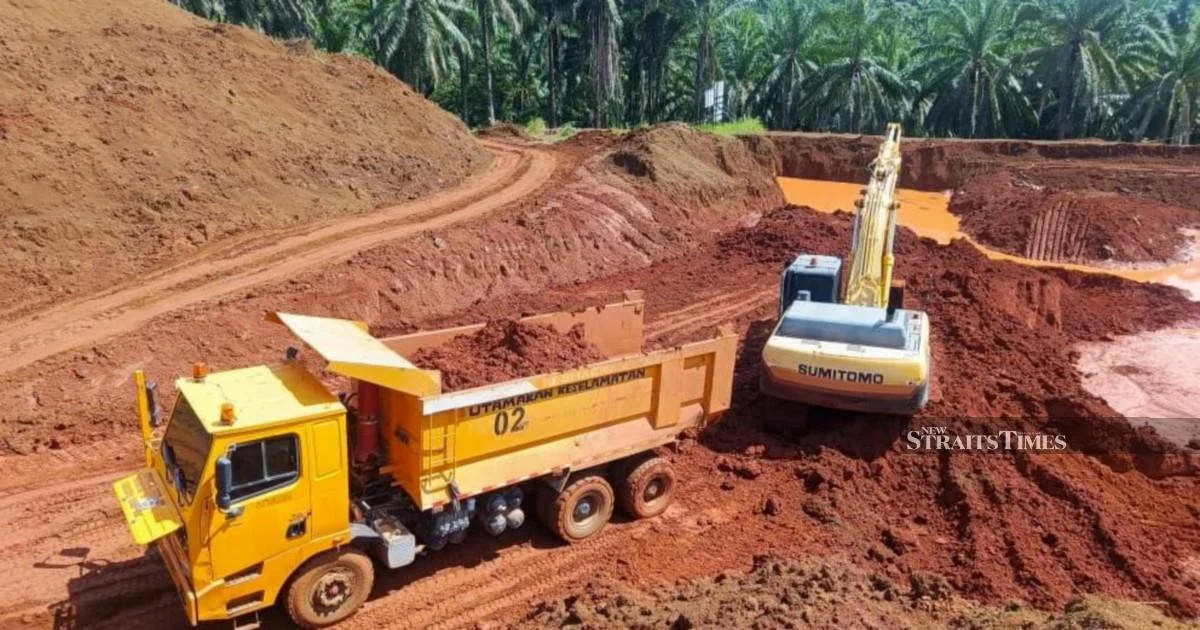
Enforcement authorities have arrested two men in Marang in what officials describe as a significant crackdown on illegal mining operations in the state. The arrests, carried out yesterday, represent an escalation in the government's efforts to combat unauthorised extraction and distribution of silica sand resources, which have become increasingly valuable to downstream industries across the region. The operation also resulted in the seizure of heavy machinery and equipment worth RM1.8 million, signalling the substantial scale of the suspected illegal enterprise.
Silica sand has emerged as a critical resource in Malaysia's industrial landscape, with applications spanning glass manufacturing, construction materials, semiconductors, and water filtration systems. The material's abundance in Terengganu has made the state a focal point for both legitimate mining operations and illegal extraction schemes. The involvement of major equipment in yesterday's operation underscores how sophisticated unauthorised mining has become, moving beyond small-scale informal extraction to organised commercial ventures that threaten both environmental integrity and government revenue.
The Marang district, located along Terengganu's coastline, has long been associated with sand-related activities due to its geological characteristics and proximity to processing facilities. However, the coastal region has also become a flashpoint for illegal resource extraction, with criminal networks exploiting the area's accessibility and the difficulties authorities face in monitoring sprawling extraction sites. The concentration of illegal operations in Marang reflects both the economic incentives and the enforcement challenges that regional authorities continue to grapple with.
Machinery seizures of this magnitude typically indicate operations with significant capital investment and organised supply chain infrastructure. The RM1.8 million valuation suggests equipment capable of large-volume extraction and processing, pointing toward a systematic operation rather than opportunistic activity. Such sophisticated installations require coordination across multiple stages—from site preparation and extraction through to transportation and transfer—making the involvement of at least two principal suspects understandable, though authorities may pursue additional leads related to broader supply networks.
Illegal silica sand extraction carries substantial environmental consequences that extend beyond immediate loss of government-controlled resources. Unregulated mining disrupts coastal and riverine ecosystems, removes protective sand barriers that shield communities from erosion and flooding, and contaminates water sources through processing residues. In Terengganu, where communities depend on agricultural and aquaculture activities, such environmental degradation creates cascading economic harms that often outweigh the short-term proceeds captured by illegal operators. The enforcement action yesterday directly addresses these broader societal impacts.
For regional readers familiar with Southeast Asian natural resource governance, this case reflects challenges replicated across the region. Illegal sand extraction and trafficking constitute a multibillion-dollar regional problem affecting countries including Indonesia, Vietnam, and Cambodia. Unlike high-profile commodities such as timber or wildlife, silica sand often escapes public attention despite its environmental footprint and economic significance. Malaysia's visible enforcement approach yesterday sends a signal that authorities recognise the issue's seriousness and are committed to disrupting operations at scale.
The arrested individuals now face investigation by relevant authorities, with their detention potentially yielding intelligence about supply chain networks, buyer relationships, and operational logistics. Such prosecutions frequently generate evidence that authorities use to map broader illegal networks and identify complicit parties in transportation, processing, and commercial distribution. The knowledge gained from questioning the suspects may help shape future enforcement strategies and identify systemic vulnerabilities in monitoring systems.
Malaysia's regulatory framework for sand mining operates through permit systems administered at state and federal levels, with Terengganu's Department of Environment and Natural Resources playing a central oversight role. The framework establishes extraction quotas, geographic restrictions, and environmental compliance requirements designed to balance resource utilisation with conservation objectives. Yesterday's operation affirms that enforcement mechanisms exist and are being deployed, though the persistence of large-scale illegal activity suggests gaps between regulatory intent and operational effectiveness that authorities continue addressing.
The economic dimension extends beyond extracted material value to encompass legitimate mining operators who face unfair competition from operators unburdened by licensing fees, environmental bond requirements, and regulatory compliance costs. Illegal operators undercut legitimate competitors by externalising environmental and administrative costs, creating perverse market dynamics that discourage compliance. Yesterday's enforcement action indirectly protects the viability of the legitimate sector, a consideration that often motivates sustained enforcement efforts even when prosecutions yield modest individual penalties.
Looking forward, the case highlights the necessity for enhanced monitoring systems covering extraction sites, transportation corridors, and transfer points where resources change hands. Technology—including satellite imagery, drone surveillance, and digital tracking of equipment movements—offers promising tools for identifying suspicious activity patterns. Cooperation between maritime enforcement agencies, land-based environmental regulators, and local authorities also proves essential given the geographic dispersal of mining operations and the multiple jurisdictions involved in oversight.
The detention of the two Marang suspects represents a tactical victory in what remains a protracted enforcement campaign. However, the recurrence of large-scale illegal extraction operations suggests that broader strategies encompassing technology deployment, inter-agency coordination, community reporting mechanisms, and market-side interventions targeting end-users of illegally sourced materials will prove necessary for sustained progress. Yesterday's RM1.8 million equipment seizure demonstrates that authorities possess capacity to disrupt operations, while ongoing investigation will reveal whether this intervention interrupts a one-time criminal venture or represents a temporary disruption to an entrenched supply network.

