Thailand's restive southern provinces faced a sharp escalation in violence on Friday as two distinct bombing incidents targeted police units within hours of each other, leaving a total of eleven officers wounded and reviving concerns about the persistence of insurgent activity in the region. The first attack struck at 8.10am when unidentified assailants detonated an explosive device along the Ban Pulo Saniyae–Ban Sakai road in Yala province's Thanto district, catching a mobile teacher protection unit from the border patrol police off guard. The blast wounded six officers, but the severity of injuries varied markedly—while four sustained minor trauma, two men required immediate emergency intervention that would dominate medical resources for the province over the following hours.
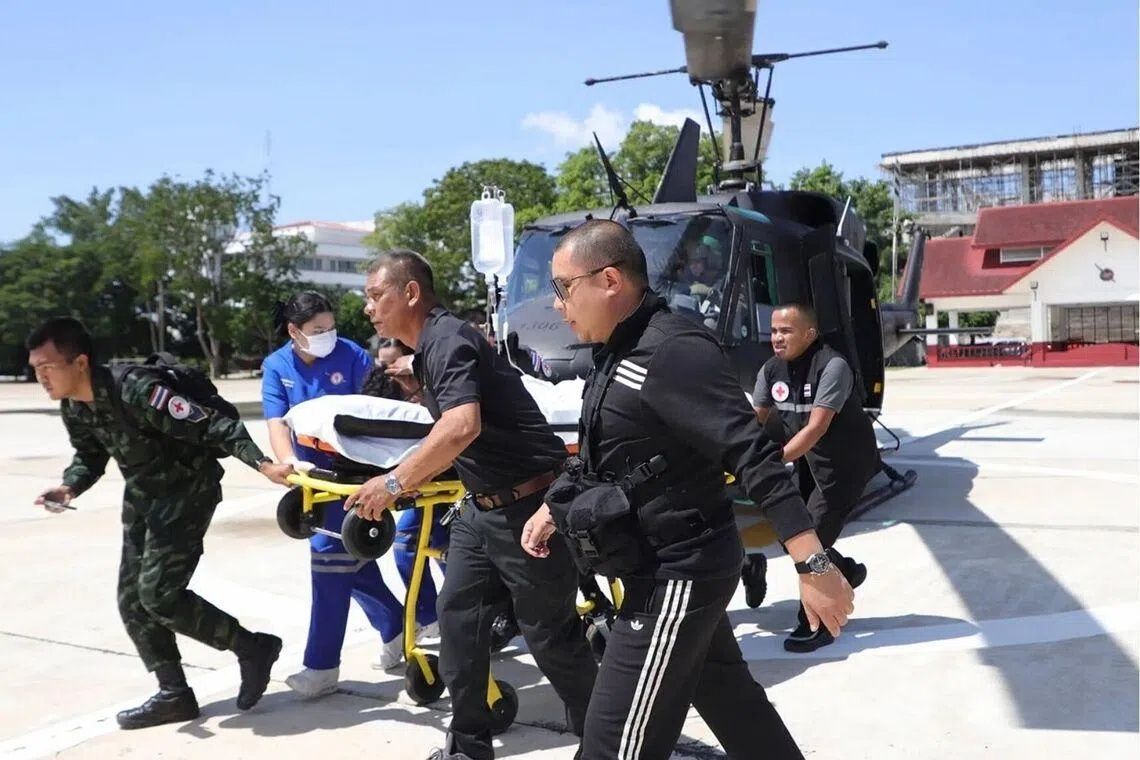
Corporal Kittisak Saksang bore the visible marks of the explosion, with shrapnel embedding in his face and neck during the detonation. His colleague, Corporal Poraphat Wongruaydee, suffered what would prove more immediately life-threatening injuries when the blast wave compressed his chest cavity and caused internal trauma. Though Wongruaydee remained conscious throughout his evacuation, his condition deteriorated rapidly once medical personnel assessed the full extent of his injuries—he had developed a significant pleural effusion, meaning blood was accumulating dangerously around his lungs, compromising his breathing and cardiovascular stability. Initial treatment at the nearby Thanto Hospital proved insufficient, prompting emergency helicopter transport to the better-equipped Yala Regional Hospital, where surgeons prepared for urgent intervention to drain the accumulated blood and repair pulmonary tissue.
The medical emergency triggered a broader response across the provincial health system. Yala Regional Hospital issued an urgent public appeal for blood donations of all types, anticipating the significant transfusion requirements that major thoracic surgery would demand. This plea underscored not only the severity of Wongruaydee's condition but also the hospital's recognition that follow-up treatment and potential complications might strain its blood inventory. For Saksang, meanwhile, plastic and reconstructive surgery specialists would be required to address the facial lacerations and assess whether shrapnel had caused deeper structural damage to underlying tissues.
Barely three hours after the Yala incident, Thai authorities confronted a second bombing that suggested either a coordinated campaign or copycat tactics designed to stretch security resources thin across the southern theatre. At 11.30am, an explosive device detonated near the Pattani Police Special Operations unit stationed at Ban Khuan Yi in Mayo district, Pattani province. The attack's timing proved particularly significant—officers had just concluded establishing a security checkpoint and were returning to their temporary operational base when the blast occurred. This pattern of striking during vulnerable transition moments, when personnel are between defined security positions, indicates tactical knowledge of police routines and suggests planning beyond opportunistic violence.
Five additional officers sustained injuries in the Pattani bombing, all reporting chest tightness consistent with blast trauma affecting the thoracic cavity. The five injured—Sergeants Anuchit, Bunyawat, Wisitphon, Aphisit and Sumit—were transferred to Mayo Hospital for treatment and observation. Unlike the Yala casualties, none of the Pattani victims required immediate emergency surgery, though their symptoms suggested potential complications if internal injuries proved more extensive than initial assessment revealed. The absence of fatalities in either attack may owe partly to the relatively small scale of the devices employed, suggesting perpetrators aimed to inflict injury and demonstrate capability rather than maximize casualties.
For regional security analysts, the twin incidents revive uncomfortable questions about the resilience of militant networks operating across Thailand's three southernmost provinces. The southern conflict, rooted in decades of communal grievances and separatist aspirations among the Muslim-majority population, has generated multiple armed groups with varying capabilities and motivations. While the overall trajectory of violence has declined from peaks recorded in the early 2000s, sporadic attacks on security forces—particularly mobile units and checkpoints—remain a feature of the landscape. The Friday bombings suggest that some organizational capacity to execute coordinated or near-simultaneous operations persists, even as counterinsurgency efforts have degraded larger militant formations.
Thailand's security establishment will scrutinize whether the attacks signal a shift in tactical focus toward inflicting officer casualties rather than targeting civilians or infrastructure. Police units, especially mobile teacher-protection contingents and special operations groups, represent high-value targets from an insurgent perspective—their elimination or degradation reduces the state's capacity to project authority and protect populations in contested areas. The targeting of officers at specific moments of vulnerability, such as checkpoint transitions, demonstrates tactical sophistication that goes beyond random attacks. Malaysian security observers should note this pattern, given that cross-border coordination among militant groups operating in Thailand's Yala, Pattani and Narathiwat provinces sometimes extends into Malaysian territory, particularly in Kedah and Perlis.
Investigative teams from Thailand's Explosive Ordnance Disposal division and forensic specialists began preliminary analysis of the blast scenes immediately after the attacks, examining crater dimensions, fragmentation patterns, and trace materials to determine device construction and potential manufacturing sources. Such analysis can sometimes link attacks to specific militant cells or production facilities, though sophisticated operators have learned to vary their methods to avoid establishing clear evidentiary trails. The cordoning of both sites and the acceleration of perpetrator identification efforts signal that Thai authorities view these incidents as serious enough to warrant elevated investigative priority, though resource constraints in the southern region may limit the scope and speed of investigation.
The injuries to serving officers, particularly the life-threatening nature of Corporal Wongruaydee's condition, will almost certainly prompt discussions within Thai security leadership about operational procedures, vehicle hardening, checkpoint security protocols, and resource allocation. Police units operating in the south have long grappled with the tension between maintaining visible security presence—which requires exposure in vehicle convoys and fixed positions—and reducing vulnerability to precisely the kind of ambush tactics demonstrated on Friday. Enhanced body armor, improved medical evacuation protocols, and better real-time intelligence on militant movement have become standard responses to such incidents, but fundamental vulnerabilities persist.

