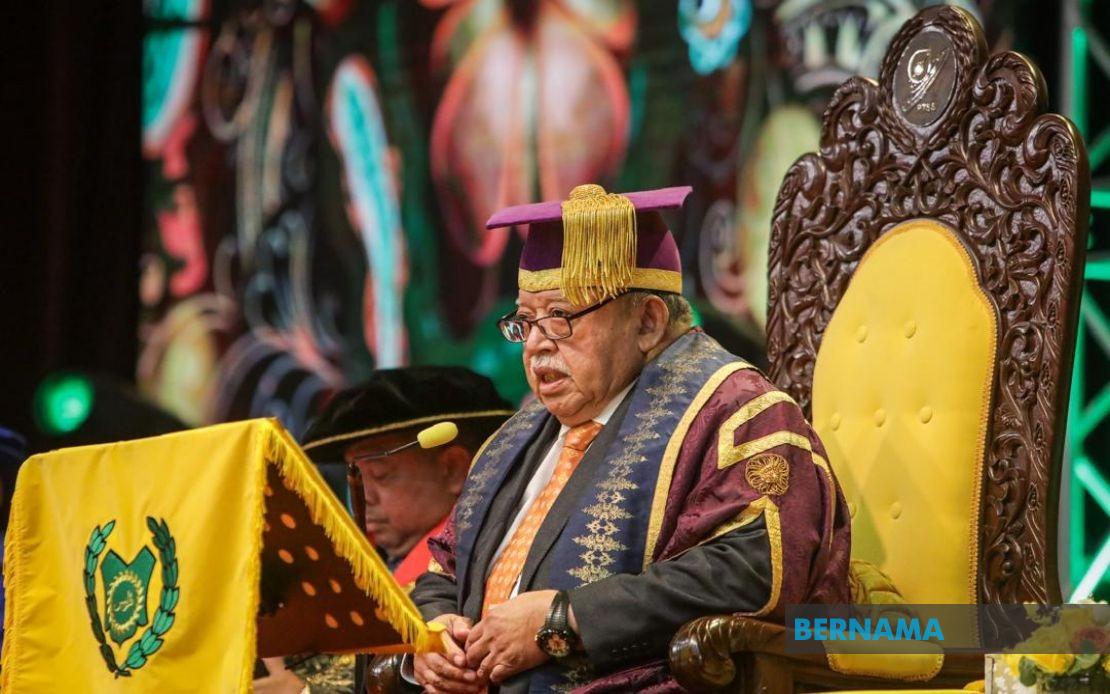
At a convocation ceremony in Arau, the Raja of Perlis, Tuanku Syed Sirajuddin Jamalullail, has positioned technical and vocational education as fundamental to Malaysia's development agenda. Speaking during the 2026 Northern Zone Polytechnic and Community College Convocation Ceremony at Politeknik Tuanku Syed Sirajuddin (PTSS), the Ruler argued that TVET institutions must serve as incubators for skilled, creative professionals capable of navigating the complexities of a transforming global economy.
The emphasis comes as Malaysia confronts seismic shifts in its employment landscape. Technological disruption through artificial intelligence, automation, robotics, and widespread digitalisation is reshaping how industries operate and what skills employers demand. The Raja acknowledged this reality directly, framing innovation not as a competitive luxury but as a foundational requirement for national progress. This perspective reflects growing recognition across Southeast Asia that traditional education pathways alone cannot adequately prepare workforces for economies undergoing rapid technological transition.
Central to the Ruler's message was a call for polytechnic institutions and their graduates to embrace an innovation culture that extends beyond mere idea generation. Tuanku Syed Sirajuddin articulated a vision wherein innovative thinking translates into practical solutions addressing real societal problems. This distinction matters significantly for Malaysia's developmental trajectory—moving from innovation as academic exercise to innovation as economic multiplier. For policymakers and educational administrators, the implication is clear: TVET curricula must integrate problem-solving frameworks alongside technical instruction.
Equally significant was the royal emphasis on character formation alongside technical competence. The Ruler cautioned graduates against divorcing expertise from moral grounding, integrity, and patriotic commitment. This reflects enduring concerns within Malaysia's leadership about the relationship between technical skill and ethical foundation. In an era when technological capabilities can be deployed for constructive or destructive purposes, the insistence that knowledge remain anchored in principle carries particular weight. The message also addresses anxieties about meritocratic systems that reward technical prowess independent of character considerations.
The convocation ceremony itself demonstrates the scale of Malaysia's TVET sector. The event, spanning from August 3 to August 9, brought together 6,104 graduates from polytechnic and community college programmes across three northern states—Perlis, Kedah, and Penang. This volume underscores TVET's role as a major educational pipeline, handling numbers comparable to or exceeding many university graduation cohorts. For Malaysia's labour market, this represents a substantial intake of mid-level skilled workers entering the workforce annually.
Among those recognised was Teerti Ganapathi Rao, a 22-year-old diploma holder in Digital Technology from PTSS's Department of Information and Communication Technology. His receipt of the Director-General of Polytechnic and Community College Education Award highlights the growing importance of digital and technology-focused disciplines within TVET pathways. The prevalence of technology-related awards and recognitions at such ceremonies suggests successful institutional alignment with future labour market demands.
The northern zone convocation carries particular regional significance. Perlis, Kedah, and Penang form part of Malaysia's northern industrial corridor, an area with distinct manufacturing and services-sector characteristics. TVET graduates from these institutions directly feed into local labour markets facing specific skill requirements. Understanding their educational preparation is therefore crucial for assessing regional economic competitiveness, particularly as these states compete nationally and internationally for industrial investment.
The Raja's intervention in educational discourse reflects the Malaysian monarchy's traditional role as guardian of national values and development priorities. Royal endorsement of TVET carries symbolic weight in a system where vocational pathways have historically occupied a secondary position relative to university education. By delivering a major convocation address centred on technical and vocational training, Tuanku Syed Sirajuddin signals elite acceptance of TVET as strategically essential rather than remedial or fallback education.
For Southeast Asian context, Malaysia's TVET emphasis aligns with broader regional trends. Neighbouring economies including Thailand, Vietnam, and Indonesia have similarly elevated technical education as development priority, recognising that advanced manufacturing, digital services, and emerging technologies require workforces with practical, applied skills. Regional competition for multinational investment in these sectors creates pressure on all economies to demonstrate capable TVET ecosystems.
The integration of innovation culture with moral principles articulated by the Ruler also speaks to contemporary debates about artificial intelligence governance and technological ethics in Southeast Asia. As AI deployment accelerates across Malaysian industries, graduates equipped with both technical competence and ethical frameworks become increasingly valuable. The royal call for innovation rooted in integrity provides philosophical grounding for emerging discussions about responsible technology deployment.
Moving forward, the challenge for Malaysian TVET institutions lies in translating these high-level commitments into operational reality. Curriculum development must genuinely reflect technological frontiers. Faculty development requires investment in continuous reskilling to keep pace with industry evolution. Industry partnerships must deepen to ensure practical relevance of academic instruction. The scale represented by 6,104 graduates annually means any gap between policy aspirations and implementation capacity carries magnified consequences across the workforce.
The convocation ceremony ultimately served as both celebration of educational achievement and reinforcement of national priorities. For Malaysia, positioning TVET as central to competitiveness in an AI-transformed economy represents a pragmatic acknowledgment that prosperity depends on the entire talent spectrum, not merely elite university graduates. The Raja's emphasis on combining innovation with integrity provides a distinctive Malaysian perspective on how technical education should contribute to national development—one emphasising capability, character, and contribution to society in equal measure.

