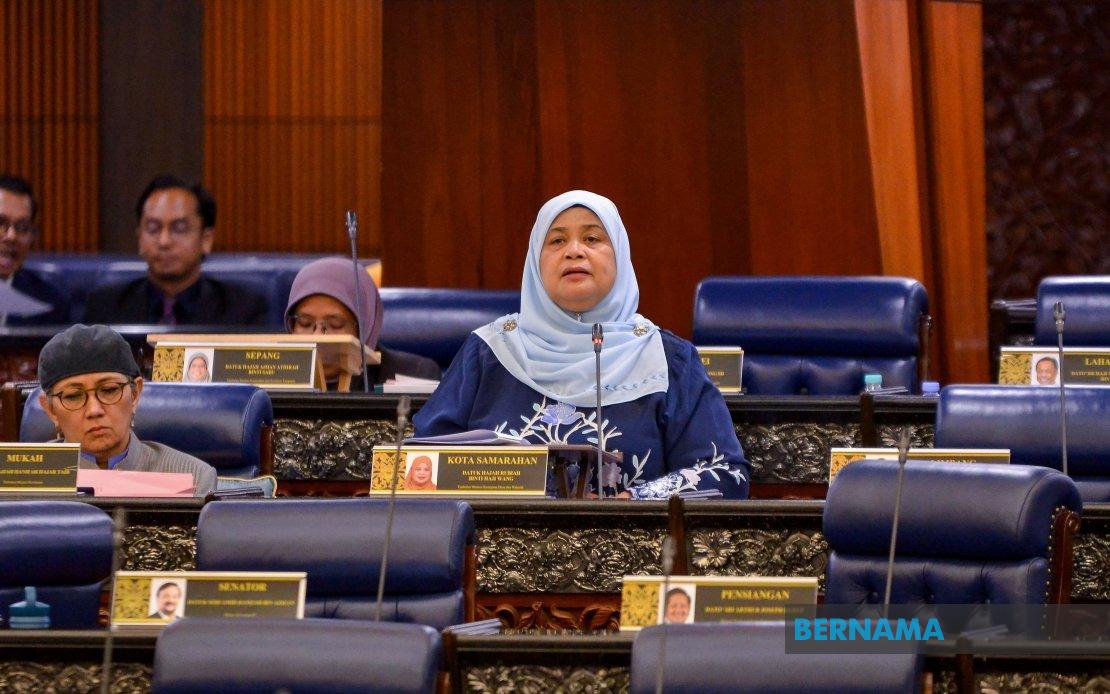
Malaysia's Technical and Vocational Education and Training (TVET) system is set for significant structural reform that anchors accreditation practices directly to industry validation. Datuk Rubiah Wang, Deputy Minister of Rural and Regional Development, disclosed that the TVET 2.0 framework will harness recognition from major employers as a key mechanism for strengthening programme quality and graduate competitiveness in the labour market. Speaking during parliamentary proceedings on July 14, she outlined how this strategic recalibration addresses persistent concerns about skills misalignment between classroom training and actual workplace requirements.
The core challenge that TVET 2.0 seeks to resolve reflects a longstanding friction point across Southeast Asia: vocational graduates often possess theoretical knowledge that fails to translate into immediate job readiness. By embedding industry endorsement into the accreditation architecture, the Ministry of Rural and Regional Development intends to create a feedback loop where employer needs directly shape curriculum development and skills assessment. This approach mirrors international best practice, where leading economies tie vocational credentials to real-world competency validation rather than purely institutional credentials.
Rubiah's remarks came in response to parliamentary questions about safeguarding programme relevance in an era of rapid technological disruption. She emphasised that the redesigned framework prioritises producing graduates who combine technical proficiency with entrepreneurial mindset, capable of establishing ventures that contribute to rural economic development. This dual emphasis on employment and self-employment reflects policymakers' recognition that traditional job creation mechanisms may prove insufficient for absorbing vocational cohorts, particularly in less-developed regions where formal sector opportunities remain constrained.
A distinctive pillar of the modernised strategy involves the TVET Tahfiz programme, an initiative integrating Quranic memorisation with digital technical training. Rather than positioning spiritual and technical education as competing domains, the ministry frames them as complementary capacities that produce graduates grounded in ethical values whilst commanding expertise in emerging technologies. This approach carries particular resonance in Malaysia's context, where harmonising religious and secular education remains a persistent policy objective. The programme targets a generation equipped to navigate globalised labour markets whilst maintaining cultural and spiritual moorings.
Technological capability development forms the bedrock of TVET 2.0's competitive positioning. The ministry's institutions are systematically infusing training curricula with exposure to artificial intelligence, Internet of Things platforms, cloud computing infrastructure, cybersecurity protocols, automation systems, robotics applications, and smart manufacturing methodologies. These competencies reflect the infrastructure demands of Industry 4.0, the current phase of industrial evolution emphasising interconnected systems and data-driven optimisation. Rubiah highlighted that this technological grounding ensures Malaysian vocational graduates possess qualifications recognised within global supply chains and digital economies.
Specialised centres of excellence represent a geographic and sectoral strategy for maximising training effectiveness. TVETMARA Petaling Jaya concentrates on Internet of Things development, positioning Klang Valley as a node for IoT expertise within the national vocational infrastructure. TVETMARA Besut, located in Terengganu, focuses on cloud computing competencies, while TVETMARA Pasir Mas in Kelantan functions as the nation's primary Building Information Modelling hub. This distributed model prevents redundancy, attracts industry partnerships suited to regional economies, and distributes vocational capacity beyond Kuala Lumpur's gravitational pull—a consideration particularly relevant for rural development objectives.
The German-Malaysian Institute occupies a distinct strategic position within this ecosystem, functioning as a technology transfer conduit linking Malaysia to German industrial expertise. Germany's manufacturing prowess and systematic approach to vocational training have long influenced Malaysian policy, and this institutional partnership formalises that relationship. Emphasis on advanced manufacturing aligned with Industry 4.0 principles ensures Malaysian trainees access methodologies and standards validated within European economies, enhancing international credential portability and facilitating potential mobility for skilled workers.
At the higher education tier, Universiti Kuala Lumpur operationalises high-level TVET through degree programmes such as its Bachelor of Artificial Intelligence Technology. This pathway bridges traditional tertiary education with applied vocational training, permitting learners to acquire research-informed expertise whilst maintaining practical application focus. The institutional architecture thus spans from secondary-level technical training through postgraduate specialisation, creating multiple entry and progression points suited to diverse learner trajectories and economic circumstances.
The employability imperative driving TVET 2.0 reflects structural challenges within Malaysia's labour market. Skills mismatches persist despite substantial investments in vocational infrastructure, partially because accreditation systems historically operated independently of employer feedback mechanisms. By institutionalising industry recognition within accreditation frameworks, policymakers seek to establish continuous calibration between training content and workplace expectations. This responsive design carries particular relevance for emerging sectors where occupational standards remain fluid and training providers struggle to anticipate skill requirements.
Regional implications extend beyond Malaysia's borders, as TVET modernisation influences Southeast Asian approaches to vocational education governance. Countries across the region grapple with comparable employability challenges and technological disruption, making Malaysia's accreditation transformation a potential reference point for policy adaptation. Success in aligning TVET outcomes with labour market demands could establish replicable models applicable to neighbouring economies facing similar skills gaps and rural development imperatives.
Rubiah's parliamentary disclosure signals that TVET 2.0 implementation has progressed from policy formulation toward operational reality. The specification of designated centres, technological focus areas, and institutional partnerships indicates concrete progress rather than aspirational rhetoric. However, accreditation transformation of this magnitude requires sustained coordination among educational institutions, industry associations, government agencies, and credentialing bodies—a complexity that could slow realisation if governance mechanisms prove inadequate.
The longer-term success of TVET 2.0 hinges on whether industry recognition becomes genuinely binding within hiring and credential evaluation practices, or remains a nominal endorsement with limited market consequence. Malaysian employers' demonstrated willingness to prioritise industry-recognised credentials over traditional educational qualifications will ultimately determine whether this accreditation transformation substantively improves graduate employment outcomes or merely adjusts labelling whilst preserving underlying misalignments.

