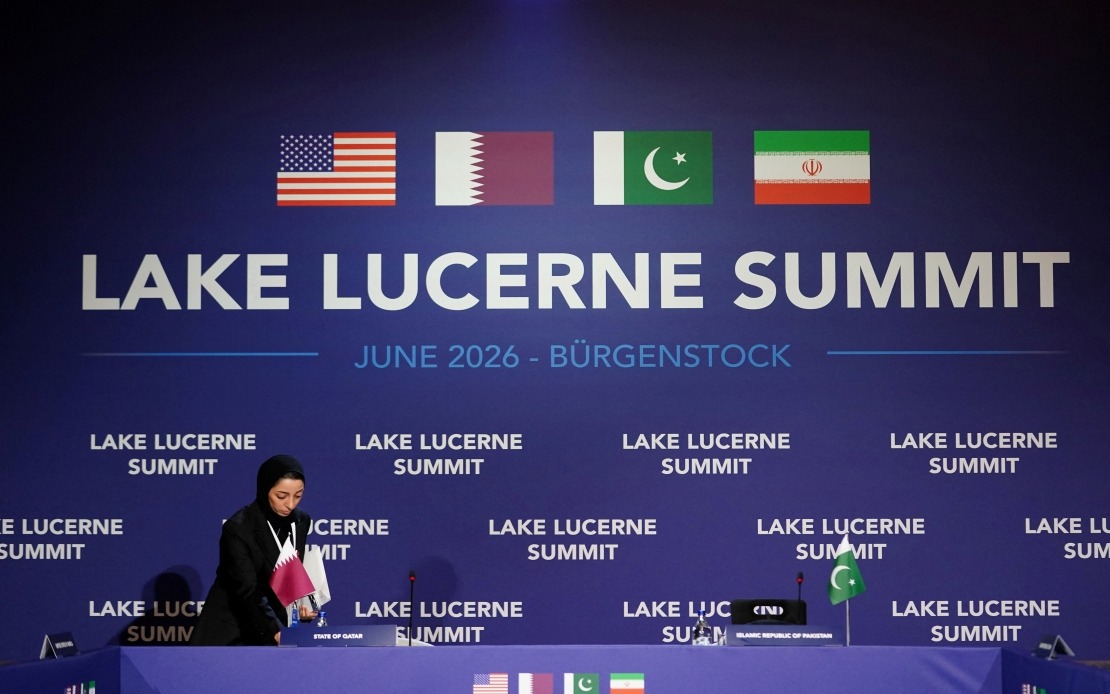
In a carefully coordinated diplomatic gesture, the foreign ministers of Türkiye, Egypt, Pakistan and Saudi Arabia have thrown their collective support behind a memorandum of understanding signed between the United States and Iran. Released following ministerial talks held in Cairo on Sunday, their joint statement reflects growing consensus among key Muslim-majority regional powers that the agreement represents a meaningful pathway toward reducing tensions in West Asia, an area that has experienced prolonged instability with far-reaching consequences for global commerce and security.
The four nations specifically commended the signing of the Islamabad Memorandum of Understanding, viewing it as more than a symbolic gesture but rather a substantive development that could arrest the cycle of escalating tensions threatening the region. By characterising the agreement as a constructive step, the ministers signalled that despite their divergent geopolitical interests and historical rivalries, they share common ground on the dangers posed by unchecked confrontation between major powers in their immediate neighbourhood. This alignment is significant given the complex web of competing interests that typically divides these countries.
The statement underscores how US-Iran tensions extend well beyond bilateral concerns, affecting multiple dimensions of regional and global stability. The foreign ministers explicitly flagged concerns about threats to international maritime routes, global supply chains, and energy markets—issues that resonate acutely with Southeast Asian nations dependent on Middle Eastern oil and reliant on unimpeded passage through critical waterways. Any escalation in the Persian Gulf invariably sends shockwaves through Asian economies, making regional de-escalation a matter of indirect but genuine interest to Malaysia and its neighbours.
Pakistan's central role in facilitating these negotiations earned particular recognition from the four ministers. As the host nation for the memorandum-signing process, Islamabad positioned itself as a trusted intermediary capable of bringing adversaries to the negotiating table—a diplomatic achievement that underscores Pakistan's continuing importance in regional conflict resolution despite its own internal challenges. Qatar's supportive efforts were also acknowledged, highlighting how smaller Gulf states continue to punch above their weight in regional diplomacy.
Looking forward, the ministers stressed the urgency of moving expeditiously toward subsequent rounds of negotiations aimed at achieving a comprehensive, long-term settlement addressing outstanding differences between Washington and Tehran. They emphasised that any future agreements must incorporate verifiable mechanisms and offer mutual acceptance—language reflecting hard-won lessons from previous diplomatic failures in the Middle East. The inclusion of such specific criteria suggests these nations are determined to prevent backsliding or half-measures that could undermine the current thaw.
Crucially, the statement insists that future negotiations must account for the legitimate security interests of Gulf Cooperation Council member states and countries throughout the Levantine region. This provision reflects the anxiety felt by US-aligned Arab states regarding potential shifts in the regional balance of power. For Malaysia and other Southeast Asian observers, this caveat suggests that even modest agreements with Iran will remain contested by regional rivals concerned about perceived gains for Tehran, potentially complicating efforts at broader regional stabilisation.
The Palestinian question features prominently in the ministers' statement, demonstrating that de-escalation in the Gulf remains inextricably linked to progress on the Israeli-Palestinian conflict. The four nations reaffirmed their principled stance supporting Palestinian statehood based on 1967 borders with East Jerusalem as capital, positioning this as essential for achieving lasting peace and stability across West Asia. This framing reflects a widespread view in the Muslim world that regional security cannot be compartmentalised—resolution of one conflict is seen as intertwined with resolution of others.
For Malaysia and other Southeast Asian nations observing these developments, the joint statement carries multiple implications. As economies heavily reliant on Middle Eastern energy supplies and dependent on freedom of navigation through regional waters, any reduction in West Asian tensions benefits Malaysian commercial interests directly. Furthermore, the willingness of Türkiye, Egypt, Pakistan and Saudi Arabia to coordinate diplomatically on such a sensitive issue suggests that pragmatism is gradually tempering the ideological rigidity that has characterised Middle Eastern politics.
The agreement also illustrates how emerging powers like Pakistan and longstanding regional players like Türkiye continue adapting to a multipolar world where US leadership cannot be taken for granted. Pakistan's mediating role, in particular, demonstrates that countries positioned at the intersection of major power rivalries can extract diplomatic dividends by offering their services as neutral facilitators. This dynamic holds lessons for Southeast Asian nations seeking to navigate great power competition while preserving regional autonomy.
The reference to threats posed by the conflict to international trade and supply chains carries particular resonance for Malaysia, which has experienced disruptions to regional commerce from Middle Eastern instability. The ministers' acknowledgment of these interconnections suggests a growing recognition that regionalisation and globalisation have made parochial security thinking obsolete—conflicts anywhere increasingly affect stability everywhere, creating incentives for even rival powers to cooperate on de-escalation.
However, the careful diplomatic language should not mask underlying tensions. The explicit inclusion of provisions protecting Gulf state security interests suggests lingering anxieties about Iran's intentions and capabilities. Similarly, the emphasis on verification mechanisms and mutual acceptability implies scepticism about trust levels between negotiating parties. For observers in Southeast Asia, these caveats remind us that while agreements represent progress, they remain fragile constructs vulnerable to unilateral reinterpretation or violation.
The coordinated statement by these four nations ultimately reflects a strategic decision that managed stability serves their collective interests better than continued escalation. Whether this emerging consensus can withstand inevitable future provocations or misunderstandings remains uncertain, but the joint declaration demonstrates that regional actors increasingly recognise the costs of endless confrontation in an economically interdependent world.

