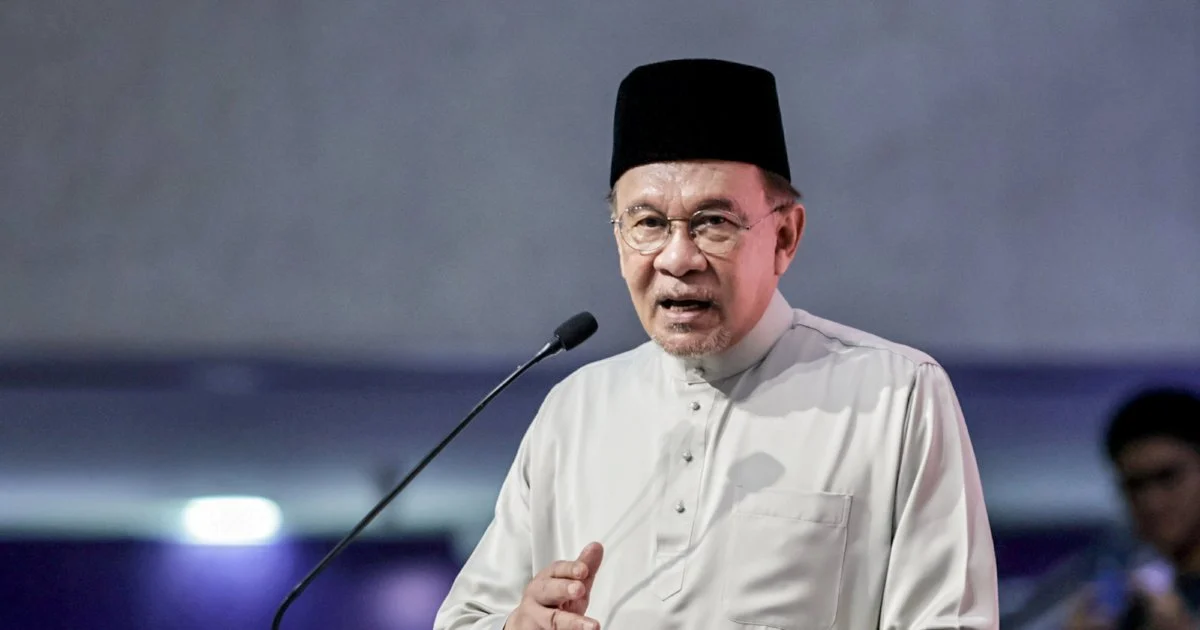
The Tunku Mahkota of Johor, Tunku Ismail Sultan Ibrahim, received Prime Minister Datuk Seri Anwar Ibrahim during a formal audience held in Kuala Lumpur on Tuesday. According to official statements, the meeting unfolded in an atmosphere marked by cordiality and mutual harmony, signalling continued positive relations between Malaysia's federal leadership and the royal household of Johor, the nation's southernmost state.
The audience represents another instance of formal engagement between the Prime Minister's office and Johor's senior royalty, underscoring the constitutional framework through which Malaysia's heads of government maintain regular liaison with the country's nine hereditary rulers. These periodic meetings serve as critical channels for discussing matters of national importance, state-level concerns, and the broader governance architecture that defines Malaysia's unique constitutional monarchy system.
Tunku Ismail Sultan Ibrahim, as Tunku Mahkota (Crown Prince) of Johor, occupies a position of considerable influence within both his state and the wider federation. The role carries responsibilities extending beyond ceremonial functions, encompassing involvement in state administration and business interests that significantly impact Johor's economic landscape. His public profile has grown markedly over recent years, particularly through his engagement with technological advancement, sports development, and youth initiatives across the state.
The timing of this audience reflects the ongoing operational rhythm of Malaysia's constitutional processes, wherein premiers and state leaders maintain scheduled interactions with royal patrons. Such meetings typically encompass discussions regarding state development projects, economic initiatives, social programmes, and alignment on matters requiring coordination between federal and state administrations. The Johor government, under Menteri Besar Onn Hafiz Ghazi, operates within a political environment increasingly shaped by federal-state cooperation frameworks.
Johor's significance within Malaysia's political and economic ecosystem cannot be understated. As the largest state by land area in Peninsular Malaysia, Johor hosts critical infrastructure including major ports, industrial zones, and increasingly, technology and innovation hubs. The state's strategic location along international shipping lanes and its proximity to Singapore make it integral to regional trade dynamics. Recent years have witnessed substantial investment flows into southern Johor, particularly through flagship projects like Forest City and the broader Iskandar Malaysia development corridor.
The cordial nature of the encounter carries particular resonance given Malaysia's sometimes complex relationship between executive authority at the federal level and the prerogatives of individual states and their rulers. Constitutional arrangements in Malaysia distribute power across multiple institutions—the monarchy, parliament, state governments, and the judiciary—requiring careful navigation and consistent relationship management. Regular audiences between premiers and royal personages contribute to maintaining institutional stability and preventing friction between these sometimes-competing centres of power.
Tunku Ismail Sultan Ibrahim has increasingly positioned himself as a forward-looking figure within Malaysia's royal institution. His advocacy for modernisation, investment in human capital, and technological adoption reflects a contemporary approach to state governance. The younger generation of Malaysian royalty, of which he represents a prominent example, navigate the dual challenge of preserving traditional institutional roles while engaging meaningfully with contemporary challenges including economic transformation, environmental sustainability, and digital society considerations.
The audience also occurred against a backdrop of broader federal-state relations management under the current administration. Prime Minister Anwar Ibrahim's government has prioritised building consensus across Malaysia's diverse political landscape, encompassing both states governed by coalition partners and those controlled by opposition parties. Maintaining functional relationships with all nine rulers and their courts represents a foundational aspect of this engagement strategy, transcending partisan political divides and focusing on national governance imperatives.
Official characterisation of the meeting as harmonious suggests no outstanding contentious issues required resolution or that any concerns raised were addressed through constructive dialogue. This stands as a positive indicator for continued cooperation on initiatives requiring joint federal-state efforts. Such meetings often lay groundwork for subsequent coordination on infrastructure projects, economic development schemes, and implementation of national policies requiring state-level participation.
Looking forward, the maintained warmth in relations between the Prime Minister's office and Johor's royal household creates favourable conditions for advancing collaborative initiatives that could benefit both the state and broader national interests. Johor's development trajectory—particularly its aspirations to become a leading innovation hub and sustainable industrial centre—requires sustained partnership between state authorities and federal institutions. The formal engagement between these two key figures signals commitment to navigating this relationship productively.
The audience exemplifies how Malaysia's constitutional framework, despite occasional tensions between different power centres, provides mechanisms for regular consultation and relationship reinforcement. Such institutional rituals, while sometimes appearing ceremonial to outside observers, serve important functions in maintaining the delicate equilibrium between monarchy, executive leadership, and state authority that has underpinned Malaysian political stability across decades.

