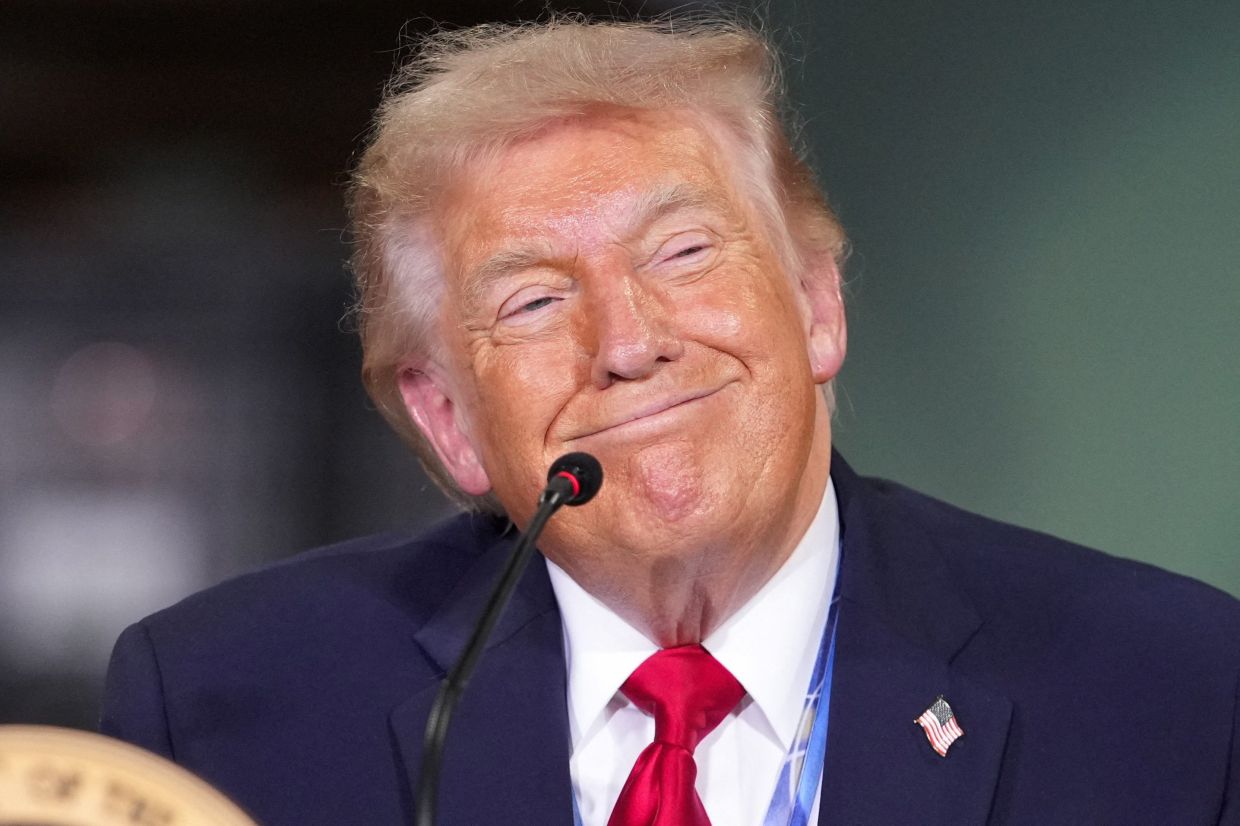
The Trump administration's pursuit of sweeping protectionist measures has taken a new legal form following a Supreme Court decision that invalidated its original global tariff strategy. Rather than abandoning the tariff wall entirely, the White House has recalibrated its approach by targeting specific countries through formal trade investigations under Section 301 of the Trade Act of 1974, allowing it to maintain broadly similar import barriers while operating within constitutional bounds. This recalibration has produced an unexpectedly uneven landscape where some nations will pay significantly less in duties than they did under the April 2025 Liberation Day levies, while others face the prospect of steeper costs ahead.
The new framework centres on two main investigative tracks: one examining alleged forced-labour practices and another targeting countries with excess industrial capacity. This structure creates the appearance of legal rigour whilst preserving the administration's fundamental protectionist intent. Countries not caught in either investigation stand to benefit most substantially when the temporary 10 percent across-the-board tariffs expire at the end of July, as they will revert to lower negotiated rates. However, the Trump administration has demonstrated a pattern of using exemptions and expansions strategically—carving out AI equipment, farm tractors, and Brazilian coffee from tariffs whilst potentially broadening the scope of covered goods—meaning the landscape remains fluid and unpredictable.
Amongst Southeast Asian nations, the Philippines emerges as a relative winner under the reformed tariff architecture. The country faced a punitive 19 percent tariff rate under the Liberation Day regime. Under the new structure, it will encounter a 12.5 percent forced-labour tariff, a reduction of nearly seven percentage points. Since the Philippines is not subject to the excess capacity investigation, there is minimal risk of further increases. This tariff relief arrives at a significant moment for Philippine exporters, as US imports from the country surged 51 percent in the January-April 2025 period compared to the same months in 2024, suggesting that lower tariff barriers could further accelerate this positive trade momentum.
Singapore, by contrast, confronts a considerably more challenging position. The city-state avoided country-specific emergency tariffs in April 2025, leaving it subject only to the blanket 10 percent duty applied universally to other trading partners. Under the new regime, however, Singapore faces exposure to both the 12.5 percent forced-labour tariff and an additional levy from the excess capacity investigation—a combination that threatens to push total duties substantially higher than the current 10 percent baseline. Deborah Elms, head of trade policy at The Hinrich Foundation, noted that Singapore's exporters have grown accustomed to manageable tariff levels and now confront genuine risk of deterioration. This outcome carries particular significance for Southeast Asian supply chains, as Singapore functions as one of the world's most critical transhipment hubs, where raw materials and components flow through its ports and industrial zones before being re-exported as finished goods to the US and elsewhere. Any tariff increase affecting Singapore inevitably ripples through the region's manufacturing networks.
Other low-trade-volume economies stand to gain substantial relief from the new tariff structure. Pakistan's tariffs will plummet 19 percentage points, from 29 percent to 10 percent, positioning it as an attractive alternative for supply chain diversification. Myanmar faces an even more dramatic shift, descending from a punitive 44 percent rate imposed in April 2025 to a range of zero to two percent on most goods—a transformation so dramatic that it may incentivise multinational corporations to reassess their Southeast Asian manufacturing footprints. Laos and Lesotho similarly benefit from substantial rate reductions, collectively creating conditions whereby multinational companies might profitably relocate production away from existing high-tariff jurisdictions. This potential supply chain migration could reshape regional trade dynamics significantly.
South Africa exemplifies how the new investigation framework delivers outcomes substantially different from Trump's earlier, more ideologically driven approach. In April 2025, the country faced a 30 percent tariff rate imposed after the president alleged government discrimination against white Afrikaners—a rationale rooted in political grievance rather than trade law. Under the forced-labour investigation, South Africa's tariff rate is expected to settle at 12.5 percent, a dramatic reduction despite the country's goods exports to the US declining 56 percent year-over-year through April. This suggests that Trump's revised framework, whilst still protectionist, operates according to more conventionally recognisable trade law principles.
North American trading partners navigate more complicated terrain. Canada benefits from certain reductions in tariff rates compared to the April 2025 baseline and maintains key exemptions for goods meeting USMCA standards. However, the Trump administration has imposed sector-specific metal tariffs that have strained Canadian industry, and the president continues to level threats regarding withdrawal from the North American trade agreement. The administration's evident irritation with Canadian retaliatory actions means that no Canadian exporter can assume stability heading into scheduled USMCA renegotiations in the second half of the year.
Mexico pursues a dual-track strategy as discussions continue over sector-specific auto tariffs. Mexican officials argue that their tariff rates on vehicles exceed those applied to imports from South Korea or Japan, creating competitive disadvantages for Mexican manufacturers. Simultaneously, Washington has tabled a more stringent requirement that automobiles produced within the USMCA zone contain at least 50 percent American-sourced components—a substantially higher threshold than current rules. These negotiations extend through at least July, creating uncertainty about Mexico's longer-term tariff exposure and competitiveness.
The European Union confronts a compressed timeline as it races to ratify a trade agreement before a July 4 deadline imposed by Trump. The European Parliament approved the pact, and EU member states are expected to deliver final ratification imminently—the culmination of a laborious year-long process. However, the administration simultaneously launched a Section 301 investigation against Germany specifically, citing alleged persistent underpayment for innovative pharmaceutical products. This move, seemingly contradictory to assurances that trade agreements remain intact, prompted Chancellor Friedrich Merz to assert that the US should honour its commitments and that pharmaceutical pricing constitutes a domestic policy matter rather than a trade issue. The contradiction reveals the extent to which Trump's tariff regime remains tactically flexible and subject to expansion based on shifting administration priorities.
China occupies a radically improved position compared to the period immediately following Trump's inauguration. The president had campaigned on imposing 60 percent tariffs on Chinese goods; the effective rate has instead settled at approximately 21 percent according to Bloomberg Economics analysis. This moderation suggests either that Chinese negotiating leverage exceeds administration expectations or that broader economic considerations have tempered the original protectionist impulse. The US and China are scheduled to revisit their tariff arrangement in autumn, and Xi Jinping has demonstrated China's capacity to disrupt American economic interests through means such as rare earths export restrictions imposed last year. This leverage dynamic means the autumn negotiations carry genuine strategic weight.
For Malaysian and broader Southeast Asian policymakers, these developments carry immediate implications. The tariff restructuring creates incentives for multinational manufacturers to reassess regional supply chain configurations, particularly given the dramatic shifts affecting Myanmar, Laos, and Pakistan. Singapore's deteriorating position may drive some regional trade diversion, though the city-state's sophisticated logistics infrastructure provides resilience. The Philippine tariff relief presents competitive advantages that may attract investment at the expense of other regional competitors. Most critically, the framework's inherent instability—evidenced by Trump's willingness to launch investigations against ostensible trading partners like Germany—means that no country can assume its tariff status is fixed. Southeast Asian nations would be prudent to diversify their trade relationships and avoid excessive dependence on any single market arrangement whilst positioning themselves to capitalise on windows of opportunity as competitive positions shift.
The broader pattern suggests that Trump's revised tariff architecture, whilst legally defensible in ways his original approach was not, remains fundamentally an instrument of tactical trade negotiation rather than systemic policy. The administration has demonstrated willingness to use investigations, exemptions, and sector-specific actions as bargaining chips, meaning that countries seeking tariff relief or stability must view negotiations as ongoing rather than concluded. For regional economies integrated into global supply chains, this environment demands both vigilance regarding potential tariff increases and readiness to capitalise on opportunities created when competitors face elevated costs or supply chain disruptions.

