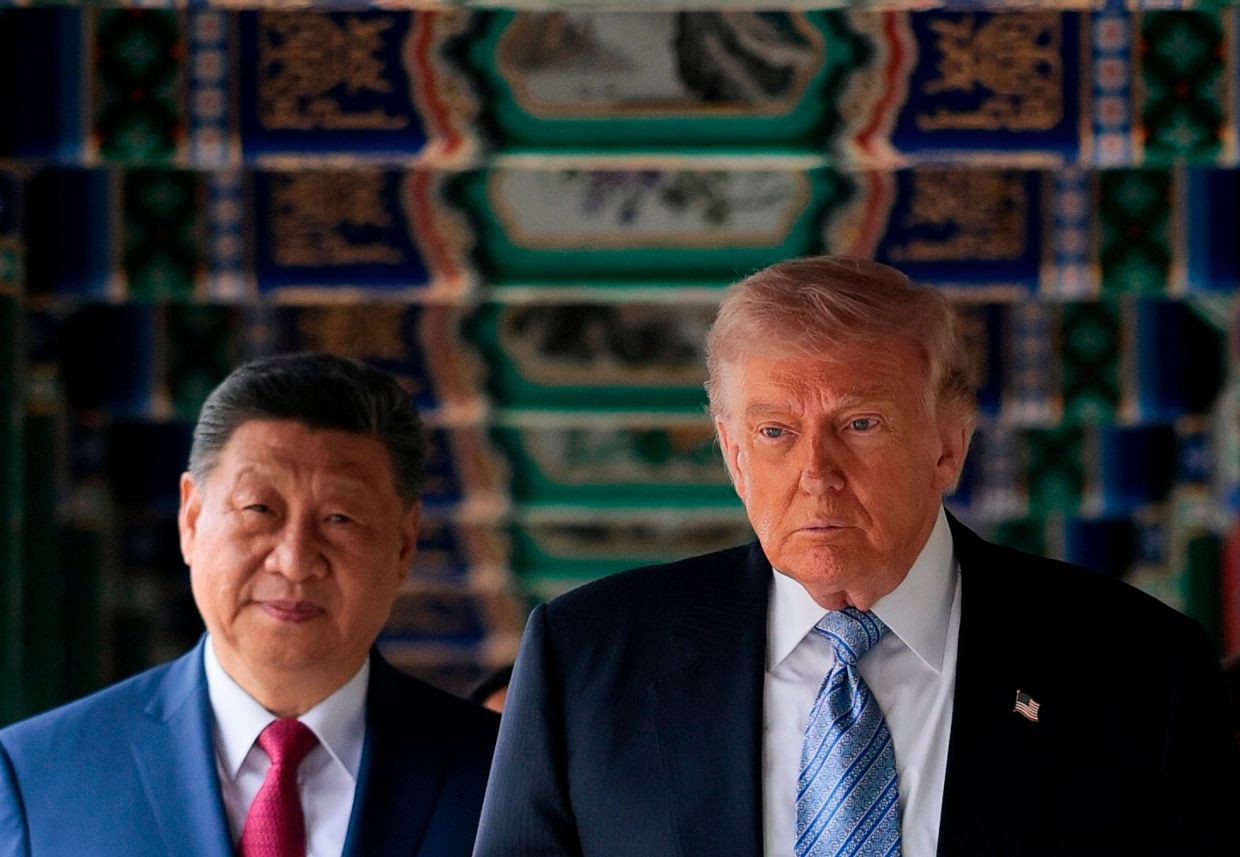
President Trump's approach to China continues to oscillate between confrontational public rhetoric and careful diplomatic restraint, most recently evident in his conflicting positions on Beijing's alleged military assistance to Iran and his emphasis on maintaining channels of communication ahead of Xi Jinping's visit to the United States on September 24. The American leader's calculated mix of pressure and negotiation reveals the fundamental tension at the heart of his administration's China policy, where economic and geopolitical competition must be balanced against the practical need for dialogue with a major global power.
Reports emerged this week alleging that China had provided weapons to Iran through a supply arrangement spanning western China and Pakistan, valued between US$60 million and US$70 million. When questioned about these claims, Trump adopted a position of diplomatic incredulity rather than outright accusation, stating he would find such conduct "surprising" and referencing his earlier conversation with Xi. The American president recounted that during their May meeting in Beijing, the Chinese leader had "very strongly" assured him that China would not participate in arming Iran under any circumstances. "I take him at his word," Trump said, adding the qualifier that such action would be "very bad for them – certainly not in their best interests." The statement functioned simultaneously as both an expression of confidence in the relationship and a thinly veiled warning of consequences.
Beijing's foreign ministry moved swiftly to deny the weapons supply allegations, characterizing the reports as "untrue and not factual at all" and reiterating China's commitment to de-escalation efforts. This represents a familiar pattern in the bilateral relationship, as Beijing had similarly rejected claims before Trump's May visit that it was supplying weapons to Iran. The Chinese government's consistent denials suggest it recognizes the delicate balance required to maintain cordial relations with Washington while managing its own strategic interests in the Middle East. For Southeast Asian observers watching China's hedging between different regional powers, these exchanges underscore Beijing's careful navigation of competing pressures.
Trump's measured tone regarding the weapons allegations stood in sharp contrast to his fiercely critical social media posts released just hours earlier, where he launched an extended attack on Anthony Fauci, the long-time American health official. Trump renewed his long-standing assertion that Covid-19 originated in a laboratory in Wuhan, China, and accused Fauci of persistently attempting to "protect China" by disagreeing with this theory from the outset. "I said from the beginning that the virus came from the Wuhan Laboratory in China. Fauci strongly disagreed, always trying to protect China," Trump declared. The comments represent a continuation of Trump's embrace of a theory that most mainstream scientific consensus has not supported, with broader expert opinion favoring the explanation of natural spillover from animals to humans.
This juxtaposition of Trump's harsh accusations regarding pandemic origins with his diplomatic accommodation on the weapons issue exemplifies the administration's broader China strategy. Rather than presenting a unified front of escalating pressure, Trump has instead opted for a compartmentalized approach where different grievances are addressed through different channels. The strategy appears designed to preserve opportunities for negotiation on matters Trump considers priorities while maintaining rhetorical dominance on domestic political issues, where the Covid origin question carries significant weight with his political base.
Trump's recent statements on Iran and China's alleged involvement reveal additional layers of complexity. Last week, the president claimed that China and Russia were not "participating" in the Iran conflict, citing his May conversation with Xi as the basis for confidence in Beijing's restraint. This assertion of trust contrasted dramatically with accusations leveled just twelve days prior, when Trump delivered a prime-time address accusing China of perpetrating "the largest compromise of election data in history." In that speech, he alleged that Beijing had illicitly obtained 220 million American voter files and declassified supporting documents, describing the situation as an "unprecedented election security nightmare."
Despite the severity of these election interference allegations, Trump's administration has notably refrained from implementing new sanctions, trade penalties, or formal diplomatic consequences targeting China for the claimed violations. The absence of concrete punitive measures suggests either skepticism within the administration regarding the severity of the alleged breach or a deliberate decision to avoid escalation ahead of Xi's visit. This restraint contrasts sharply with the administration's rhetoric and reflects the ongoing priority placed on maintaining a functional relationship with Beijing, even amid accusations of serious transgressions against American national security.
For Malaysia and the broader Southeast Asian region, Trump's inconsistent China approach carries important implications. The region has long sought to maintain balanced relationships with both Washington and Beijing, and the unpredictability of American policy signals creates planning challenges for regional governments. When the United States vacillates between confrontation and accommodation, it becomes difficult for Southeast Asian nations to calibrate their own strategic positioning. Trump's comments about finding alleged Chinese arms supplies to Iran "surprising" while simultaneously maintaining confidence in Xi's assurances suggests that economic and security partnerships remain paramount considerations in his calculations, potentially above more abstract concerns about international norms or transparency.
The scheduling of Xi's September 24 visit carries symbolic weight in this context, as it indicates both leaders have determined that maintaining high-level diplomatic engagement serves their interests. The planned summit suggests that despite public disputes over pandemic origins, election security, and Iranian weapons, the Trump administration views ongoing dialogue as necessary. This reflects the reality that American-Chinese relations have become too deeply integrated economically and strategically to permit complete rupture, even when serious accusations of misconduct emerge.
Trump's mixed messaging also reveals something about how the administration prioritizes different categories of grievance. Allegations of weapons supplies to Iran trigger concerns about American regional interests in the Middle East, where Iran represents a long-standing adversary. Election interference accusations strike at the heart of American democratic legitimacy and domestic political credibility. Yet when forced to choose which battles to pursue aggressively, Trump has selected neither, instead opting for a strategy of conditional skepticism paired with diplomatic preservation. This calculus suggests that immediate bilateral relations and the possibility of negotiated settlements on economic or security matters outweigh immediate demands for accountability.
The broader pattern evident in Trump's China communications reflects a transactional worldview where relationships are maintained through personal connections and reciprocal understanding rather than through consistent application of principle or enforcement of established international norms. Xi's characterization in Trump's account as someone who has given his "word" on key matters suggests the American president views the relationship as resting on personal assurances rather than verified compliance or institutional mechanisms. Whether such an approach can sustainably address fundamental security concerns regarding weapons proliferation, election interference, and pandemic accountability remains an open question as the September visit approaches.

