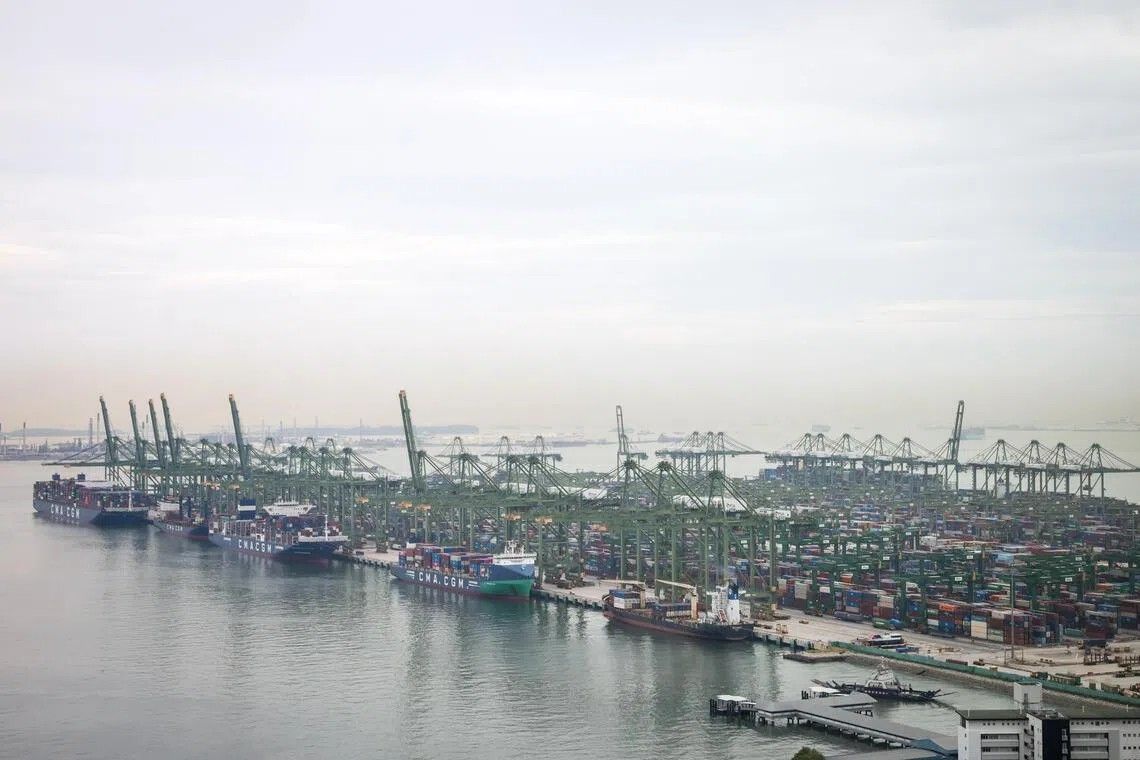
Singapore has become one of 45 economies hit by a new 12.5 per cent US tariff, with the duty applying to approximately one-third of the city-state's domestic exports to America. The tariff, which took effect at 12:01am Eastern Time on July 24, represents the latest instalment in President Donald Trump's effort to reinvigorate his trade policy agenda following a significant court challenge to his earlier tariff regime. The Office of the US Trade Representative initiated the investigation in March and concluded its review in July, determining that Singapore and dozens of other trading partners had failed to sufficiently adopt or enforce prohibitions against importing goods made with forced labour.
US Trade Representative Jamieson Greer framed the measure as a long-overdue enforcement action, noting that America has maintained a forced-labour import ban for nearly a century and expects its trading partners to demonstrate equivalent commitment. The administration distinguished between different tiers of economies in its tariff response: 45 nations, including Singapore, Japan and South Korea, face the full 12.5 per cent rate, while approximately ten economies deemed to have adopted adequate forced-labour restrictions, including Mexico, Britain, Canada and India, received a reduced 10 per cent tariff. For the latter group, the duties were structured to comply with existing bilateral or multilateral trade agreements.
The strategic use of forced-labour enforcement as a tariff mechanism reflects the Trump administration's broader legal manoeuvre. Experts observe that officials are anchoring these duties in Section 301 of the Trade Act of 1974, a statute that contains no statutory expiration date or percentage cap, precisely because Trump's signature reciprocal tariffs faced invalidation when the US Supreme Court struck down their legal foundation in February 2026. The previous global levy of 10 per cent, imposed under Section 122 following the court's decision, expired earlier this week, making way for the new forced-labour tariff. This approach, while potentially more durable against judicial challenge, stretches the law beyond what Congress originally intended when it authorised Section 301 measures, prompting legal experts to anticipate immediate lawsuits once the tariff fully takes effect.
Singapore's Ministry of Trade and Industry responded swiftly, rejecting characterisations of the nation as a hub for forced-labour goods and emphasising its comprehensive enforcement framework and strong track record. The ministry committed to continued engagement with the USTR to explore potential resolutions, while pledging further announcements regarding implementation details. The statement underscored that forced labour in complex, multi-tiered international supply chains constitutes a transnational issue requiring coordinated international action, best addressed at source rather than through tariffs on transit or re-export economies. This framing proved significant: as a major global trading hub, Singapore's vulnerability to such restrictions differs from manufacturing economies, since many goods simply pass through its ports without production involvement.
Foreign Minister Vivian Balakrishnan raised the matter directly with US Secretary of State Marco Rubio during bilateral talks at the Asean Foreign Ministers' Meeting in Manila, signalling that Singapore was deploying diplomatic channels to negotiate relief. The government indicated it would consult closely with the Singapore Economic Resilience Taskforce and the business community before determining next steps, suggesting potential appeals or targeted exemptions. Notably, MTI announced that certain categories would escape the new tariff: products already subject to Trump's Section 232 duties on metals and strategic goods remain exempt, as do energy products, pharmaceuticals, certain electronics, aerospace components, semiconductors, precious metals and goods covered by the United States-Mexico-Canada Agreement.
The tariff's real impact on Singapore's economy hinges partly on which domestic exports fall within the 12.5 per cent band. While the exemptions are substantial, roughly one-third of Singapore's US-bound shipments remain exposed, representing significant value in sectors ranging from chemicals and refined petroleum to food products and machinery. For a nation whose economic model relies heavily on open trade and supply-chain integration, this duty introduces both immediate costs and strategic uncertainty. Companies suddenly face higher landed costs in their largest developed-market customer, potentially pricing them out of competitive American markets or forcing them to absorb margins.
Complicating the outlook is an ongoing USTR investigation into structural excess capacity in manufacturing sectors, under which Singapore and 15 other economies face potential additional duties. US Trade Representative Greer disclosed in a recent Bloomberg Television interview that this inquiry was proceeding more slowly than the forced-labour review because officials sought to ensure compliance with the law's technical requirements. The timing and nature of any resulting duties remain unclear, leaving Singapore's manufacturers in a state of suspended uncertainty. The prospect of layered tariffs—first the forced-labour duty now in place, potentially followed by excess-capacity tariffs—compounds planning difficulties for exporters.
Lennon Tan, president of the Singapore Manufacturing Federation, acknowledged on July 24 that the forced-labour characterisation did not reflect the standards maintained by the federation's members, yet cautioned that real harm would nonetheless materialise. He noted particular anxiety over whether further duties might accumulate on top of the current 12.5 per cent rate, creating cascading compliance costs and unpredictable pricing pressures. The federation announced plans to survey affected exporters, particularly those with substantial US market exposure, to quantify the damage and communicate manufacturers' concerns to government officials. Tan's public guidance to members—to diversify geographically, strengthen supply-chain resilience and leverage Singapore's network of free trade agreements alongside regional growth opportunities—reflected a measured but sobering assessment that reliance on the US market was becoming riskier.
For Malaysia and the broader Southeast Asian region, Singapore's experience carries instructive lessons. The tariff mechanism, ostensibly targeting forced-labour practices, operates as a catch-all trade restriction that affects trading hubs and manufacturing economies alike without clearly distinguishing between nations with genuine compliance problems and those with robust enforcement records. This indiscriminate approach suggests that other regional economies, particularly those with complex export profiles or transshipment operations, could face similar actions. The Trump administration's willingness to stretch Section 301 beyond its conventional application signals an aggressive posture on trade that may expand rather than contract in coming months, as the excess-capacity investigation and potentially other probes yield findings.
Malaysia, Indonesia and other ASEAN nations should monitor developments closely, as the forced-labour tariff and forthcoming excess-capacity determinations may establish templates for broader action against the region. The US administration's demonstrated preference for legal frameworks that resist judicial challenge, combined with its apparent indifference to whether tariff measures align with original congressional intent, suggests that traditional dispute-resolution mechanisms—whether through the World Trade Organization or bilateral negotiation—may offer limited relief. Manufacturers across Southeast Asia now operate under a new calculus: American market access, once a reliable growth engine, has become contingent on navigating an increasingly complex and unpredictable tariff landscape. Companies that had built supply chains optimised for US consumption must now consider whether diversification, nearshoring or market reorientation represents a prudent hedge against further trade restrictions.

