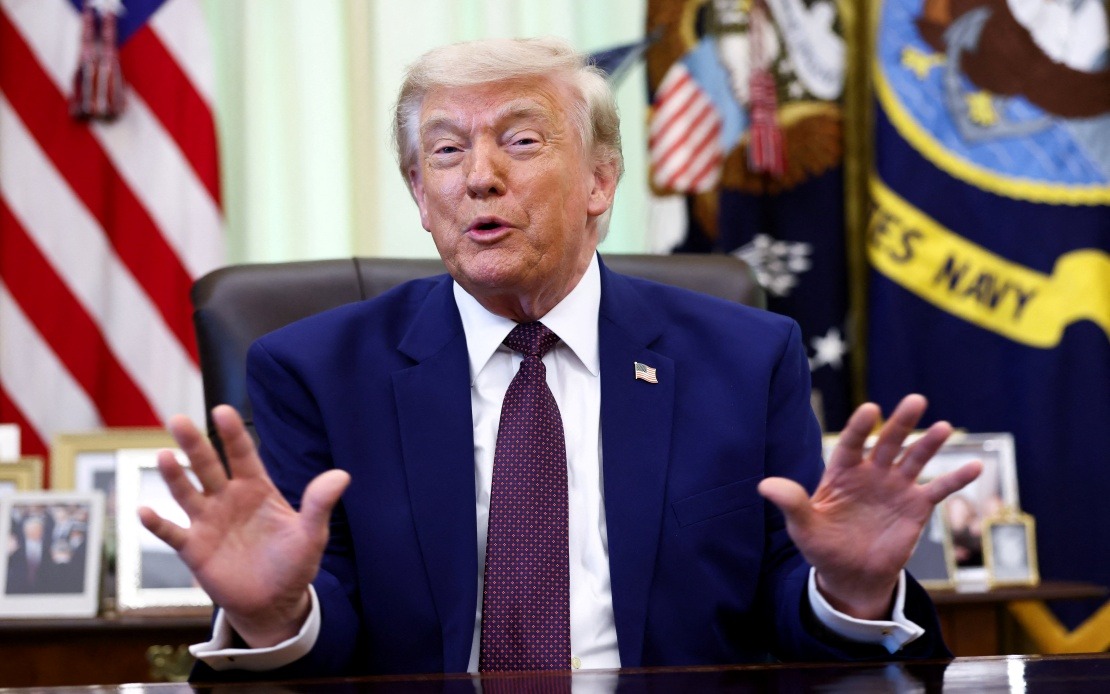
President Donald Trump has intensified his pressure on Republican senators to advance the SAVE America Act without delay, signalling growing impatience with legislative pace as the summer recess approaches. The White House messaging has sharpened in recent days, with Press Secretary Karoline Leavitt indicating that Trump's confidence in Senate Majority Leader John Thune is being tested. The administration's goal is to secure substantial progress on the voting restrictions measure before the August congressional break, treating the deadline as a critical political milestone.
The centrepiece of Trump's legislative push is the SAVE (Safeguard American Voter Eligibility) America Act, a Republican-backed initiative designed to impose stricter identification requirements for voter registration in federal elections. Under the proposed legislation, Americans would be required to present either a passport or birth certificate when registering to vote, creating a documentary verification system that does not currently exist uniformly across all states. The measure targets what Republicans characterise as a vulnerability in the current system that allows foreign nationals and undocumented immigrants to register in certain jurisdictions where state authorities do not systematically verify citizenship status.
Trump's frustration boiled over on his Truth Social platform, where he issued an unambiguous directive to fellow Republicans. His message combined explicit urgency with a strategic argument about Democratic intentions, framing the filibuster—a parliamentary tool allowing extended debate—as an obstacle that Democrats would dismantle themselves if given the opportunity. This rhetorical approach attempts to reframe what would ordinarily be seen as a procedural overreach as merely preemptive action against perceived Democratic future tactics. By characterising the move as defensive rather than aggressive, Trump seeks to build internal party support for eliminating a rule that has protected minority interests in the Senate for over a century.
The filibuster elimination demand reveals the deeper structural challenge facing Trump's legislative agenda. Currently, passing most legislation in the US Senate requires 60 votes to overcome a filibuster, a threshold the Republican caucus cannot reliably meet given Democratic opposition. By removing this supermajority requirement, Republicans could pass bills with their current 53-seat majority. Trump's impatience reflects the reality that his window for legislative achievement is finite, with midterm elections potentially reshaping congressional dynamics and reducing Republican advantages.
From a Southeast Asian perspective, the SAVE America Act and the broader debate it has triggered carry implications for how democracies navigate voter authentication and electoral security. Malaysia, which has its own voter registration systems and periodic electoral cycles, operates within a different constitutional framework but faces similar questions about balancing accessibility with security. The American debate illuminates the tension between expanding democratic participation and implementing identity verification measures—a challenge many regional democracies grapple with as technology and migration patterns evolve.
The Republican strategy of bundling voting restrictions with budget measures and debt ceiling negotiations represents a high-stakes legislative package. Trump's instruction to act on "everything else, including the Budget, and upcoming Debt Ceiling" signals an intention to leverage multiple pressure points simultaneously. This approach converts individual legislative items into components of a broader political confrontation, potentially increasing stakes for negotiations while risking congressional gridlock if Republicans cannot maintain internal cohesion.
Democratic opposition to the SAVE America Act is virtually certain, with the party likely viewing strict identification requirements as barriers to voter participation among minority and lower-income communities. The legislation thus embodies a fundamental partisan disagreement about electoral access—whether the priority should be maximizing participation or preventing irregular voting. This fundamental divide has become more pronounced in recent American politics, with each side increasingly convinced that the other poses an existential threat to democratic legitimacy.
Trump's invocation of hypothetical Democratic behaviour—his suggestion that Democrats would abolish the filibuster if given power—references the 2013 decision by then-Senate Majority Leader Harry Reid to eliminate the filibuster for most presidential appointments and judicial nominations below the Supreme Court level. That decision reduced the threshold for those specific confirmations to a simple majority. Republicans argue this precedent justifies their current position, while Democrats contend the situations are fundamentally different. This historical comparison has become a standard element in American partisan rhetoric, with each side claiming vindication from the other's past actions.
The August recess deadline assumes significance because it represents a natural breaking point in the legislative calendar. Congressional recesses historically provide time for political reassessment and can shift momentum on stalled initiatives. By targeting this date, Trump creates artificial pressure that forces decision-making before legislators disperse to their home districts. The timing also coincides with campaign season considerations, as members become increasingly focused on securing re-election rather than legislative achievements.
For Malaysia and other democracies observing American political dynamics, the SAVE America Act debate illustrates how voting procedures inevitably become partisan battlegrounds in polarised societies. The requirement for documentary identification seems straightforward but carries substantial implications for different demographic groups' ability to register. These considerations affect not only America but resonate globally as democracies worldwide contend with questions about how to maintain both security and accessibility in electoral systems.
Trump's approach to Senate leadership demonstrates his preference for direct public pressure over behind-closed-doors negotiation. By making his demands explicit on social media, he simultaneously appeals to his base, signals resolve to fellow Republicans, and creates expectations that legislative leaders must manage. This strategy can generate momentum but also risks alienating moderate Republicans who prefer traditional legislative procedures and deliberation. The tension between Trump's outsider approach to politics and the Senate's institutional norms continues shaping American legislative outcomes.

