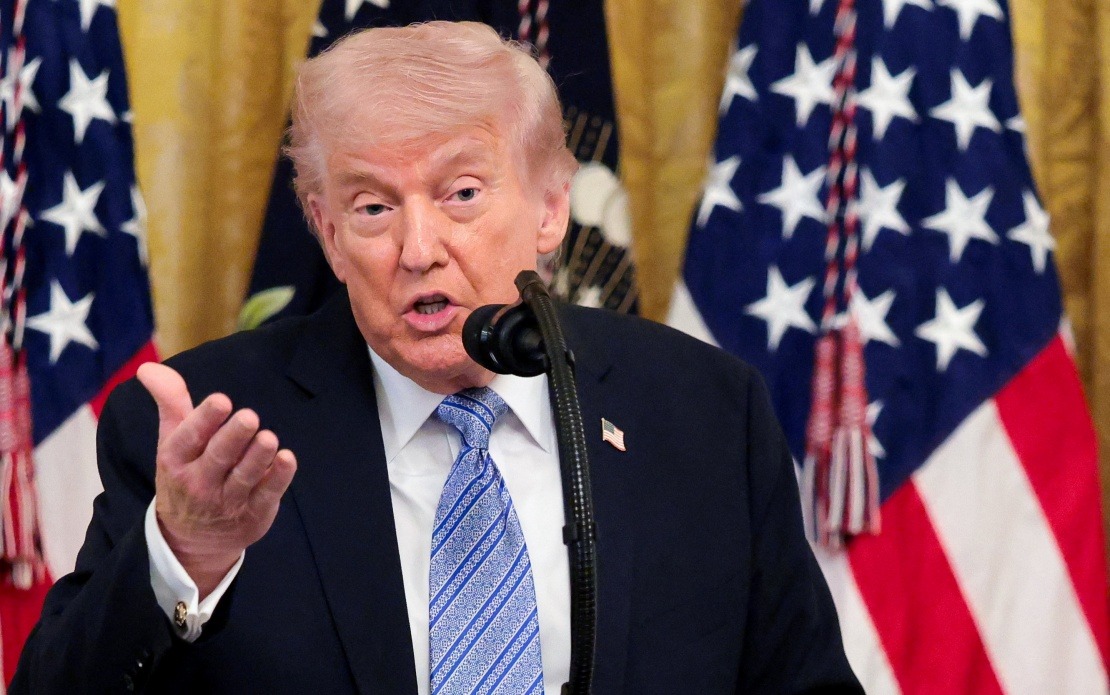
United States President Donald Trump has firmly rebuffed Israeli Prime Minister Benjamin Netanyahu's reservations about a potential F-35 fighter jet sale to Türkiye, declaring that Washington's defence export decisions rest solely with American leadership. Speaking to reporters aboard Air Force One on Monday, Trump made clear that external pressure would not dictate his administration's arms sales policies, signalling a significant shift in US-Turkish military relations after years of suspension triggered during his first term in office.
The president's comments mark a decisive moment in the delicate balance between America's two critical Middle Eastern and Mediterranean allies. Trump characterised Türkiye as a "tremendous ally" and President Recep Tayyip Erdogan as a "friend" who has performed admirably in managing regional complexities, particularly in Syria. This warm assessment contrasts sharply with the cooling in military cooperation that defined the 2019 suspension of Türkiye from the F-35 programme, when the US objected to Ankara's acquisition of Russia's S-400 air defence system.
Trump acknowledged the existing tensions between Ankara and Jerusalem, conceding that Türkiye is "not a big fan" of Israel or its prime minister. Rather than allowing this friction to dictate policy, however, the US president emphasised the strength and resilience of the Washington-Ankara bilateral relationship. His remarks suggest a compartmentalisation of concerns, where Turkish-Israeli tensions need not constrain Washington's defence partnerships with either nation. This approach reflects a transactional view of international relations that prioritises pragmatic strategic interests over mediating between allies with conflicting objectives.
The president offered considerable praise for Turkish military capabilities, describing Türkiye's armed forces as "tremendous" and emphasising the nation's status as a "very big military" and "very powerful country." These characterisations serve multiple purposes: they justify the F-35 sale on technological and strategic grounds, underscore Türkiye's importance to NATO, and reinforce Trump's messaging about American confidence in Ankara's strategic role in a volatile region. Such language also signals to the Turkish government that Washington recognises Ankara's regional weight and is willing to treat it as a substantial partner rather than a subordinate ally.
During the NATO summit in Türkiye last month, Trump had already signalled openness to reconsidering the F-35 suspension, saying he would "certainly consider" restoring sales. He notably framed Türkiye as "much more loyal than other countries," a comparative assessment that carries implications for Washington's relationships across Europe and Asia. Erdogan's public characterisation of Trump's approach as "positive" suggests Ankara views the presidency as an opportunity to restore military cooperation that has remained frozen for five years, complicating Türkiye's NATO commitments and air defence capabilities.
Media reports had previously indicated that Trump was significantly frustrated by Netanyahu's public opposition to the proposed sale, with sources describing his reaction in colourful terms. The Israeli prime minister's decision to voice concerns publicly appears to have backfired, triggering the precise outcome he sought to prevent. This dynamic raises questions about the effectiveness of open diplomatic pressure when applied to an administration that views such criticism as an infringement on sovereign decision-making authority.
The original 2019 suspension created a complex dispute centred on Türkiye's procurement of Russia's S-400 system. Ankara has consistently maintained that acquiring both systems poses no technical or strategic conflict, pointing out that NATO allies operate equipment from diverse sources without adverse consequences. Türkiye has repeatedly proposed establishing a joint technical commission to investigate compatibility concerns, a proposal that went largely unheeded during the Biden administration. Turkish officials argue that suspending Türkiye from the F-35 programme violated the terms of their participation agreement and that the aircraft would strengthen both Turkish defences and broader NATO capabilities in the Eastern Mediterranean and Black Sea regions.
The F-35 dispute encapsulates broader tensions in US foreign policy regarding weapons systems, alliance management, and the weight given to Israeli security preferences. Türkiye's exclusion from the fighter jet programme has forced Ankara to seek alternatives, complicating NATO interoperability and potentially pushing Turkish military procurement toward non-Western sources. Restoring access to the F-35 would address these concerns while reinforcing Türkiye's integration into Western defence structures.
For Malaysia and Southeast Asian observers, this dispute offers insights into how great powers navigate competing alliance obligations. The case demonstrates that arms sales and military cooperation remain fundamentally strategic rather than purely technical matters, shaped by geopolitical alignments and leadership priorities. Trump's willingness to override Israeli objections suggests that alliance relationships exist in hierarchy, with Turkish strategic importance to broader US interests potentially outweighing concerns specific to Israeli security in this particular instance.
The implications extend to Türkiye's role within NATO, where restoration of F-35 access would enhance interoperability and modernisation efforts at a time of heightened Russian assertiveness in Europe. For the broader Middle East, Turkish military strengthening could shift regional balances, particularly regarding air power projection capabilities in contested zones. Whether this represents a temporary shift tied to Trump's presidency or signals longer-term American strategic realignment toward Turkey remains uncertain, but the clear rejection of Israeli veto power suggests a recalibration of relationship dynamics within the transatlantic alliance system.

