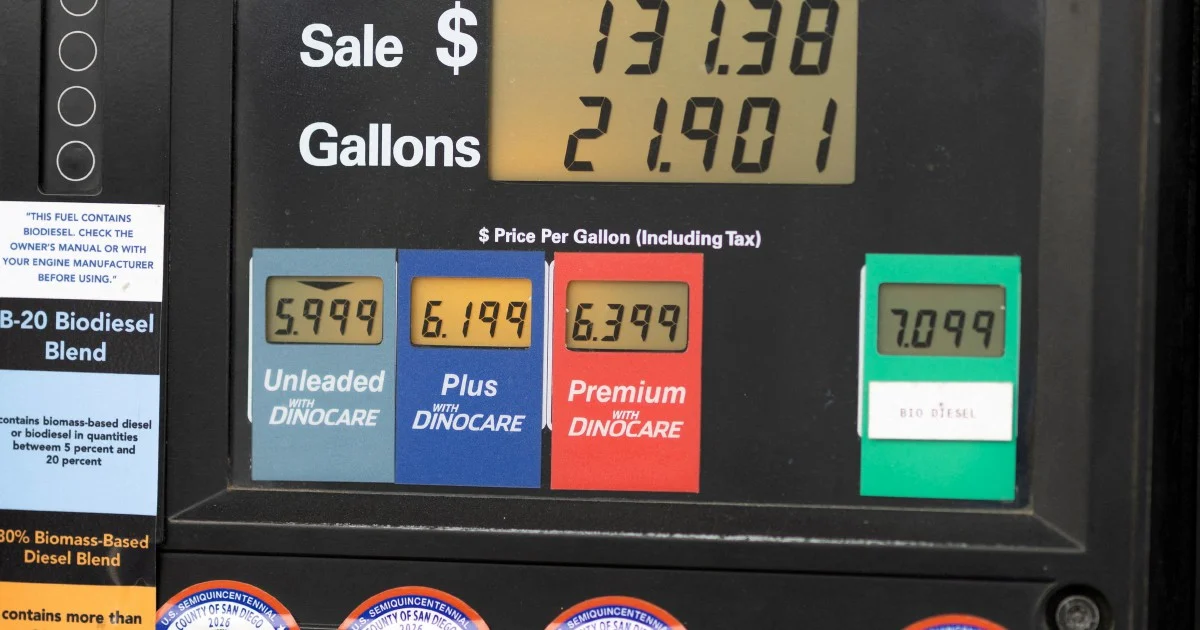
President Donald Trump has directed federal authorities to investigate major oil companies, citing disappointing gasoline price declines as the catalyst for the probe. Speaking on Wednesday, Trump emphasised that despite expectations of falling fuel costs, American consumers continue to face elevated pump prices, prompting the administration to examine whether corporations are acting in the national interest.
The investigation underscores growing frustration within the Trump administration over energy markets that have stubbornly resisted downward pressure on prices. While international crude oil benchmarks have fluctuated, the translation to consumer gasoline prices at the pump has lagged considerably, creating a disconnect between wholesale and retail markets that has drawn political attention. This gap between crude costs and what drivers actually pay has become a focal point of the administration's economic messaging.
Geopolitical tensions centring on the Middle East have complicated the energy price picture throughout the year. The ongoing conflict in the region has created uncertainty about future supply disruptions, keeping oil markets elevated even when immediate supply constraints do not justify current price levels. Traders have maintained a risk premium in their pricing, anticipating potential supply shocks that may never materialise, effectively anchoring prices at higher floors than fundamental market conditions alone would suggest.
For Malaysian and Southeast Asian observers, this development carries significant implications. The region's economies remain deeply integrated with global energy markets, and any disruption to American energy policy or the investigation's findings could reverberate through regional petroleum markets. Malaysia, as both an oil and gas producer and net energy exporter in certain products, maintains a vested interest in how the world's largest economy manages its energy sector dynamics and whether new regulatory pressures might reshape global oil trading patterns.
The investigation into oil company conduct reflects a broader political calculation within the Trump administration. Energy prices function as a visible measure of presidential economic stewardship in the eyes of American voters, and elevated gasoline costs can translate into political vulnerability. By initiating scrutiny of oil corporations, the administration signals responsiveness to consumer concerns while potentially laying groundwork for future regulatory or policy interventions if companies are found to be engaging in anti-competitive behaviour or market manipulation.
The oil industry faces complicated pressures on multiple fronts. Refineries worldwide have operated at constrained capacity in recent years, limiting their ability to convert crude into final fuel products. Supply chain disruptions from geopolitical conflicts, particularly affecting shipping routes and production facilities in volatile regions, have prevented the additional refinery capacity needed to ease bottlenecks. Environmental regulations have also made opening new refineries economically challenging, creating a structural constraint that prevents supply from responding efficiently to demand increases.
This investigation occurs within a broader context of energy market restructuring. The global transition toward renewable energy has created uncertainty about long-term petroleum demand, causing some companies to moderate capital investments in traditional refining and production capacity. When prices spike, the industry cannot quickly expand output or processing capacity as it historically might have done, instead facing a mismatch between constrained supply and demand that justifies higher price levels from a market perspective even if politically unpalatable.
Consumers across the Americas remain particularly sensitive to gasoline price movements given the region's vehicle-dependent infrastructure and cultural expectations of abundant, inexpensive fuel. Unlike many developing economies where public transport provides alternatives, Americans typically depend entirely on personal automobiles, making gasoline a direct household expense that influences overall cost-of-living calculations. This structural reality ensures that energy prices command significant political attention regardless of underlying market fundamentals.
The investigation's scope and findings remain to be determined, but precedent suggests the administration will examine whether major producers are withholding supply intentionally, whether refineries are operating below capacity without justification, or whether trading companies are engaging in speculative behaviour that artificially inflates prices. Historical investigations have occasionally yielded evidence of market coordination, though definitive proof of systematic price manipulation in decentralised global oil markets remains elusive.
Longer-term implications extend beyond immediate price concerns. If the investigation leads to regulatory changes or enforcement actions against major oil corporations, energy companies may respond by reducing investment in American refining and production, potentially exacerbating future supply constraints and price volatility. Alternatively, if investigations conclude that structural market factors rather than corporate malfeasance drive current prices, the administration faces the uncomfortable reality that presidential authority over energy costs remains limited regardless of political will.
For regional policymakers in Southeast Asia, the investigation and its outcomes merit close monitoring. Malaysian energy firms with international operations, regional refineries processing crude imports, and economies dependent on stable energy pricing all face potential ripple effects. Should Washington implement new restrictions on oil trading or impose windfall profit taxes on energy companies, global market dynamics and investment flows could shift in ways that reshape regional energy economics and competitiveness.

