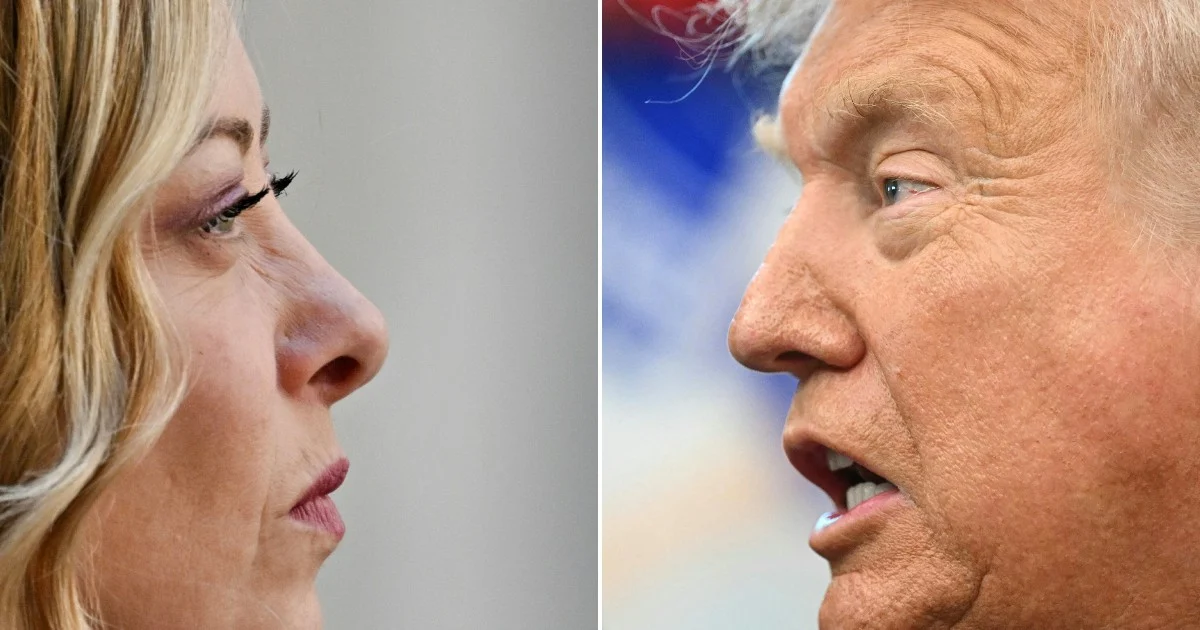
The brewing diplomatic tension between Washington and Rome took a sharper turn on Saturday when US President Donald Trump publicly accused Italian Prime Minister Giorgia Meloni of persistently attempting to secure photographs with him during G7 interactions. Trump's renewed criticism marks a notable escalation in what had begun as a lower-profile disagreement, transforming what might have appeared as a minor personal slight into a more substantive diplomatic concern with implications extending across NATO and Middle Eastern policy frameworks.
The photograph dispute, while seemingly superficial on its surface, reflects deeper fractures within the Western alliance that observers of international relations regard with concern. Trump's decision to air the grievance publicly rather than through private diplomatic channels suggests an unusually confrontational approach to alliance management, departing from traditional protocols that typically govern interactions among major Western democracies. The American president framed the situation as part of a pattern rather than an isolated incident, indicating frustration that he views as accumulating over time.
The connection Trump drew between personal interactions and substantive policy disagreements reveals the interconnected nature of modern diplomacy, where personal relationships between leaders increasingly influence broader geopolitical positions. By linking the photograph issue to disagreements concerning Iran policy and NATO commitments, Trump signalled that tensions extend well beyond protocol or etiquette into the realm of strategic alignment. This bundling of grievances reflects the transactional approach that has characterised his administration's foreign policy orientation.
Italy's position within European and Western structures makes this dispute particularly sensitive for regional stability. As a G7 member and NATO participant, Italy occupies a crucial role in European security architecture and serves as an important voice in shaping Western responses to Middle Eastern developments. Meloni's government, elected on a nationalist platform, has already navigated complex relationships with other European partners and Brussels institutions. A deterioration in relations with Washington adds another layer of diplomatic complexity that Rome must carefully manage while maintaining its domestic political identity.
The Iran question underlies much of the current tension, reflecting fundamental disagreements about how Western powers should approach Tehran's regional activities and nuclear programme. Trump's previous withdrawal from the Iran nuclear agreement and his administration's posture toward the Islamic Republic created stark divisions within the alliance. Italy, like other European nations, sought to preserve diplomatic channels and maintain the possibility of negotiation, positioning itself differently from the American approach. These divergent perspectives on Iran represent not merely tactical disagreements but reflect fundamentally different strategic philosophies about engagement versus confrontation in the Middle East.
NATO commitments and defence spending requirements have similarly created friction points between Washington and its European allies, including Italy. Trump has repeatedly emphasised that European partners must increase defence expenditures, viewing current spending levels as inadequate burden-sharing within the alliance. Italy's defence budget, while increasing in recent years, remains a point of contention in broader discussions about NATO members fulfilling their financial obligations. These financial disagreements, when combined with policy divergences on Iran, create multiple pressure points that a disagreement over personal interactions can suddenly amplify and weaponise.
For Malaysia and Southeast Asian observers, this transatlantic friction carries important implications regarding regional security and alliance stability. A weakened or fractious Western alliance affects the calculations of all nations attempting to maintain balanced relationships with major powers. Southeast Asia's strategic environment depends significantly on the coherence and predictability of Western positions, particularly regarding maritime security, freedom of navigation, and economic arrangements. When Western leaders engage in public disputes that call alliance cohesion into question, regional actors must reassess their own strategic positioning and hedging strategies.
The public nature of Trump's accusations against Meloni marks a departure from conventional diplomatic practice that typically reserves serious disagreements for private channels. This escalation through media and public statement suggests either a deliberate strategy to apply pressure on Rome regarding substantive issues, or a willingness to sacrifice diplomatic courtesy in pursuit of particular objectives. Either interpretation raises questions about the stability and predictability of American foreign policy under Trump's leadership, concerns that reverberate beyond Europe into Asia-Pacific and other regions where American security commitments matter substantially.
Meloni's response to these accusations will test her government's diplomatic skills while potentially forcing her to choose between defending her international standing and managing her relationship with the American president. Italy's historical role as a bridge between different European perspectives and its efforts to strengthen ties with both France and Germany mean that how this dispute unfolds carries implications for intra-European dynamics as well. The Italian government faces pressure to demonstrate that it can maintain European solidarity while preserving a functional working relationship with Washington.
The broader context of Western alliance management under Trump's renewed presidency encompasses not just bilateral relationships but the entire architecture of transatlantic cooperation. When disputes between leaders become personalised and aired publicly, they risk undermining the institutional frameworks and professional relationships that diplomats and officials rely upon to manage complex multilateral arrangements. This escalation thus threatens consequences extending far beyond the immediate photograph controversy, affecting how Western governments can coordinate responses to global challenges from climate change to technological competition with China.
From a Malaysian perspective, the more significant concern involves what this dispute reveals about American reliability as an alliance partner. Nations throughout Asia have long structured their security strategies around assumptions about American commitment and consistency. Public quarrels between Trump and European allies, carried out in inflammatory language, introduce new uncertainties into the calculations of Asian governments trying to maintain strategic balance in increasingly competitive regional environments. The very unpredictability that characterises Trump's approach to alliances creates challenges for smaller nations attempting to navigate between major power interests.
The resolution of this dispute, whether through private reconciliation or continued public sparring, will signal important information about the future trajectory of transatlantic relations and American foreign policy more broadly. Should Trump maintain his combative posture toward European allies, particularly G7 members, this could reshape fundamental assumptions about Western unity that have underpinned global order since the Cold War. For Southeast Asia and the broader Indo-Pacific region, such fundamental shifts in Western alliance dynamics carry strategic weight that extends well beyond the immediate parties involved.

