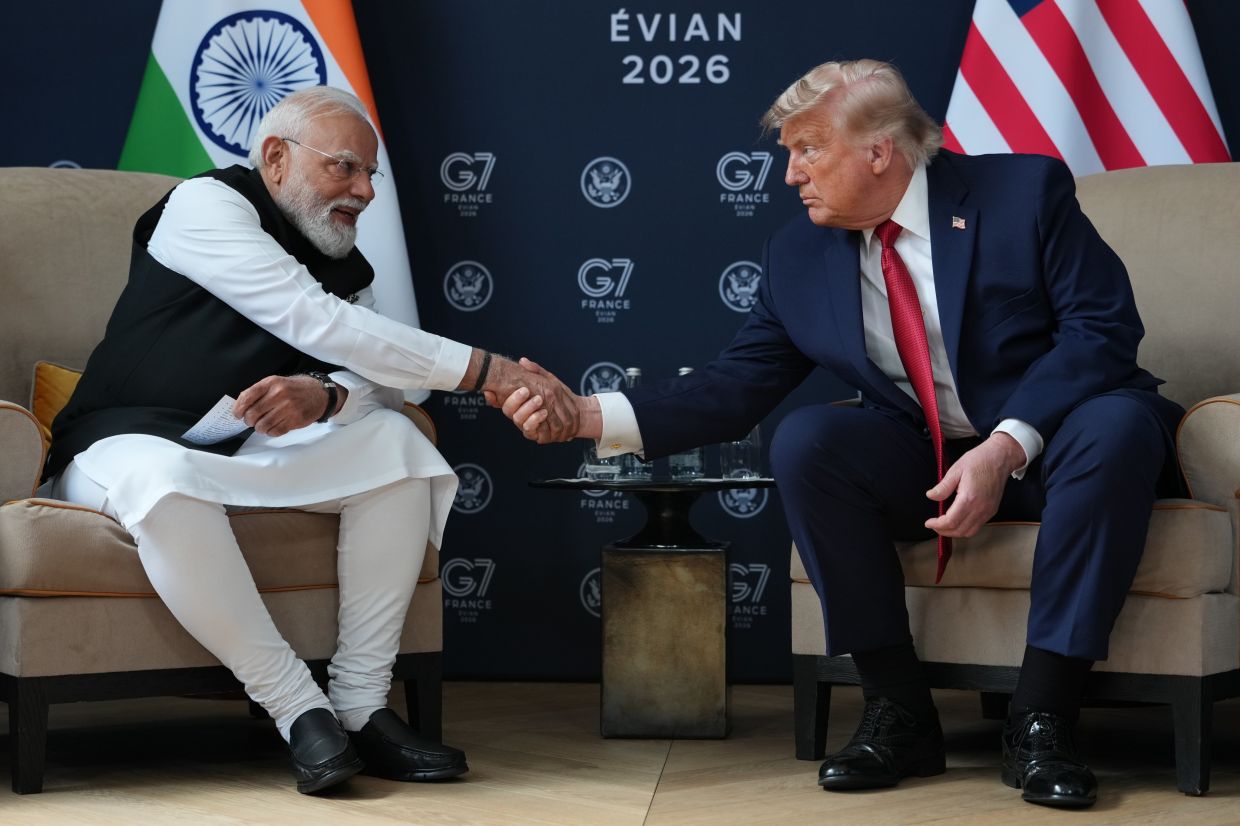
President Donald Trump made no apology for the deaths of three Indian nationals aboard a commercial vessel struck by American missiles, instead characterizing maritime casualties as an inevitable aspect of seafaring operations. Speaking alongside Prime Minister Narendra Modi following their first bilateral meeting in over a year, Trump acknowledged hearing about the incident but offered neither condolences nor expressions of regret, instead framing the matter as an ongoing challenge that both nations would "work together" to address.
The incident that prompted the tense exchange occurred when US forces fired missiles at the Palau-flagged MT Settebello in the Strait of Hormuz, killing the three Indian crew members. Washington justified the strikes as part of enforcing a blockade on Iranian ports, claiming the vessel was engaged in illicit transport of Iranian oil. Beyond this primary attack, American military forces also targeted two additional commercial ships carrying Indian personnel for similar alleged violations of the blockade.
India's External Affairs Minister S. Jaishankar conveyed strong objections during a call with his American counterpart, yet the State Department's account of the conversation revealed significant underlying tensions between the two capitals. Rather than acknowledging the concerns raised about the loss of Indian lives, Washington doubled down on its position, emphasizing that violations of the American blockade and unlawful transport of Iranian petroleum products would face strict enforcement and would "not be tolerated."
The American government's uncompromising stance sparked considerable public anger across India. Videos circulated showing auto-rickshaw drivers in Delhi removing posters bearing Trump's image, which had been distributed by the US embassy as part of a cultural outreach campaign featuring "Happy Birthday America" messaging. This grassroots reaction underscored the depth of frustration among ordinary Indians at what many perceived as Washington's disregard for Indian casualties.
Indian opposition politician Rahul Gandhi seized on the incident to criticize the Modi administration, characterizing the prime minister as "compromised" for his apparent restraint in responding to American pressure. Gandhi posted on social media that a truly independent nation would never accept such language from a foreign power, contrasting this with what he described as the government's obedient and compliant posture. The comment reflected broader concerns within Indian political circles about whether New Delhi was adequately defending national interests in its dealings with Washington.
Trump, meanwhile, stressed the strength of US-India ties, asserting that the two nations and their leaders could not grow "any closer." He referenced the absence of a formal treaty while paradoxically suggesting that America would intervene militarily to assist India if attacked. This rhetorical positioning appeared designed to emphasize strategic partnership while simultaneously avoiding direct responsibility for the seafarers' deaths. Trump praised Modi as a "tough trader" and pledged to visit India in future, maintaining a tone of camaraderie despite the underlying friction.
The bilateral meeting comes amid ongoing negotiations between Washington and New Delhi over a comprehensive trade agreement. These talks began during Trump's February 2025 visit to Washington, when Modi became among the first foreign leaders to enter formal trade negotiations with the new American administration. However, the initial display of warmth has been complicated by disagreements over terms, with discussions now focused on an interim arrangement while the broader accord remains under negotiation.
The Trump administration has maintained its hardline approach toward Iranian commerce despite pushback from trading partners and allies. Secretary of State Marco Rubio reinforced this position during a subsequent visit to India, while emphasizing that Washington regarded India as among its "most important strategic partners." This messaging attempted to balance the enforcement action with reassurance about the depth of the bilateral relationship, though the damage to India's trust had already accumulated.
For Malaysian and broader Southeast Asian observers, the incident illuminates complexities in managing relationships with Washington, particularly when American geopolitical priorities clash with the protection of citizens. India's muted official response to the deaths, despite domestic political pressure, demonstrates how countries navigate strategic partnerships with the United States even when facing grievances. The Strait of Hormuz blockade enforcement reflects broader American efforts to contain Iranian influence, a policy that directly affects regional maritime commerce and shipping safety across Southeast Asia.
The incident also underscores vulnerabilities faced by commercial shipping in contested waters, with Indian crews among those most affected by US enforcement operations. Malaysian shipping interests, already sensitive to regional security concerns, must contend with evolving maritime restrictions that could impact trade routes and crew safety. India's apparent willingness to absorb losses without fundamental rupture of ties with Washington may signal to other nations in the region that US strategic partnerships can withstand significant friction over such matters.
Longer-term implications for India centre on whether the trade negotiations can advance amid such tensions. American pressure on Iranian oil commerce conflicts with India's traditional reliance on Iranian petroleum imports, creating structural friction in the bilateral relationship. Trump's characterization of maritime deaths as routine reflects Washington's prioritization of containment objectives over the immediate human cost to allied nations, a calculus that regional governments must factor into their own strategic calculations.
The contrast between Trump's casual dismissal and Modi's restrained official response illustrates asymmetries in the bilateral relationship. India's desire to cultivate US engagement on security and economic matters appears to outweigh immediate political costs of appearing passive on national casualties. This dynamic may encourage Washington to expect compliance on sensitive issues from New Delhi, though Indian public opinion and opposition voices continue to express reservations about the terms of this partnership.

