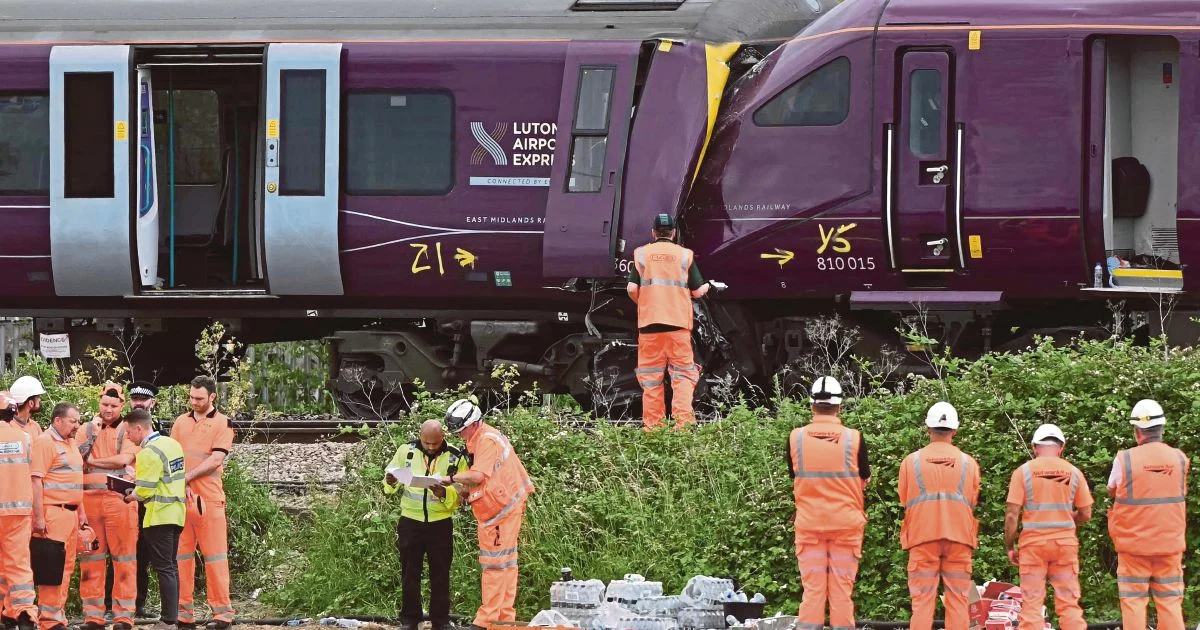
A fatal train collision that unfolded near Bedford, north of London, has triggered an immediate investigation by UK accident authorities as emergency services continue to manage the aftermath of the incident. The crash claimed the life of a train driver and left a significant number of passengers requiring hospital treatment, with several among them facing life-threatening injuries requiring intensive medical care.
The collision occurred on the railway line serving the Bedford area, a major transport corridor connecting the Midlands and southern England. Early response teams arrived at the scene swiftly, and emergency medical personnel worked to extract passengers from the damaged carriages and provide initial treatment. The scale of the incident—with 28 people requiring hospital admission—underscores the severity of the impact and the complexity of the emergency response operation that unfolded throughout the day.
Among the hospitalized passengers, nine were classified as being in critical condition, indicating that their injuries posed immediate threats to life and required emergency intervention and ongoing intensive monitoring. This distribution of injury severity is typical of major rail collisions, where the force of impact can cause catastrophic trauma to those in the impact zone while others in adjacent carriages may sustain less severe injuries. The presence of such a high proportion of critically injured patients has placed significant strain on regional hospital facilities.
The UK's Rail Accident Investigation Branch (RAIB), the statutory body responsible for investigating serious railway incidents, immediately commenced their formal inquiry into the collision. Their investigation process typically involves detailed examination of the physical evidence, including structural analysis of both trains, track conditions, and signal systems. Investigators will seek to determine whether human error, mechanical failure, maintenance shortcomings, or signalling malfunctions contributed to the collision occurring.
For Malaysian observers of UK rail safety, this incident serves as a reminder that rail transport, regardless of infrastructure sophistication, remains vulnerable to catastrophic accidents. Britain's rail network, despite its age and complexity, maintains some of the world's most rigorous safety protocols, yet major collisions continue to occur periodically. The Bedford area has historically experienced sporadic rail incidents, though the frequency of such collisions has declined significantly over recent decades due to improved signalling technology and operational procedures.
The immediate investigation will likely focus on several standard areas of inquiry. Train speeds at the moment of collision will be reconstructed using data recorders; the visibility conditions and weather at the time will be examined; the functionality of automatic train protection systems will be verified; and the maintenance records of both trains will be scrutinized for any evidence of mechanical defects that might have contributed to the incident.
For regional transport operators and safety authorities across Southeast Asia, where rail expansion continues at significant pace, such incidents highlight the enduring importance of maintaining rigorous safety culture despite technological advancement. Many nations in the region are modernizing their railway infrastructure, and the Bedford collision exemplifies how even established systems can experience tragic failures, underscoring the necessity of continuous vigilance and investment in safety systems.
The loss of a train driver represents a particular poignancy in such incidents, as these professionals bear responsibility for the safe operation of their trains and often represent the final layer of human oversight in transport systems. Driver fatalities in railway accidents, while statistically less common than passenger injuries, carry significant weight within transport operator organizations and often precipitate broader reviews of operational procedures and crew safety protocols.
As the investigation proceeds, the RAIB will produce detailed findings and recommendations aimed at preventing similar incidents. Such recommendations frequently influence operational changes across the UK rail network and often shape international best practices. For rail operators globally, including those operating in Malaysia and the broader ASEAN region, RAIB investigations frequently provide valuable insights into failure modes and preventive measures that inform policy development.
The incident also raises questions about emergency response coordination and hospital resource allocation during major transport disasters. The dispersal of 28 injured patients across regional healthcare facilities, particularly when nine require critical care, demands sophisticated communication between emergency services and medical providers. Lessons learned from such incidents inform disaster preparedness planning across both UK authorities and international transport safety bodies.
As recovery and investigation efforts continue, the focus remains on providing comprehensive medical care to the injured and determining precisely how this collision occurred. The findings will likely contribute to ongoing debates about rail safety investment, infrastructure maintenance scheduling, and the appropriate balance between automation and human oversight in modern railway operations—issues equally relevant to developing nations investing heavily in rail transport expansion.

