Transport Minister Anthony Loke has made it unambiguous that road safety and traffic compliance will be enforced without exception throughout the 16th Negeri Sembilan state election campaign. Speaking in Seremban on July 19, the DAP secretary-general underscored that these requirements are not discretionary—they form the baseline for conducting a responsible electoral exercise. His comments signal a clear intent to prevent the campaign period from becoming marred by preventable accidents or reckless behaviour that sometimes accompanies high-octane political activities in the state.
Loke's position reflects growing concern about campaign-related safety incidents in Malaysia's state and federal elections. By positioning safety enforcement as a collective responsibility rather than a partisan issue, he has appealed to all participating parties and their supporters to recognise that electoral success should never come at the expense of public safety or lawful conduct. The framing suggests that winning votes while violating traffic laws represents a moral and practical contradiction that undermines the legitimacy of the democratic process itself.
The minister revealed that he has issued personal directives to his own party's campaign machinery, instructing all members riding motorcycles to wear helmets at all times without exception. This appears designed to set a visible standard for other parties to follow. He cited his participation in a convoy from Pekan Titi to Kuala Klawang during nomination day as an example of where he established clear parameters in advance: any motorcyclist without a helmet would not be permitted to join the procession. The specificity of this example—naming routes and establishing tangible consequences—suggests a serious commitment to enforcement rather than mere rhetorical posturing.
Beyond helmet compliance, Loke specifically condemned the practice of supporters riding on the tailgates of moving four-wheel-drive vehicles, characterising such behaviour as reckless and fundamentally unsafe. This warning targets a particularly visible and often-photographed campaign tactic where supporters gather on vehicle exteriors to create impressive visual spectacles for media coverage. The Transport Minister's intervention suggests this practice has become common enough to warrant explicit prohibition, indicating that previous campaign cycles may have normalised what amounts to dangerous conduct.
Loke's broader appeal to all candidates and party leaders across the political spectrum carries weight precisely because he holds an office directly relevant to transport regulation and safety. Rather than framing the directive as a Pakatan Harapan initiative that opposition parties might resist, he positioned it as a universal expectation applicable to all actors in the electoral arena. This rhetorical approach acknowledges that safety compliance gains traction only when presented as a shared responsibility transcending partisan divides.
The Negeri Sembilan state assembly was dissolved on June 5, setting in motion the electoral calendar that culminates in polling day on August 1, with early voting scheduled for July 28. This timeline creates a compressed campaign period during which candidates and their supporters will be conducting intensive ground operations, organising convoys, and staging public events. The condensed schedule arguably increases the risk of accidents if safety protocols are not actively maintained, as the intensity of activity necessarily rises when fewer days remain for campaigning.
Election officials are preparing for participation from 889,490 registered voters across the state. This figure comprises 867,151 ordinary voters, 16,884 military personnel and their spouses, and 5,455 police officers who are designated as early voters. The substantial turnout expected means that major roads and residential areas will likely experience significant disruption from campaign convoys and political gatherings, making traffic discipline all the more essential to prevent gridlock, accidents, or confrontations between campaign teams using the same routes.
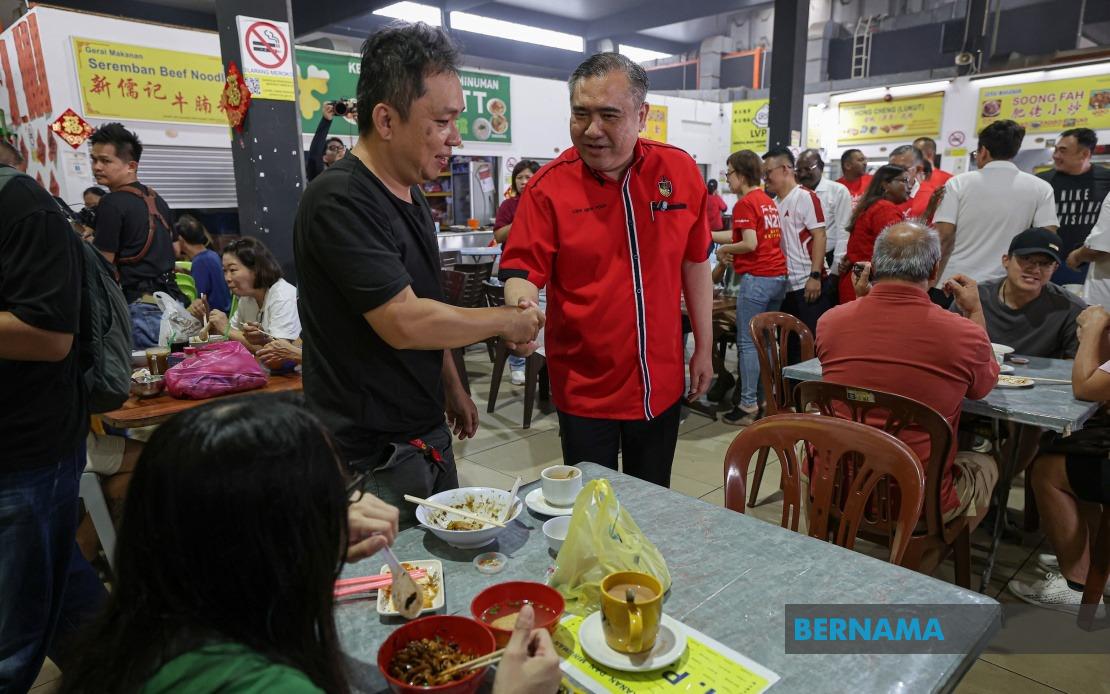
Loke's public walkabout with six Pakatan Harapan candidates in Seremban—visiting Ho Weng Wah in Temiang, Lee Kai Yet in Mambau, Siau Meow Kong in Rahang, Nicole Tan in Bukit Kepayang, S. Mugunthan in Seremban Jaya, and Chew Seh Yong in Lobak—provided the backdrop for reinforcing these safety messages directly at the grassroots level. By conveying the directive while on the campaign trail rather than merely issuing formal statements, Loke demonstrated that traffic compliance is not an afterthought or bureaucratic requirement but an integral component of how his party conducts electoral activity.
For Malaysian voters and observers monitoring the campaign, Loke's intervention represents a potential inflection point in how state elections are conducted. Historically, campaign season in Malaysia has been associated with a de facto suspension of normal traffic discipline, with political operatives operating under the assumption that enforcement agencies would look the other way during the electoral period. By explicitly rejecting this implicit understanding, Loke is attempting to shift the culture of campaign operations toward greater accountability.
The enforcement of such directives will ultimately depend on the willingness of local authorities to monitor and penalise violations, and on candidates themselves to exercise genuine oversight of their supporters' conduct. Police and traffic enforcement agencies will face pressure during the campaign to balance protecting candidates' freedom to campaign with ensuring public safety on roads. Loke's public statements create a record that could be cited to demand consistent enforcement rather than selective application of traffic laws depending on which party is involved.
For Southeast Asian readers observing Malaysian electoral practices, this episode illustrates broader tensions within democratic systems operating in developing contexts. The impulse to generate spectacular campaign moments—whether through large convoys, dramatic stunts, or mass mobilisations—often conflicts with safety and regulatory compliance. Loke's stance suggests that mature electoral competition need not sacrifice practicality or legal order to achieve political engagement, a message with relevance across the region where similar campaign culture patterns frequently emerge.

