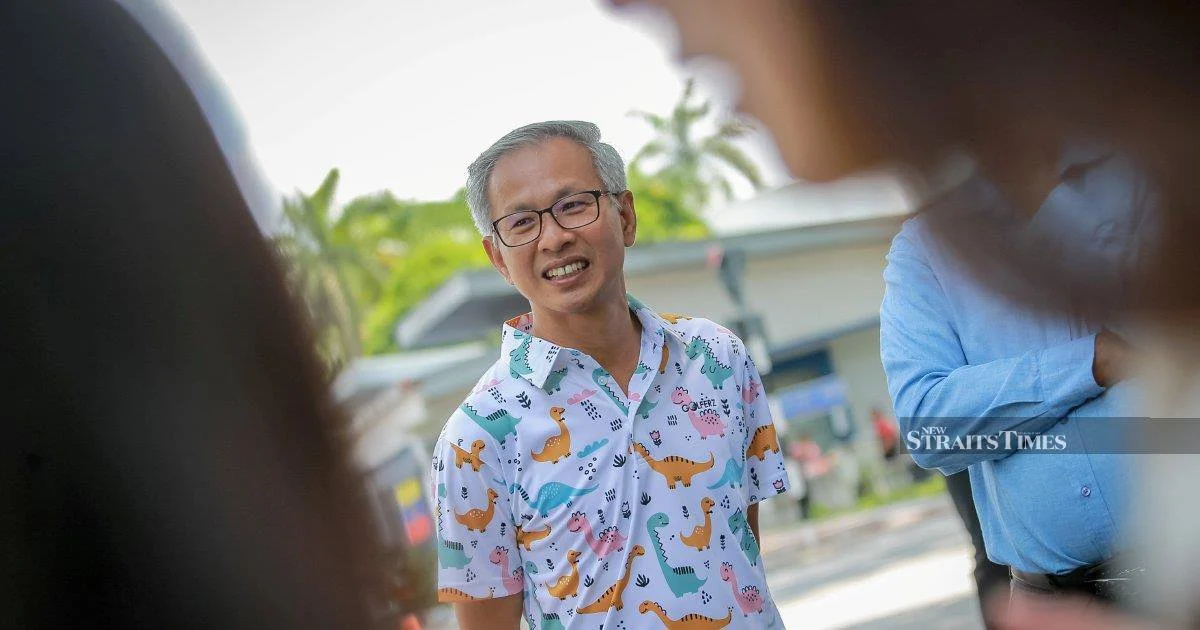
The investigative status of Tony Pua, who represented Damansara in parliament, has undergone a significant shift in the police inquiry surrounding his Facebook remarks about the Rukun Negara, moving from witness classification to suspect—a development that signals the investigation into the matter has progressed toward potential prosecutorial action. Pua has indicated his expectation that formal charges could materialise within the coming weeks, reflecting the acceleration of the legal process and suggesting authorities have gathered sufficient evidence to support such a course of action.
The transition from witness to suspect represents a meaningful escalation in police procedure and indicates investigators have completed their initial evidence-gathering phases. In Malaysia's criminal justice framework, this reclassification typically precedes formal charging decisions and reflects the police's assessment that a person has moved from providing information about an incident to being implicated in a potential violation of law. For Pua, a long-time political figure known for his vocal presence on social media and parliamentary commentary, the development underscores the intensifying scrutiny his public statements have attracted from law enforcement authorities.
The Rukun Negara, Malaysia's national ideology formulated in 1970, comprises five fundamental principles: belief in God, loyalty to the sovereign and nation, upholding the constitution, rule of law, and good behaviour and morality. Any discourse involving this foundational document carries particular political and legal weight given its constitutional significance and the sensitivity surrounding its interpretation. The specific nature of Pua's social media post that prompted the investigation has not been fully detailed in official statements, but the decision to elevate his status suggests authorities view his remarks as potentially crossing legal thresholds related to sedition, contempt of court, or other provisions governing public discourse about state institutions.
For Malaysian political discourse, the investigation highlights the delicate balance between constitutionally protected free speech and legal boundaries governing commentary on state symbols and foundational documents. Opposition figures and civil society observers have historically contested the application of such provisions, arguing they can be employed to restrict legitimate political criticism. The case involving Pua, a prominent opposition voice, may reignite broader conversations about the scope and application of laws restricting discourse about national symbols and constitutional matters, particularly as Malaysia navigates its democratic practices and the bounds of permissible political expression.
The timing of this investigative development carries implications for Malaysia's political landscape. Pua's presence in parliament during the recent 15th and 16th sessions contributed to substantive debates on economic policy, state finances, and governance issues. His potential prosecution would remove a vocal parliamentary critic from active participation in legislative proceedings, at least temporarily, and could influence the dynamics of opposition scrutiny on government policies. The investigation may also send broader messages to political figures and commentators about the limits of social media engagement on sensitive institutional matters.
From a regional perspective, Malaysia's approach to investigating and prosecuting cases involving national symbols and state ideology merits attention among Southeast Asian democracies grappling with similar questions about protecting national institutions while preserving space for political dissent. The case reflects ongoing tensions between constitutional values of free expression and legal frameworks designed to protect state symbols—tensions that animate political and legal debates across multiple democracies in the region and globally.
The prospect of charges being filed within weeks means the case will likely enter a more public phase, with court proceedings that could attract considerable media and public attention. Legal observers will monitor how prosecutors construct their case and which specific legal provisions are invoked, as these determinations will influence interpretations of how Malaysian courts adjudicate disputes involving national ideology and public speech. The outcome could establish important precedents affecting future investigations into similar matters.
For Pua personally, the investigation introduces significant legal complexity and uncertainty. Beyond the immediate question of charges and potential trial proceedings, a prosecution involving statements about the Rukun Negara could affect his political career trajectories, public standing, and the broader opposition coalition's messaging strategies. The case also potentially influences how other political figures calibrate their public commentary on sensitive state matters, potentially creating a chilling effect on political discourse if widely viewed as overly restrictive.
The investigation also raises questions about prosecutorial discretion and the criteria applied to determine when social media commentary warrants elevation from witness status to suspect classification. Malaysian civil society organisations have occasionally raised concerns about consistency in enforcement of speech-related offences, and this case may prompt renewed scrutiny of such questions. The forthcoming weeks will reveal whether authorities proceed with formal charges and, if so, which legal provisions form the foundation of the prosecution.
As the investigation advances toward its apparent conclusion, the case encapsulates broader themes in Malaysian governance: the relationship between state power and individual expression, the role of social media in contemporary politics, and the mechanisms through which national symbols receive legal protection. The specific outcome will matter not only for Pua's personal circumstances but also for how Malaysian courts and prosecutors interpret the legal boundaries surrounding political speech in the digital age.