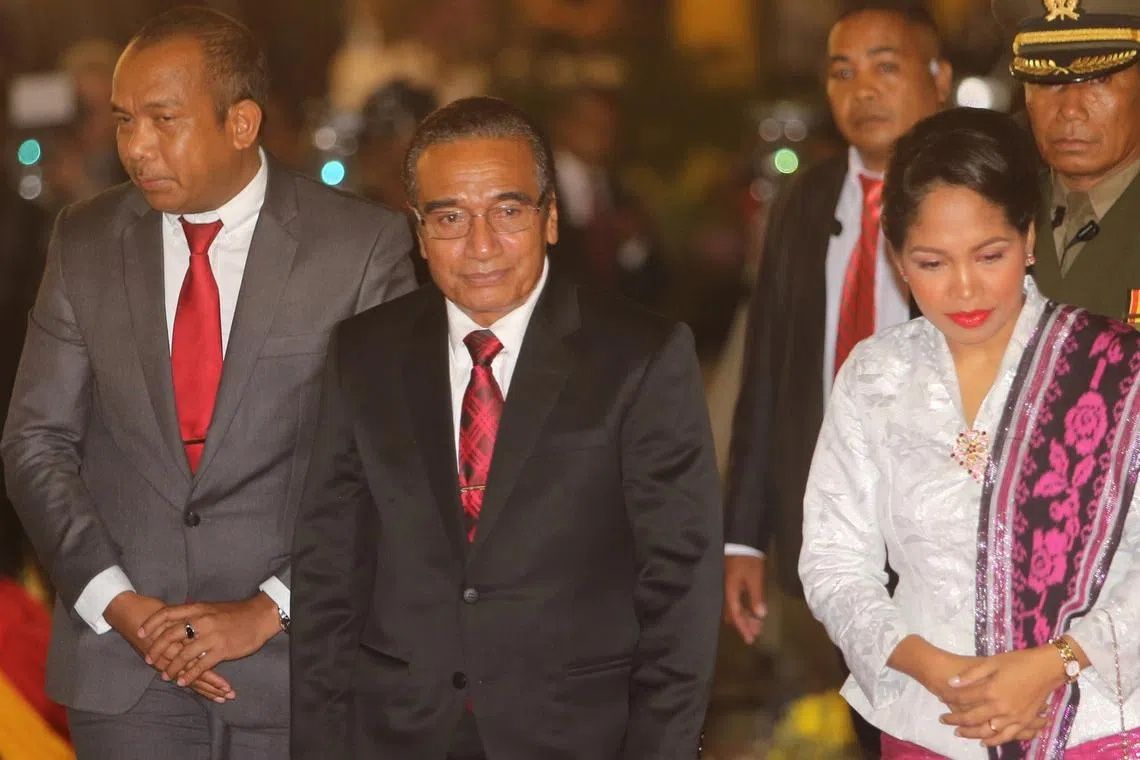
The government of Timor-Leste announced a seven-day period of national mourning on June 22 for former president Francisco "Lu-Olo" Guterres, the iconic freedom fighter who died at a Malaysian hospital over the weekend at the age of 71. The declaration underscores the profound place Guterres occupies in the collective consciousness of Southeast Asia's youngest nation, a figure whose life trajectory mirrors the turbulent path to independence achieved in 2002.
As a mark of respect, authorities have instructed that flags be lowered to half-mast across government facilities, diplomatic missions, and consular offices throughout the nation. The symbolic gesture reflects not merely the loss of a former head of state but the passing of someone whose influence permeated multiple decades of the nation's political development. Guterres's brother, Domingos, informed media representatives that the former leader's remains would be returned to Dili, the capital, on Tuesday, with funeral ceremonies still being organised by the bereaved family.
Guterres's five-year tenure as president, which ran from 2017 to 2022, represented the culmination of a lifetime devoted to Timorese self-determination. Rising through the ranks during the brutal 24-year Indonesian occupation, he became synonymous with armed resistance and political determination. His election to the presidency with more than 57 per cent of the popular vote in 2017 vindicated decades of sacrificial struggle and elevated him to the nation's highest elected office, a distinction achieved as the country's sixth president.
The current president, Jose Ramos-Horta, who secured victory against Guterres in the closely contested 2022 presidential runoff, issued a statement characterising his predecessor as a national treasure whose departure inflicts a profound wound upon the state. Ramos-Horta, himself a Nobel Peace Prize recipient, acknowledged the historical significance of Guterres's contributions to nation-building and the independence movement that fundamentally transformed Timorese society. The gracious tribute from his electoral adversary demonstrates the complex relationship between rivals united by shared commitment to their homeland's sovereignty.
Guterres's political prominence extended beyond the presidency through his long association with the Revolutionary Front for an Independent East Timor, commonly known as Fretilin, the party he previously stewarded. Fretilin itself traces its origins to the anti-colonial resistance and remains one of the nation's most influential political organisations. The party and the broader Timorese community have joined the government in mourning, acknowledging the loss of a transformative figure whose decisions shaped institutional development across decades.
The family's request for privacy amid their grief reflects a measured response to the considerable public interest in Guterres's passing. Supporters gathered to express tributes to the departed leader, with formal acknowledgements of his legacy, his service record, and his steadfast commitment to advancing Timorese interests taking precedence over intrusive scrutiny. The family's statement, which expressed gratitude for prayers and remembrance, also honoured Guterres's institutional contributions and his unwavering dedication to the people he served throughout his extraordinary political career.
Guterres's journey from humble circumstances to leading a nation liberated from colonial rule exemplifies the transformative power of determination and principled struggle. His rise within the independence movement reflected qualities valued across Southeast Asia—resilience in the face of occupation, strategic acumen during protracted conflict, and commitment to nation-building during fragile post-independence phases. Younger generations of Timorese and observers throughout the region regard his life as emblematic of the sacrifices required to achieve national sovereignty against authoritarian rule.
Malaysia's Prime Minister Datuk Seri Anwar Ibrahim acknowledged the historical moment with a statement expressing sorrow at Guterres's passing and extending official condolences to his family and the Timorese people. The Malaysian premier emphasised that Guterres's memory would endure in Malaysia with respect and affection, particularly given that he died within Malaysian territory—a poignant detail that highlights regional interconnectedness and medical cooperation among Southeast Asian nations during times of individual and collective crisis.
Guterres's unsuccessful bid for reelection in 2022 represented a significant political transition for Timor-Leste, with voters opting instead for Ramos-Horta's vision. However, the manner in which Guterres accepted electoral defeat and the grace demonstrated by both figures toward each other illustrates the stability of democratic institutions in the young nation. His death occurs during a period of continued democratic consolidation in Timor-Leste, where peaceful transfers of power and respect for electoral outcomes have become normalised, distinguishing the nation within the broader Southeast Asian context.
The week of national mourning provides occasion for reflection on Timor-Leste's trajectory since regaining independence two decades ago. Guterres's role in that foundational struggle and subsequent political development ensures his legacy will be examined across multiple generations. His passing closes a chapter in the nation's contemporary history, removing from the political stage a figure whose presence connected citizens to the sacrifices of the liberation era and the aspirations that accompanied the establishment of an independent state in Southeast Asia.

