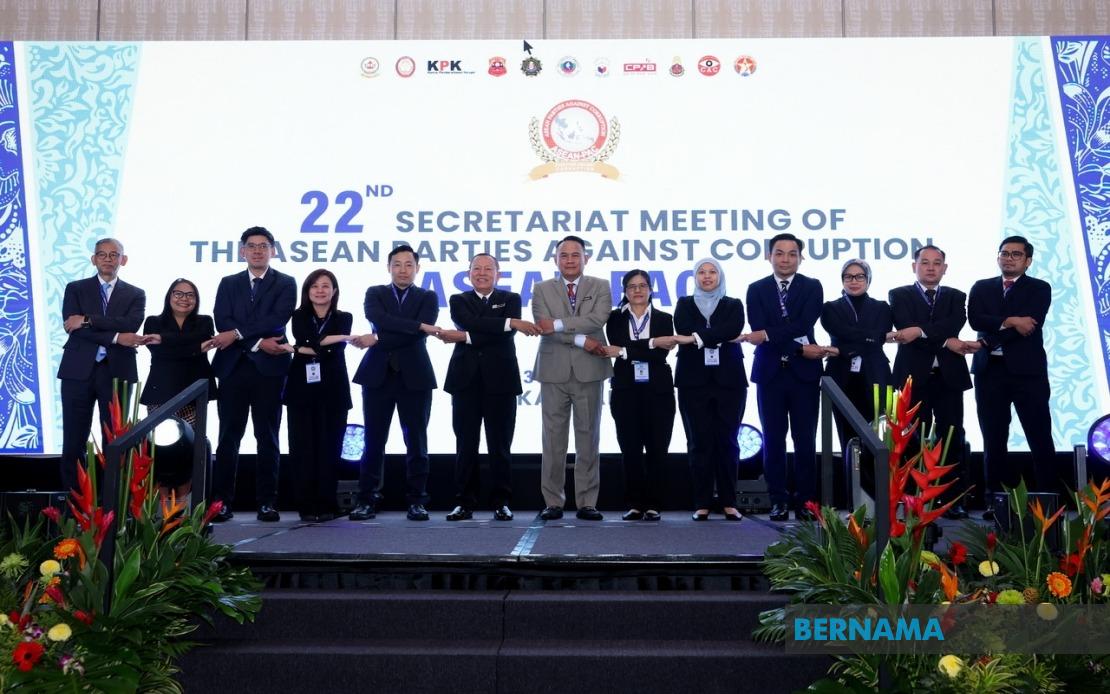
Timor-Leste's accession to the ASEAN Parties Against Corruption (ASEAN-PAC) marks a watershed moment for Southeast Asia's collective anti-corruption architecture, with Malaysian Anti-Corruption Commission chief commissioner Datuk Seri Abd Halim Aman signalling that the newest member will substantially amplify the bloc's enforcement capabilities. Speaking at the 22nd ASEAN-PAC Secretariat Meeting in Melaka, Abd Halim underscored how Timor-Leste's participation would deepen collaborative mechanisms that have been painstakingly built across the region over decades, positioning the organisation to tackle increasingly sophisticated corruption schemes that transcend national borders.
The admission of Timor-Leste arrives at a critical juncture for ASEAN, as transnational corruption networks have become more resilient and complex. Timor-Leste, despite its relative youth as an independent nation, has made measurable strides in establishing institutional safeguards and regulatory frameworks, making it a valuable addition to a coalition already comprising ten nations. The southeastern Asian nation brings unique experiences from its post-conflict reconstruction and transitional governance journey, offering insights that could enrich the collective understanding of corruption prevention mechanisms tailored to developing economies.
Abd Halim outlined that Malaysia, as the current custodian of the secretariat, would shepherd Timor-Leste through a comprehensive orientation programme. This involves exposing the new member to established initiatives that have evolved through years of collective effort, as well as forthcoming projects designed to address emerging corruption vulnerabilities. The transition process reflects ASEAN-PAC's institutional maturity, whereby established members actively mentor newcomers rather than relegating them to peripheral roles. Such mentorship extends beyond formal training, encompassing access to best-practice databases, technical expertise, and inter-agency intelligence sharing protocols that have proven effective across diverse jurisdictions.
The Malaysian-hosted meeting convened representatives from anti-corruption agencies throughout the bloc, creating a forum for candid dialogue on emerging threats and evolving countermeasures. Beyond ASEAN's own contingent, the gathering attracted participation from formidable international partners, including the International Association of Anti-Corruption Authorities (IAACA), the United Nations Office on Drugs and Crime (UNODC), and the Asian Development Bank (ADB). This multistakeholder architecture reflects recognition that corruption cannot be addressed through unilateral action, requiring instead coordinated intelligence, capacity-building support, and aligned investigative methodologies across jurisdictional lines.
The rotational hosting of ASEAN-PAC meetings underscores the organisation's commitment to distributing both responsibility and ownership among member states. Malaysia's stewardship this year, following its hosting of the annual heads-of-agency meeting in the prior year, demonstrates the country's sustained dedication to the anti-corruption mandate. The baton will subsequently pass to Myanmar, which is positioned to convene the next assembly in October. This rotating leadership model ensures that no single nation dominates the agenda while allowing each member to imprint its priorities and institutional innovations onto the collective framework.
Abd Halim stressed that ASEAN-PAC member states have demonstrated unwavering commitment to the organisation's mission, with engagement extending well beyond the confines of annual conferences. Video conferences, written correspondence, and continuous digital communication platforms have become the sinews binding the coalition together, enabling rapid response to urgent developments and maintaining momentum on long-term initiatives. This asynchronous collaboration model has proven invaluable, particularly when urgent intelligence or coordinated enforcement actions demand immediate attention across multiple jurisdictions.
The strengthening of regional cooperation holds particular significance for Malaysia and other ASEAN members grappling with sophisticated money-laundering operations, transnational bribery schemes, and asset-misappropriation networks that often exploit the region's financial corridors. Timor-Leste's integration into ASEAN-PAC will facilitate intelligence sharing regarding suspicious transactions flowing through regional banking systems, potentially disrupting illicit financial flows before they crystallise into entrenched wealth. The expanded membership also amplifies ASEAN-PAC's legitimacy on the global stage, demonstrating to international anti-corruption bodies that Southeast Asia is comprehensively mobilised around governance standards.
The calibre of international participation in the Melaka conference signals robust external validation of ASEAN-PAC's strategic importance. UNODC, in particular, brings decades of experience combating corruption across the Asia-Pacific region and maintains sophisticated analytical capabilities for tracking transnational corruption networks. ADB's involvement underscores the economic dimensions of anti-corruption work, as institutional graft substantially impairs development outcomes and undermines investor confidence. IAACA's participation provides comparative perspectives from anti-corruption agencies globally, enabling ASEAN members to benchmark their methodologies against international gold standards.
Abd Halim's affirmation that member states have provided exceptional support for ASEAN-PAC's institutional development reflects the organisation's maturation from a nascent initiative into a consequential regional governance body. This trajectory is noteworthy given ASEAN's historical reliance on consensus-based decision-making, which often constrains coordinated action on sensitive matters like corruption. ASEAN-PAC has managed to operate within this diplomatic environment while building substantive enforcement relationships, a feat that speaks to the universal recognition that corruption undermines all ASEAN aspirations for prosperity and stability.
Looking forward, Timor-Leste's membership invites questions about the broader expansion logic underpinning ASEAN-PAC. The organisation currently encompasses all ten ASEAN member states, suggesting that future growth would require either establishing associate memberships for extra-regional nations or creating hierarchical participation categories. As corruption increasingly assumes transnational and cross-regional dimensions, the potential for ASEAN-PAC to forge deeper partnerships with East Asian and South Asian anti-corruption bodies could substantially amplify its deterrent effect and investigative reach.
The Malaysian hosting of this year's secretariat meeting thus represents more than ceremonial significance. It crystallises a moment of institutional evolution wherein ASEAN's anti-corruption machinery is simultaneously expanding its membership, deepening its operational integration, and cementing its position within the global governance architecture. For Malaysia specifically, the role carries domestic implications, as successful regional cooperation can strengthen the MACC's international standing and provide comparative advantages in pursuing complex cases with cross-border dimensions. The next months will reveal whether Timor-Leste rapidly operationalises its ASEAN-PAC membership or requires extended capacity-building support, a metric that will illuminate the organisation's agility in absorbing new participants.

