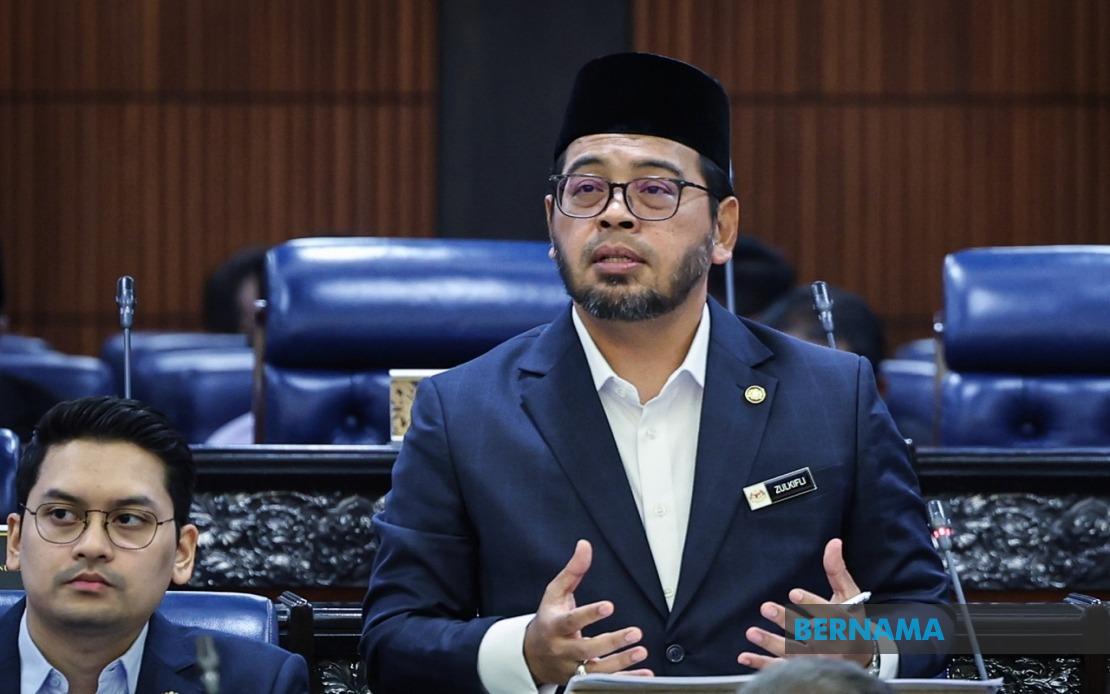
The financial crisis engulfing Lembaga Tabung Haji (TH) represents a preventable institutional failure, according to Minister in the Prime Minister's Department (Religious Affairs) Dr. Zulkifli Hasan, who pointed to the Islamic pilgrimage fund's persistent refusal to act on clear warning signals from Bank Negara Malaysia dating back nearly a decade. Speaking during parliamentary debate on a Royal Commission of Inquiry report into TH's collapse, Zulkifli underscored how five separate warning letters issued by the central bank to TH's leadership between August 2014 and September 2016 addressed critical vulnerabilities in the fund's financial position, reserve adequacy, and cash management practices—failings that ultimately necessitated a government bailout.
The deterioration of TH's financial standing occurred gradually but relentlessly despite BNM's escalating interventions. Rather than implement corrective measures in response to the central bank's concerns, TH's management allowed the institution's asset-liability gap to balloon to approximately RM10 billion by the conclusion of 2018, at which juncture government rescue became unavoidable to forestall a systemic financial emergency. This trajectory suggests institutional dysfunction extending well beyond simple administrative oversight, pointing instead to a pattern where senior management either disregarded or failed to comprehend the gravity of issues flagged by financial regulators.
A particularly damaging finding emerged through the RCI's examination of TH's audit practices. The inquiry determined that the pilgrimage fund should not have received clean audit certificates in the years preceding its collapse; instead, material concerns flagged within audit reports as "Emphasis of Matter" sections should have been formally classified as non-compliance findings triggering qualified audit opinions. This technical distinction carries profound implications, as qualified audits serve as early-warning mechanisms for stakeholders and regulators, whereas unqualified certifications convey financial soundness. The apparent divergence between TH's official audit status and its underlying financial deterioration suggests either inadequate audit rigor or management's successful suppression of audit concerns.
Zulkifli's parliamentary remarks highlighted BNM's frustration in real-time with TH's response mechanisms. Although the central bank received assurances that management would address identified issues, subsequent investigation proved these commitments hollow. The fund continued paying dividends despite operating with liabilities exceeding assets—a violation of Section 22 of the Tabung Haji Act—and distributed hibah (religious grants) determined without reference to actual financial capacity through 2017. These practices represented not merely accounting irregularities but fundamental breaches of fiduciary responsibility toward the millions of Malaysian Muslim workers whose savings resided within TH's custody.
The case illustrates systemic governance weaknesses within Malaysia's Islamic financial institutions. TH's muamalat (transaction) framework theoretically emphasizes transparency and prudential asset management aligned with Shariah principles, yet the institution's actual operations diverged markedly from these ideals. The fund's willingness to distribute returns exceeding genuine earnings, coupled with its apparent indifference to BNM's technical expertise and regulatory authority, suggests institutional cultures sometimes prioritize short-term stakeholder satisfaction over long-term solvency and regulatory compliance. For Malaysian Muslims viewing TH deposits as both savings vehicles and religious obligations, the breach of this trust relationship extends beyond financial to emotional and spiritual dimensions.
The government's intervention trajectory also warrants examination. Officials characterize the bailout as preventing financial catastrophe, yet the necessity of such rescue raises questions about regulatory oversight timing and escalation procedures. BNM possessed statutory authority and technical capacity to mandate corrective action—including management replacement, dividend restrictions, or enhanced supervisory intervention—yet the central bank's warnings apparently lacked enforcement mechanisms compelling immediate institutional response. The apparent gap between BNM's identified problems and consequent regulatory enforcement suggests potential limitations in the central bank's administrative tools when addressing non-bank financial institutions.
Government officials have now initiated multiple remedial initiatives. Parliamentary discussion confirmed that forensic auditing investigations into TH's investment portfolio have commenced, examining specific holdings identified in the RCI report as vulnerable to loss. More ambitiously, the government welcomed the RCI's recommendation to establish a Multi Agency Task Force specifically charged with investigating at-risk investments and tracing asset recovery opportunities. These investigations carry potentially significant implications for identifying responsible parties and recovering funds where malfeasance occurred. Additionally, amendments to the Tabung Haji Act 1995 are proceeding to strengthen governance frameworks and prevent recurrence of observed weaknesses.
The parliamentary proceedings themselves consumed substantial legislative resources, with 39 Members of Parliament participating in debate spanning more than ten hours. This extended engagement reflects the political salience of TH's collapse among Malaysian lawmakers, who recognize the fund's singular importance to Muslim workers dependent upon pilgrimage savings. The special parliamentary session represented not merely procedural review of audit findings but an explicit political reckoning with institutional failure affecting millions of constituents. Speaker Tan Sri Johari Abdul announced that a third parliamentary session addressing TH matters is scheduled for October, signaling that legislative scrutiny of the institution's rehabilitation will continue.
The broader implications for Malaysian financial regulation extend beyond TH's specific circumstances. The case demonstrates that formal regulatory warnings, however technically sound, require corresponding enforcement mechanisms to generate institutional compliance. BNM's experience suggests that regulatory authority over non-bank financial institutions operating under separate legislative frameworks may encounter compliance constraints absent in conventional banking oversight. Future reforms addressing Malaysian Islamic finance governance will likely examine whether BNM requires expanded intervention powers over entities like TH, or whether institutional change should occur through amendments to governing statutes that clarify regulatory authority relationships.
For Malaysia's pilgrimage fund depositors, institutional reforms now underway aim to restore confidence in TH's financial integrity and management practices. The comprehensive approach combining forensic investigation, legal amendments, governance enhancement, and multi-agency coordination represents acknowledgment that preventing future institutional failure requires simultaneous attention to accountability, prevention, and structural reform. Whether these measures prove sufficient to rehabilitate public confidence in TH—and whether similar vulnerabilities exist within other Islamic financial institutions—will shape Malaysian Islamic finance regulation's evolution across coming years.

