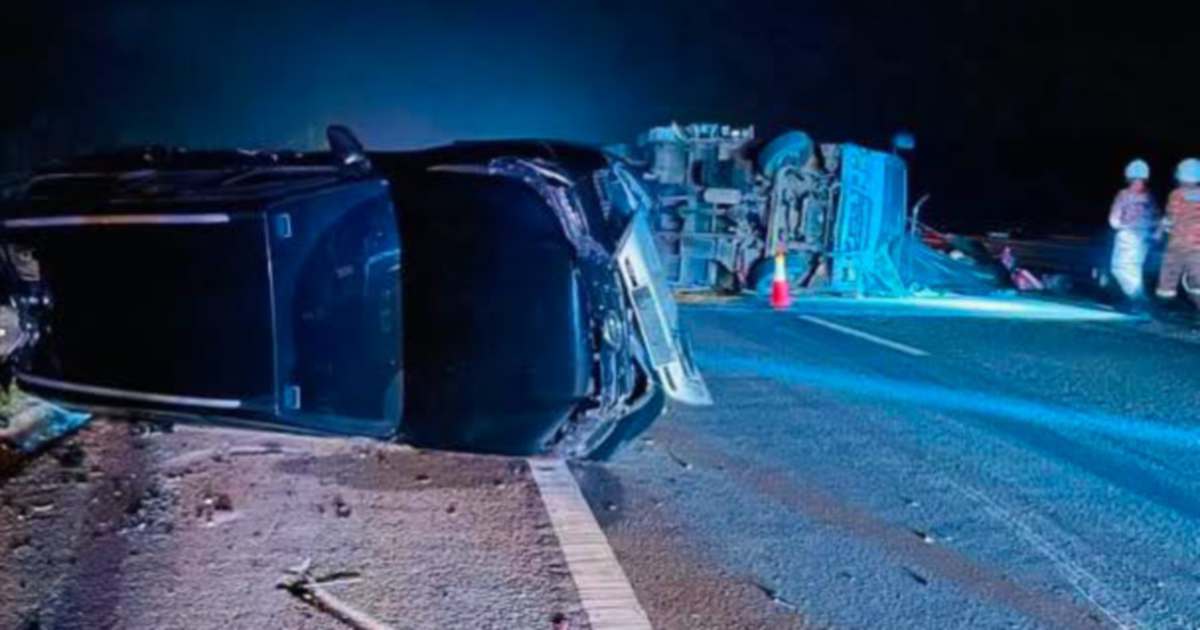
A multi-vehicle accident on the East Coast Expressway near Maran has left seven people injured, including three media officers assigned to Deputy Prime Minister Datuk Seri Dr Ahmad Zahid Hamidi. The collision, which involved three vehicles at the 144-kilometre mark of the expressway, occurred in the early hours of the morning and prompted a swift emergency response to the scene.
The involvement of media personnel working directly with the nation's second-highest office has drawn attention to safety concerns along the East Coast Expressway, a critical arterial route that connects key population centres across the peninsula. The expressway sees significant traffic volume, particularly during early morning hours when long-distance travellers attempt to cover ground before peak congestion sets in. The incident adds to a growing list of accidents on major highways that have involved public figures and their entourages.
All seven individuals injured in the crash were conveyed to medical facilities for treatment and observation. The media officers were among those requiring medical attention, though their injuries were reported to be non-critical. This distinction is noteworthy given that accidents involving high-profile officials often generate intensive scrutiny regarding vehicle safety protocols and adherence to best practices during official travel.
The circumstances surrounding the collision remain under investigation by relevant authorities, who typically conduct thorough examinations of such incidents involving multiple vehicles. Early-morning travel on expressways presents particular hazards due to factors including reduced visibility, driver fatigue accumulated from overnight journeys, and variable road conditions that may develop overnight. The combination of these elements frequently creates accident clusters during the hours just before dawn.
Response time by emergency services proved adequate in ensuring that injured persons received prompt medical assistance. The efficiency of such interventions has long been a priority for highway management authorities, given that minutes can be critical in determining outcomes for traffic accident victims. However, the incident underscores the ongoing challenge of maintaining emergency readiness across the extensive network of major expressways that crisscross Malaysia.
For media personnel working in official capacities, travel hazards form an occupational reality that receives limited public discussion. These professionals frequently accompany high-ranking officials on duties that require extensive road travel, often under compressed timelines and variable road conditions. The accident involving Zahid's media team highlights the exposure faced by support staff who enable official communications and media engagement.
The East Coast Expressway, which forms a crucial transport corridor linking the east coast states with the central regions of Peninsular Malaysia, has historically experienced variable safety records across different sections. The 144-kilometre mark near Maran falls within a region traversed by significant volumes of commercial and personal vehicles daily. Understanding accident patterns in specific corridor sections assists authorities in implementing targeted safety improvements and enforcement initiatives.
Investigations into such accidents typically examine factors including vehicle mechanical conditions, driver behaviour, road surface conditions, and visibility circumstances at the time of impact. The involvement of three vehicles suggests a potential chain-reaction scenario, a common occurrence when initial contact between two vehicles creates conditions leading to subsequent collisions. Such patterns inform safety recommendations and engineering assessments for highway sections experiencing repeated incidents.
The broader context of this accident aligns with Malaysia's ongoing efforts to reduce fatality rates and serious injury outcomes on major expressways. Despite infrastructure improvements and enforcement campaigns, road safety remains a persistent public health challenge. Each incident involving multiple vehicles and multiple casualties represents a statistical data point in nationwide highway safety analysis, informing policy discussions regarding speed limits, vehicle standards, and emergency response protocols.
For the Deputy Prime Minister's office and its communications team, the incident likely prompted immediate review of travel protocols and vehicle maintenance schedules. Government vehicles used for official duties operate under specific safety standards, and any accident involving such vehicles typically generates internal assessments of adherence to established protocols. These reviews, while internally focused, contribute to incremental improvements in safety culture within government transport operations.
The recovery of the injured individuals will be monitored over coming days and weeks. While initial reports indicated non-critical injuries for the media officers involved, comprehensive medical assessment may reveal secondary injuries that become apparent after initial treatment. Such cases often require follow-up care and rehabilitation, particularly when individuals resume demanding professional schedules shortly after accidents.
Looking forward, this incident adds another chapter to the ongoing dialogue regarding highway safety management, emergency response effectiveness, and protective measures for official personnel engaged in regular high-distance travel. As Malaysia continues developing its transportation infrastructure and refining safety protocols, such events provide valuable empirical data informing evidence-based policy adjustments. The focus remains on preventing such occurrences entirely through comprehensive, multi-faceted approaches addressing infrastructure, driver behaviour, and emergency preparedness simultaneously.

