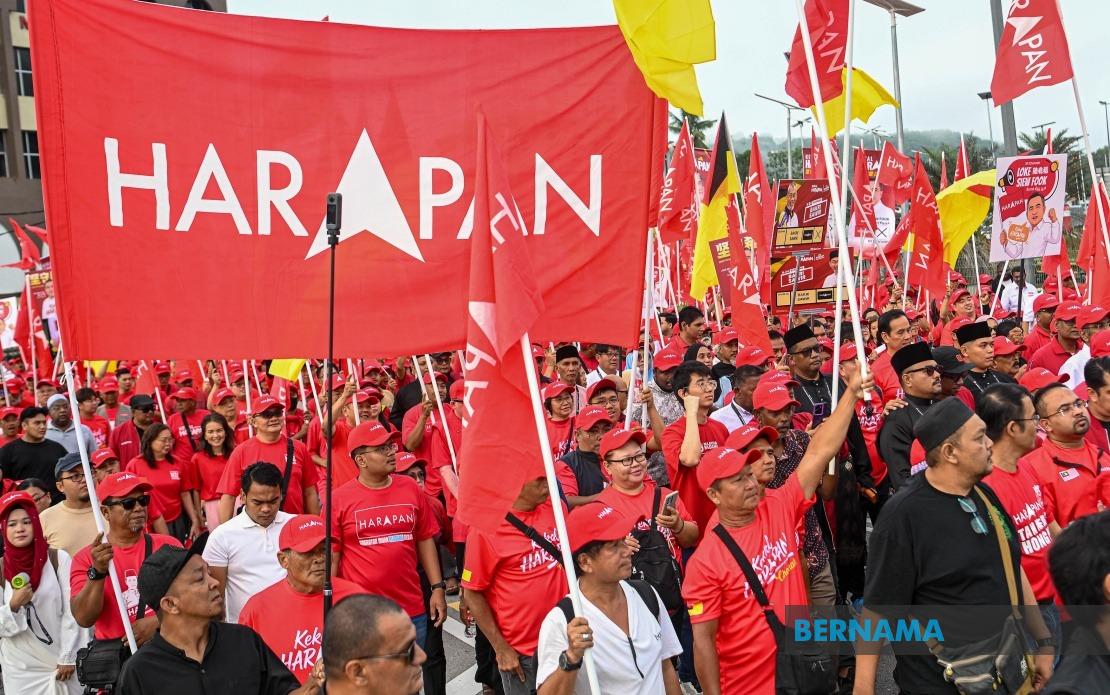
The 16th Negeri Sembilan State Election is shaping up as a closely contested affair, with three significant constituencies set to host three-way battles between Malaysia's major political coalitions. Following the conclusion of nominations in Jelebu on July 18, the returning officer announced that Pertang, Klawang and Sungai Lui will all see candidates from Barisan Nasional, Pakatan Harapan and Bersatu competing for voter support, setting the stage for a fractured contest across these seats.
The Pertang constituency presents a classic incumbent defence scenario. Datuk Seri Jalaluddin Alias, the sitting Barisan Nasional representative, secured a decisive 2,844-vote majority at the previous election with 5,634 votes, defeating Perikatan Nasional's Amirudin Hasan. His position appears solid given the scale of his previous victory, yet he now faces a divided opposition that could either undermine or strengthen incumbent advantages depending on how opposition voters distribute their ballots. Pakatan Harapan's Mohd Umry Abdul Khois and Bersatu's Mohd Faizal Fadli Mohd Idrus will seek to capitalise on any ground-level dissatisfaction with Jalaluddin's tenure.
Sungai Lui has captured particular attention as the seat features an unusual personal dimension—three former schoolmates entering electoral battle. Datuk Mohd Razi Mohd Ali contests for Barisan Nasional, while Zainal Fikri Abd Kadir represents Pakatan Harapan and Mazrulhisham Abd Mansor flies the Bersatu flag. Such personal histories within constituencies often reveal deeper community dynamics and can influence voting patterns in subtle yet meaningful ways. The personal familiarity between contenders may either elevate civic discourse or introduce complications rooted in long-standing community relationships.
Klawang's electoral narrative centres on a change-of-guard scenario within the opposition bloc. Incumbent Datuk Bakri Sawir of Pakatan Harapan seeks re-election whilst facing competition from Muhammad Adib Musa of Bersatu and Danni Rais representing Perikatan Nasional. Bakri's position reflects Pakatan Harapan's broader challenge in Negeri Sembilan—maintaining relevance whilst managing internal coalition dynamics and external opposition from both right and left.
The three-way configuration across these constituencies reflects Malaysia's contemporary electoral landscape, where the traditional two-coalition framework has fragmented. Bersatu's presence in all three contests signals its ambition to establish itself as a meaningful force in state-level politics, particularly in Peninsular Malaysia where it has struggled to build grassroots infrastructure. Similarly, Perikatan Nasional's appearance in Klawang and historical presence in Pertang suggests these constituencies remain competitive ground where multiple parties believe they can mobilise support.
For Malaysian voters following Negeri Sembilan politics, three-way contests introduce additional complexity. Vote splitting becomes a critical consideration, particularly in constituencies where one party holds significant but not overwhelming strength. The 2,844-vote margin that secured Pertang for Jalaluddin previously would become highly vulnerable should opposition votes coalesce, yet the presence of two opposition candidates ensures that outcome remains uncertain. Analysts will watch whether strategic voting considerations influence voter behaviour, or whether ideological or personality-driven preferences override such calculations.
The election schedule announced by the Election Commission structures the campaign timeline strategically. Early voting on July 28 enables working professionals, the elderly and those with mobility constraints to cast ballots before the main polling day on August 1. This approach, increasingly standard in Malaysian elections, typically generates higher overall turnout and provides both campaigns and observers with preliminary indicators of electoral momentum.
Negeri Sembilan's electoral significance extends beyond state-level implications. The state has historically served as a bellwether for peninsular Malaysian politics, and results here often foreshadow broader trends. A strong performance by Bersatu across these constituencies would demonstrate the party's capacity to establish viable state-level presence beyond its historical strongholds. Conversely, decisive Barisan Nasional victories would reinforce the coalition's recovering position after the 2018 electoral shock, whilst Pakatan Harapan results will clarify whether the coalition can maintain relevance in states where its performance has been inconsistent.
For Southeast Asian observers monitoring Malaysian democratic practice, the Negeri Sembilan contest exemplifies how federal systems can fragment along multiple axes—coalition realignment, factional competition within established parties, and emergence of new political actors—whilst maintaining institutional continuity. The Election Commission's management of a three-way competitive environment across multiple constituencies will be observed as a test of electoral administration capacity under more complex scenarios than straightforward two-coalition contests.
The weeks leading to August 1 will reveal how extensively these three constituencies campaign on state-specific issues versus national political narratives. Negeri Sembilan faces particular challenges around economic diversification, infrastructure development and urban-rural equity that should theoretically dominate local discourse, yet the gravitational pull of national politics frequently overwhelms localised concerns in Malaysian electoral contests. Whether candidates and voters in Pertang, Klawang and Sungai Lui maintain focus on constituency-specific governance or surrender attention to broader political theatre will ultimately shape both the character of the campaign and the legitimacy of the results.

