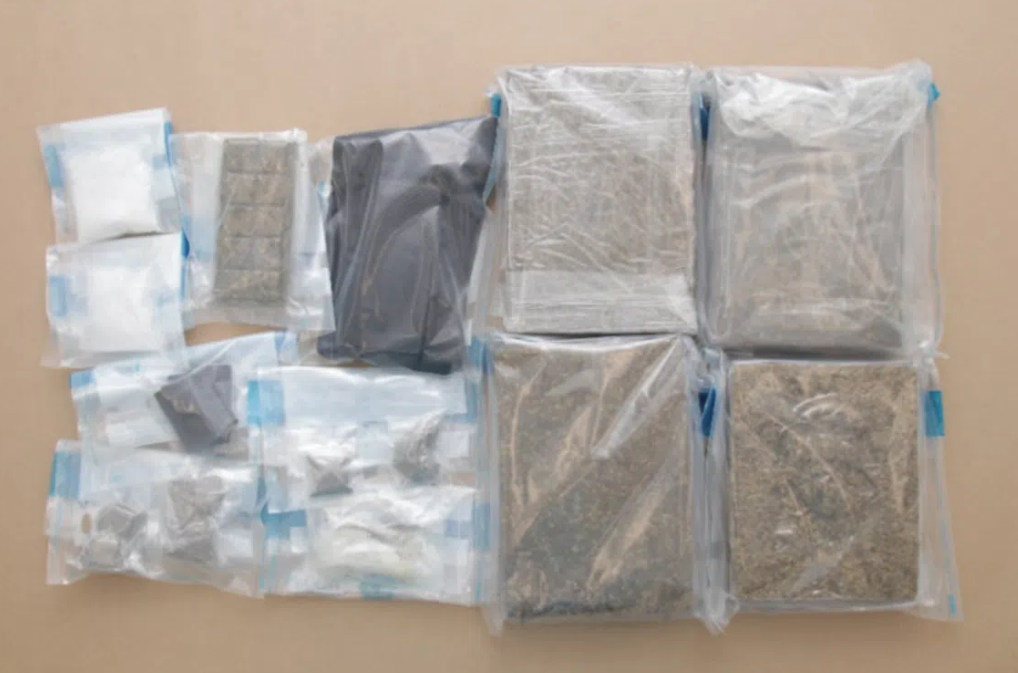
Singapore's drug enforcement authorities have dismantled another significant trafficking operation, arresting three men and seizing drugs valued at $142,000 following a coordinated series of raids across residential neighbourhoods. The Central Narcotics Bureau (CNB) announced the arrests on July 29, detailing how officers apprehended the suspects and recovered substantial quantities of multiple narcotics from July 27 onwards. The seizure, which totalled approximately 5.52 kilograms of cannabis alongside hundreds of grams of crystal methamphetamine and ketamine, represents the type of interconnected drug network that continues to challenge Southeast Asian law enforcement despite the region's stringent penalties.
The operation began in the afternoon of July 27 when CNB officers moved against a 34-year-old Singaporean at a void deck location near Ang Mo Kio Avenue 4, arresting him on suspicion of drug trafficking. Rather than conducting a simple arrest and release pending investigation, officers immediately escorted the man to a nearby residential unit in an adjacent block, where a thorough search uncovered four LSD stamps along with 879 grams of cannabis and approximately 123 grams of crystal methamphetamine. The timing and coordination of the arrest and follow-up search suggests officers had been conducting surveillance to identify both the suspect and likely locations where drugs were stored, a standard investigative technique employed when authorities believe assets may be moved or destroyed if warned of police activity.
The second phase of enforcement occurred later the same day when a 29-year-old man was arrested at the lift landing of a residential block near Pasir Ris Street 11, again on suspected drug trafficking charges. Following the same procedure as with the first arrest, police escorted him to his residential unit in the same block, where the scale of the operation became apparent. Officers recovered approximately 4,641 grams of cannabis in multiple forms—including two packets found on the man's person, several packets and ketamine seized from within the unit, and substantial blocks of cannabis located outside the residential space. This distribution of drugs across multiple locations and physical forms—suggesting preparation for distribution to street-level dealers—indicates a more sophisticated operation than simple personal use or small-scale dealing.
The third arrest involved a 27-year-old man apprehended at his residential unit near Jalan Bukit Ho Swee on the same afternoon, where officers recovered nine grams of crystal methamphetamine. Unlike the first two suspects, this individual was arrested on suspicion of drug offences rather than trafficking specifically, suggesting he may have occupied a different role within the distribution network—possibly as a user or lower-level distributor. The aggregate seizure from all three locations tells a revealing story about contemporary drug trafficking patterns in Singapore, where cannabis remains the dominant controlled substance, but the presence of ice and ketamine indicates suppliers are diversifying their offerings to capture market demand across multiple user demographics.
The CNB's official statement emphasised the potential impact of the seizure, calculating that the recovered substances could have sustained the habits of approximately 860 drug abusers for one week. This measurement methodology, though somewhat speculative, attempts to convey to the public the genuine human toll of such operations and the scale of addiction that any single drug network can fuel. For Malaysian observers and policymakers, such figures underscore how regional drug manufacturing and trafficking operations do not operate in isolation but rather feed into interconnected supply chains spanning multiple countries. The sophistication of networks operating from Singapore, where land borders and maritime access points make enforcement challenging, has direct implications for Malaysian law enforcement tasked with interdicting drugs before they reach domestic markets.
Singapore's legal framework for drug trafficking offences remains among the world's harshest. Under the Misuse of Drugs Act, trafficking in controlled drugs constitutes a serious felony, while possession of more than 500 grams of cannabis carries a mandatory death penalty upon conviction. This sentence structure reflects the city-state's zero-tolerance approach to drug trafficking, distinguishing between users and suppliers in ways designed to incentivise information sharing from lower-level operatives against their suppliers. For the 29-year-old arrested with over 4.6 kilograms of cannabis, the quantity seized alone substantially exceeds the threshold triggering capital punishment provisions, meaning he faces potentially the most serious legal consequences of the three men arrested.
The investigation into all three suspects remains ongoing, according to the CNB's statement, suggesting authorities are attempting to identify upstream suppliers, downstream distributors, and financial beneficiaries of the operation. Such investigations typically expand beyond the initial arrests as officers analyse communications, financial records, and supply chain evidence to map out the full scope of the criminal enterprise. For Southeast Asian drug control agencies, understanding these operational networks has become increasingly important as trafficking organisations have become more fluid and decentralised, with individual operatives handling specific functions rather than maintaining rigid hierarchies vulnerable to collapse when key figures are arrested.
The timing and scale of this operation reflects broader trends in Singapore's drug enforcement strategy, which has increasingly focused on disrupting mid-level trafficking operations rather than concentrating resources exclusively on street-level users or kingpin-level traffickers. The deployment of resources to track the 29-year-old across residential areas and the coordination required to simultaneously arrest and search three separate locations demonstrates the manpower and intelligence-gathering capabilities that Singapore's narcotics bureau can mobilise. Compared to enforcement capacity in neighbouring jurisdictions, such operational sophistication remains relatively uncommon, raising questions about whether other Southeast Asian nations are sufficiently resourced to address similar trafficking patterns within their own borders.
For Malaysia, the Singapore drug enforcement operation carries several implications. First, the prevalence of cannabis trafficking through Singapore suggests supply chains may funnel substances through the city-state toward Malaysian markets, necessitating enhanced cooperation between Malaysian and Singaporean authorities at ports of entry. Second, the diversity of narcotics seized—spanning cannabis, ice, ketamine and LSD—reflects the heterogeneous demand profile among drug users across the region, suggesting that Malaysian enforcement agencies must maintain capability across multiple drug categories rather than concentrating resources on traditional opioid trafficking alone. Third, the successful identification and disruption of this operation demonstrates that patient, intelligence-led enforcement can yield substantial results, a lesson applicable to Malaysian law enforcement agencies seeking to strengthen their own counter-narcotics capacity and international cooperation frameworks.

