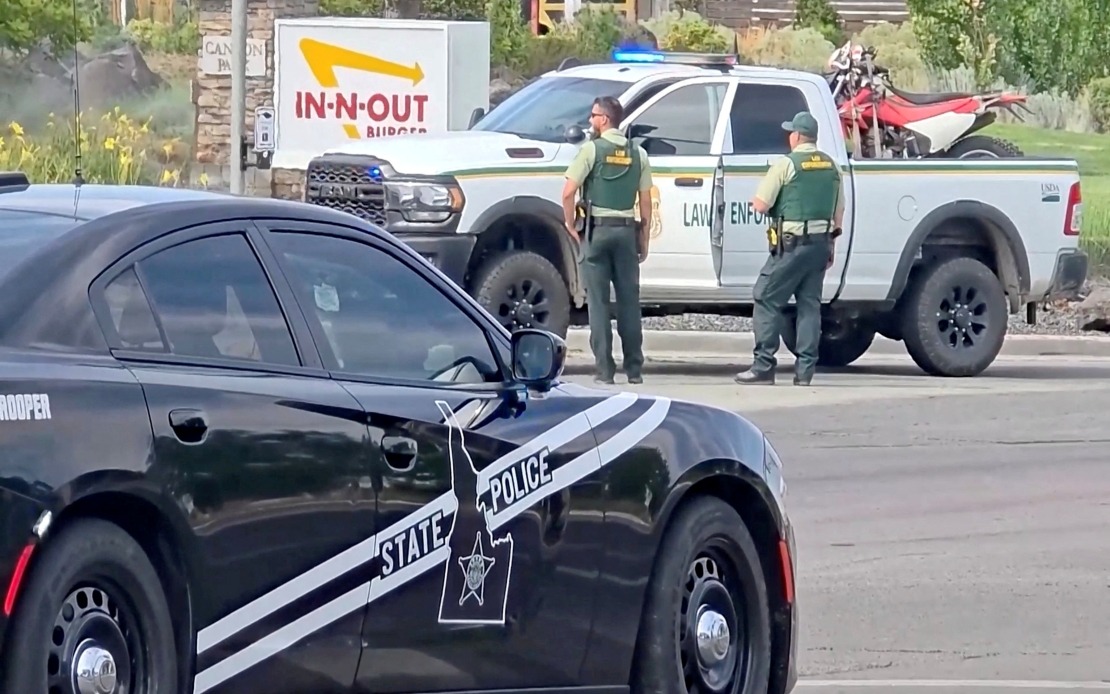
A mass shooting at an In-N-Out Burger restaurant in Twin Falls, Idaho on Saturday resulted in three fatalities and seven injuries, with law enforcement officials confirming the incident unfolded in what is typically a crowded commercial area. The incident occurred around 2 pm local time at the fast-food establishment situated within a busy shopping plaza, where hundreds of people were present at the time of the shooting. Police discovered the body of the suspected gunman in a location near the restaurant, though authorities have not yet clarified whether this individual is counted among the three confirmed deaths.
Joshua Palmer, the public information coordinator for the city of Twin Falls, reported that several of the injured victims remain in critical condition as emergency services managed the aftermath of the violence. Twin Falls Police Chief Matthew Hicks addressed the public at a press conference, reassuring residents that the immediate threat to the community had been contained and that further danger was not anticipated. His statement came as officers worked methodically through the initial stages of investigation at the scene.
The identity of the suspected shooter remains undetermined at this stage, with investigators focusing their efforts on establishing a clear motive for the attack. Authorities have not yet released names, ages, or demographic information about the victims, citing ongoing notifications to family members as the reason for maintaining confidentiality during the early investigative phase. This standard protocol allows law enforcement to ensure that next of kin receive official confirmation before details become public.
The shooting adds to a troubling pattern of gun violence in the United States, where mass casualty incidents at public venues including restaurants, shopping areas, and other commercial establishments have become increasingly frequent. For Malaysian readers accustomed to stringent firearms regulations and strict gun control measures, such incidents underscore the dramatic differences in regulatory approaches between Malaysia and the United States. Malaysia maintains among the world's most restrictive gun ownership laws, requiring multiple licences, security clearances, and legitimate sporting or professional purposes for firearm possession, making mass shooting events virtually non-existent in the country.
The Twin Falls incident occurred during daylight hours in what police characterised as a populated commercial zone, suggesting the shooter carried out the attack in a highly visible public setting rather than in an isolated location. The presence of hundreds of people in the shopping plaza at the time heightened the potential for casualties and complicated the immediate response, as first responders had to navigate crowded conditions while addressing multiple victims with varying degrees of injury severity.
Emergency response protocols in Twin Falls appear to have functioned effectively, with medical personnel addressing the critical condition patients and securing the scene to prevent further escalation. The recovery of the suspect's body by police near the restaurant indicates that law enforcement personnel contained the situation relatively quickly, preventing the shooter from fleeing or continuing the assault. However, the exact circumstances surrounding the suspect's death—whether through police intervention or self-inflicted injury—remain unclear as the investigation proceeds.
For Southeast Asian observers and Malaysian security analysts, incidents of this magnitude in the United States continue to illustrate the complex relationship between constitutional protections for firearm ownership and the resulting public safety challenges. While Malaysia maintains its strict regulatory framework with severe penalties for unlicensed firearm possession and use, the United States operates under constitutional provisions that complicate legislative attempts to restrict gun access. Understanding these policy differences provides valuable context for appreciating Malaysia's comparatively lower violent crime rates and the effectiveness of its firearms control legislation.
The ongoing investigation will likely consume significant resources from Twin Falls law enforcement and potentially require assistance from state and federal agencies. Federal Bureau of Investigation protocols typically become involved in mass shooting cases, particularly when multiple fatalities are involved, to coordinate investigation efforts and identify any potential connections to broader criminal networks or ideological motivations. As information emerges regarding the shooter's background and circumstances, investigators will piece together a comprehensive narrative of the incident.
The psychological impact on survivors, witnesses, and the Twin Falls community will extend far beyond the immediate aftermath of the shooting. Research on mass shooting incidents demonstrates lasting trauma effects on survivors and those who witnessed the violence, as well as broader community anxiety regarding personal safety in previously considered secure public spaces. The fact that this incident occurred at a casual dining establishment—a location where families and individuals routinely gather for meals—adds another dimension to its significance in illustrating how violence can penetrate ordinary aspects of daily life.

