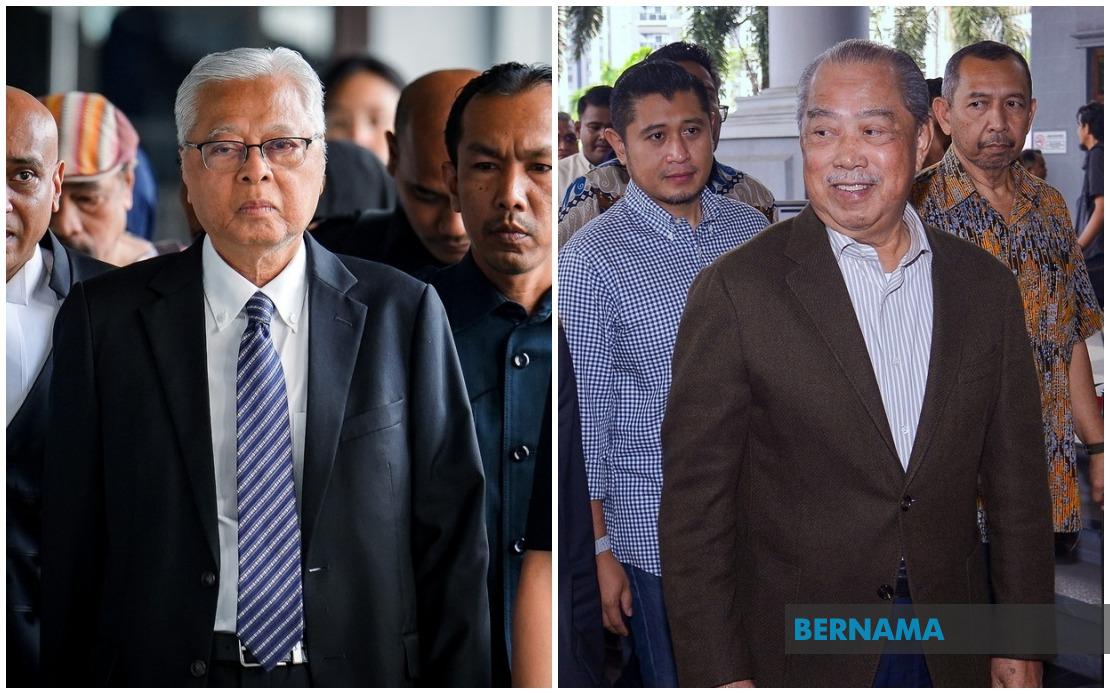
The simultaneous appearance of three former prime ministers at the Kuala Lumpur Court Complex on August 27 represented an extraordinary convergence in Malaysian judicial proceedings, with veteran observers describing the day as historically significant and likely unrepeatable. Datuk Seri Najib Tun Razak, Tan Sri Muhyiddin Yassin, and Datuk Seri Ismail Sabri Yaakob each attended distinct court hearings on the same day, drawing extensive media coverage and raising complex logistical and security considerations for court administrators and law enforcement.
The rarity of such an occurrence cannot be overstated. V. Anbalagan, a seasoned court reporter with Free Malaysia Today, emphasised that his decades-long journalism career had never encompassed witnessing three former national leaders present in the same judicial venue simultaneously. He characterised the event as a definitive historical marker, noting that every journalist present was participating in an unprecedented chapter of Malaysian media and political narrative. Anbalagan reflected that such an incident, with all three former premiers at the Jalan Duta complex in a single day, may represent a record so distinctive that subsequent replication appears extraordinarily unlikely.
The logistical complexity of managing such simultaneous proceedings demanded meticulous advance planning. Court authorities commenced preparations the previous afternoon, recognising that the convergence presented unprecedented operational challenges. Security personnel from Sentul district police headquarters and court security officers coordinated extensively with Palace of Justice police to establish comprehensive protocols. The security framework involved issuing between three and six categories of access passes tailored to different constituencies, encompassing members of the public, journalists covering open proceedings, and media personnel accessing video-link facilities. This stratified approach aimed to prevent congestion while maintaining journalistic access and public transparency regarding proceedings.
Journalists arriving on the morning found themselves navigating an exceptionally busy environment beginning at 7 am. Television crews, photographers, and reporters converged on court grounds with expectations of capturing developments and obtaining reactions from the three former leaders. Amirul Aiman Osman from Utusan Malaysia acknowledged the considerable congestion and intensity of the day, though he emphasised that rigorous security measures prevented any dangerous incidents despite the high-pressure atmosphere. His early morning arrival underscored the significance journalists attributed to the occasion, with media personnel recognising they were witnessing a genuinely singular moment in contemporary Malaysian political and judicial history.
Bernama television journalist Siti Zanariah Nor Zin reflected on her sixteen-year career, contextualising the day as genuinely unprecedented in Malaysian media documentation. The staggered arrivals of the former prime ministers and their legal representatives provided operational breathing room, enabling her organisation and others to dispatch regular updates to their headquarters. The controlled environment surrounding the court perimeter allowed media monitoring of the involved parties' movements throughout the proceedings, facilitating comprehensive coverage despite the complexity of managing three simultaneous high-profile cases.
Security officer Nik Zainab Jusoh confirmed that the court grounds maintained calm and orderly conditions throughout the day, attributing this to thorough preparatory briefings conducted previously. Security personnel remained particularly attentive to upper floor areas adjacent to courtrooms, whilst ground-level operations proceeded without significant incident. This stratified monitoring approach reflected the sophisticated understanding that different zones required calibrated security responses proportionate to their proximity to active proceedings.
Najib appeared before Judicial Commissioner Mohamad Redzuan Idrus regarding civil proceedings initiated by 1Malaysia Development Berhad (1MDB) and its subsidiary, involving a USD5.64 billion claim against him and numerous co-defendants. This litigation represents ongoing accountability efforts stemming from the financial scandal that profoundly shaped Malaysian political discourse over preceding years. The case exemplifies how legal complexities originating from major governance failures continue commanding judicial attention and generating substantial public interest.
Muhyiddin faced seven charges linked to alleged abuse of power and money laundering involving the Jana Wibawa programme, with proceedings conducted before Judge Noor Ruwena Md Nurdin. These charges represent separate legal accountability mechanisms addressing distinct allegations within Malaysia's broader framework of investigations targeting former political leadership. The Jana Wibawa programme allegations represent particular concern given the programme's governance implications and the scrutiny directed towards executive decision-making processes.
Ismail Sabri appeared before Judge Suzana Hussin confronting asset declaration charges involving substantial undeclared holdings. The allegations encompassed RM14.7 million in cash, considerable quantities of various foreign currencies, and gold bar holdings, collectively suggesting significant discrepancies in financial disclosure compliance. After posting RM300,000 bail with one surety, Ismail Sabri departed the court complex at 11:43 am, returning to public life whilst legal proceedings continued their deliberate progression.
The convergence of these three leaders within a single judicial venue simultaneously illuminated the multifaceted legal challenges confronting Malaysia's political establishment. Each former premier faced distinct allegations reflecting different categories of governance accountability concerns, yet their simultaneous court appearances created symbolic resonance regarding systemic accountability expectations. The unprecedented nature of the gathering prompted reflections among media professionals regarding the evolving relationship between political leadership and judicial oversight in Malaysia's contemporary democratic context.
For Malaysian observers and regional analysts, the day underscored the institutional capacity of Malaysia's judicial system to simultaneously process multiple high-profile cases involving former national leaders. This parallel processing capability demonstrated judicial independence and organisational sophistication, distinguishing Malaysia's approach from other regional jurisdictions where former leaders have faced prolonged legal proceedings. The successful management of the day's logistical complexities suggested institutional maturity within Malaysian law enforcement and court administration, despite the extraordinary nature of coordinating three simultaneous former prime ministerial appearances.
The historical significance extends beyond immediate judicial proceedings. The gathering represented a moment crystallising Malaysia's contemporary political narrative, wherein governance accountability mechanisms continued operating visibly and simultaneously across multiple former executives. This transparency, however uncomfortable for involved parties, reinforced the principle that political office does not confer immunity from legal scrutiny. The media documentation of these proceedings and the unprecedented convergence itself contributed to public understanding of Malaysian governance transitions and institutional evolution during an era of heightened political accountability.

