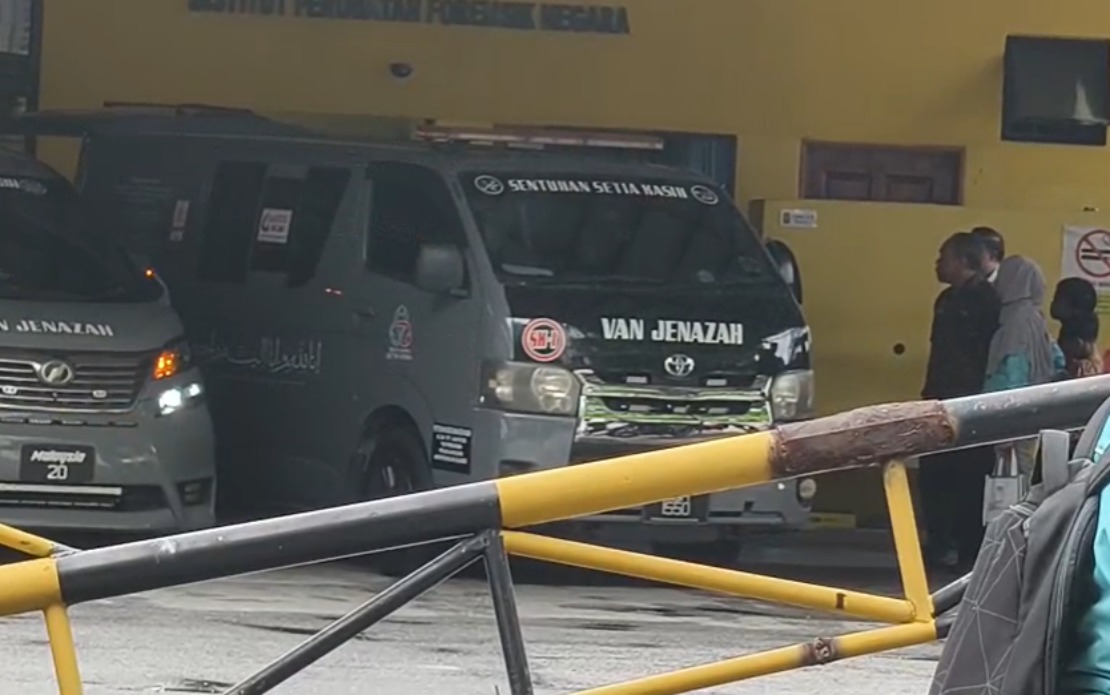
Three family members killed in a tragic collision involving a Malaysian Immigration Department lorry on Jalan Sultan Ismail in Kuala Lumpur have been released for funeral arrangements following the completion of post-mortem examinations. The remains of Shaik Mohd Firdaus Shaikh Yahya, aged 53, alongside his daughters Siti Nor Sazlin, 25, and Siti Darwisyah Auni, 12, were discharged from the National Institute of Forensic Medicine at Kuala Lumpur Hospital at approximately 5.45 pm on August 19.
The three sets of remains were transported in separate hearses to their family members, marking the beginning of funeral preparations that will span several stages before the victims' final resting place. According to information gathered, the deceased will first be taken to Jamiul Ehsan Mosque on Jalan Pahang for the customary Islamic bathing, shrouding, and funeral prayer ceremonies. Following these rites, the bodies will be transported to Kampung Air Hitam Labu Muslim Cemetery in Kampar, Perak, for burial, returning the victims to their home state for their final interment.
The tragedy unfolded in the early hours of August 19 when a Malaysian Immigration Department Black Maria lorry, operating without any passengers on board, collided with multiple vehicles at the Maju Junction intersection. The department vehicle was en route to Chow Kit with its emergency lights and siren activated, reportedly heading towards a planned enforcement operation targeting undocumented migrants in the area. However, accounts of the incident suggest the lorry approached the intersection against a red traffic light, setting the stage for the fatal collision.
The lorry struck a Proton Saga that was lawfully proceeding through the intersection on a green light, resulting in a violent impact that caused the heavier government vehicle to lose control. After the initial collision with the private motor vehicle, the lorry skidded uncontrollably across the intersection, subsequently striking four pedestrians who were in the vicinity. The chain-reaction accident also damaged an Inokom Matrix multi-purpose vehicle, underscoring the extent of the impact and the chaotic nature of the collision.
Beyond the three fatal casualties, police reports indicated that another person sustained serious injuries in the accident, though details regarding their current condition and hospitalization status remained unclear. The scale of injuries and vehicle damage pointed to a high-impact collision occurring at what authorities believed was considerable speed, compounded by the lorry's size and weight advantage over civilian vehicles.
Police launched a formal investigation into the incident under Section 41(1) of the Road Transport Act 1987, which governs motor vehicle offences and accidents on Malaysian roads. This particular statute typically covers offences related to careless or rash driving causing injury or death, suggesting that investigators were examining whether negligence played a role in the tragedy. The investigation will likely focus on the circumstances leading to the lorry's passage against the red light, whether proper procedures were followed during the emergency response, and whether driver fatigue or other factors contributed to the loss of control.
The incident raises significant questions about the safety protocols governing high-speed emergency operations by government vehicles, particularly those belonging to enforcement agencies. While operational imperatives such as immigration raids require rapid response capabilities, the collision demonstrates the potential consequences when emergency vehicles enter intersections without ensuring absolute safety clearance. The activation of beacon lights and sirens, while indicating emergency status, does not automatically grant right of way if the driver fails to verify that the intersection is clear before proceeding.
For Malaysian road safety authorities, the accident presents another data point in ongoing discussions about how emergency vehicles should navigate urban intersections during active operations. International best practices in many jurisdictions require drivers of emergency vehicles to reduce speed at intersections, ensure they have confirmed the path is clear, and prepare to stop if necessary despite their priority status. The tragic outcome here suggests the importance of reinforcing these principles among all drivers of government vehicles engaged in law enforcement and immigration operations.
The involvement of the Immigration Department's transport division also draws attention to the broader context of immigration enforcement operations in Malaysia's major urban centres. As Kuala Lumpur continues to grapple with undocumented migration challenges, enforcement agencies conduct regular raids and sweep operations, particularly in commercial areas and labour-intensive zones. These operations, while necessary for regulatory compliance, must be balanced against public safety considerations affecting innocent civilians who share the same roads and intersections.
For the bereaved family, the loss of three members in a single incident represents an extraordinary tragedy compounded by the circumstances of a government vehicle's involvement. The fact that the victims were attempting to cross what should have been a safe intersection highlights how civilian road users have little control over their safety when faced with traffic violations by larger, heavier vehicles operated by government agencies. The family's journey through the Islamic funeral process and eventual burial in Perak will unfold against the backdrop of an ongoing police investigation that will determine whether criminal negligence charges are warranted.
The broader Malaysian transportation and governance community will likely scrutinize the findings of this investigation closely. Questions about vehicle maintenance, driver training, shift patterns, and operational procedures at the Immigration Department's transport division may emerge during the inquiry. Additionally, this incident may prompt discussions within government agencies about revising emergency response protocols to emphasize the primacy of public safety alongside operational efficiency, ensuring that the rush to fulfill enforcement mandates does not compromise the safety of the motoring public.

