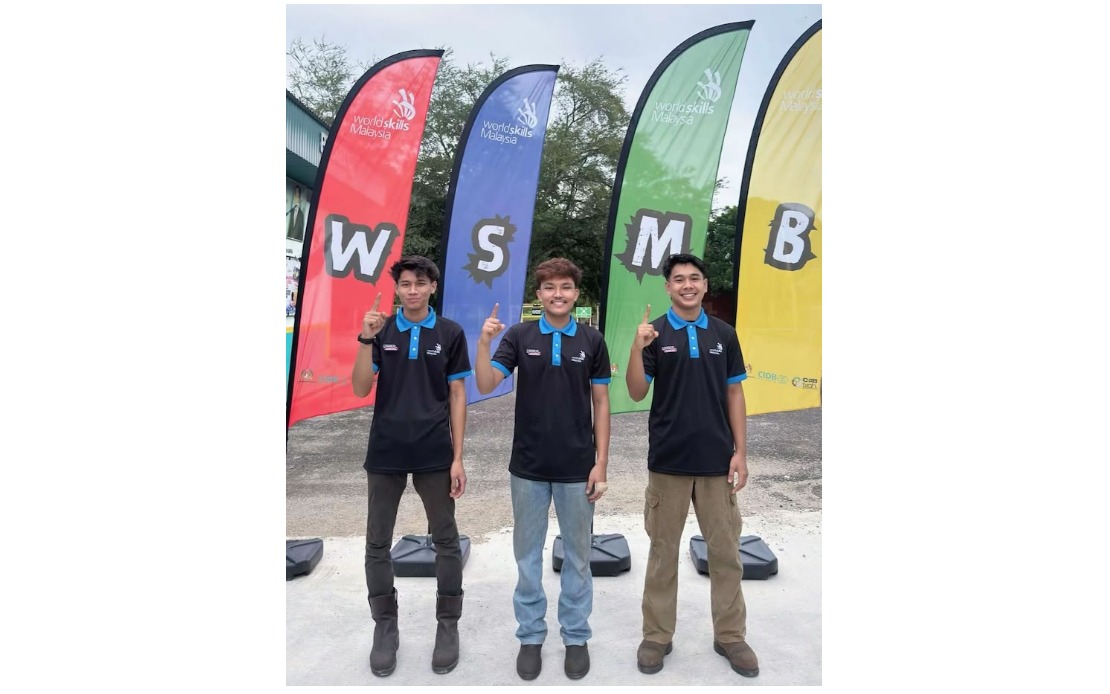
Malaysia's construction industry has long faced challenges in workforce development, but one programme has quietly shaped generations of skilled professionals. WorldSkills Malaysia Belia (WSMB), established in 1990 under the vision of former Prime Minister Tun Dr Mahathir Mohamad, has evolved through several iterations—beginning as the Malaysian Skills Champion Competition before becoming the Anugerah Tangan Emas Perdana Menteri (1991-2006), then MySkills (2007-2013), and finally its current form since 2014. The constancy of purpose behind these rebrands reflects the government's enduring commitment to skills development as a cornerstone of economic competitiveness.
At its core, WSMB operates as a talent pipeline rather than merely a competition. Individuals who excel through the programme receive systematic training and mentorship designed to position them as Malaysia's representatives at the WorldSkills international competition—a global benchmark for vocational excellence. This two-tier structure ensures that participants benefit not only from competitive motivation but also from exposure to world-class standards and international best practices. For Malaysia, participation in the international stage amplifies the nation's credibility in skills development and creates networking opportunities that strengthen regional positioning in the construction sector.
The operational framework relies on two key institutional players: the Malaysian Construction Academy (ABM) and CIDB Technologies, both accredited by the Construction Industry Development Board. These centres have invested significantly in infrastructure and equipment meeting international specifications, ensuring that training environments reflect real-world conditions. This investment in facilities matters considerably; trainees gain familiarity with machinery and processes they will encounter in actual employment, reducing the transition friction that often delays productivity gains in newly hired workers. For employers across construction, manufacturing, oil and gas, energy, and maritime sectors, this readiness translates to reduced onboarding costs and faster time-to-competency.
Mohd Hafiz Dasahi, chief executive officer of CIDB Technologies, articulates a philosophy that extends beyond immediate skills transfer. He positions talent investment as strategic infrastructure for future competitiveness, arguing that today's training decisions shape tomorrow's industry resilience. This framing resonates particularly with Malaysian policymakers concerned about workforce readiness amid technological disruption and regional competition. Rather than treating skills development as a short-term employment solution, the programme conceptualises it as a long-term economic asset that sustains comparative advantage.
The assessment methodology employed by WSMB reflects sophisticated understanding of workplace requirements. Zarulhakim Abdul Rahim, head of welding at CIDB Technologies, details evaluation criteria spanning technical precision, workmanship quality, procedural compliance, temporal discipline, problem-solving capacity, and safety consciousness. This multidimensional approach recognises that industry needs extend beyond technical competence; employers value workers who integrate reliability, adaptability, and safety awareness into their professional identity. The psychological dimensions—self-confidence, discipline, resilience, and achievement motivation—receive equal weight, acknowledging that technical skills without these personal attributes often underperform in demanding workplace environments.
Private sector engagement constitutes a distinctive feature of WSMB's architecture. Companies like Lincoln Energy and Vinxus Mark contribute not merely as observers but as active participants, providing equipment, consumables, and technical guidance. This involvement ensures curriculum relevance and creates recruitment pipelines connecting employers directly to emerging talent. Putra Faisal Ashraf Idris, a sales engineer specialising in welding technology, frames corporate participation as a shared responsibility for workforce quality, emphasising that industry input prevents the training-to-practice gap that often frustrates both graduates and employers. For businesses operating in technology-intensive sectors, this hands-on involvement allows them to shape competency standards aligned with their operational realities.
Participant narratives illuminate programme impact at ground level. Ahmad Syafie Dasuki, aged 20 from Tumpat, Kelantan, exemplifies the typical beneficiary profile: youth with foundational workshop experience seeking to elevate skills through structured competition. His two-year engagement at a facility in Teluk Kalong provided initial exposure, yet WSMB offered qualitative advancement through exposure to contemporary technology and rigorous standardised assessment. For rural or semi-urban youth like Dasuki, such programmes democratise access to world-class training that might otherwise require relocation or substantial family investment.
Muhammad Fazran Md Rashid @ Yusoff, currently employed at a welding company in Kulim, Kedah, represents another demographic segment: young workers already integrated into industry who seek continuous improvement. His participation reflects not just immediate career advancement but aspiration toward mastery and professional identity. The programme evidently functions as a validation mechanism, transforming informal workplace learning into formally recognised competency. For employers, such progression pathways encourage retention of promising staff and signal commitment to professional development, contributing to workplace stability and productivity.
Mohd Sahmi Irfan Sulaimi's advocacy for expanded youth participation extends the programme's social dimensions. Beyond technical outcomes, he highlights psychological benefits: confidence building, discipline cultivation, and resilience development. These capacities transfer across sectors and life domains, addressing concerns about youth engagement and social productivity. For policymakers focused on inclusive development and human capital formation, WSMB demonstrates how vocational competition structures broader developmental objectives beyond sectoral skill requirements.
The programme's relevance intensifies amid Malaysia's economic transition toward higher-value manufacturing and services. Construction industry professionals equipped with international-standard competencies enhance productivity, reduce defect rates, and elevate project delivery quality—variables directly affecting infrastructure performance and foreign investor confidence. Successful WSMB participants constitute visible proof of Malaysian capability, supporting government narratives about domestic talent and sector readiness.
Looking forward, WSMB faces both opportunities and pressures. Technological disruption—automation, digital fabrication, IoT integration—demands continuous curriculum evolution. The programme's sustainability depends on maintaining industry partnership intensity and securing consistent government support. Regional competitiveness intensifies as neighbouring countries strengthen their skills ecosystems; WSMB's international representation serves as both motivational mechanism and reality check regarding comparative positioning.
For Southeast Asian observers, WSMB offers a replicable model combining government vision, institutional infrastructure, private sector engagement, and international benchmarking. The 36-year trajectory demonstrates that sustained commitment to vocational excellence yields tangible workforce quality improvements. As Malaysia navigates transition toward high-income economy status, programmes embedding practical skill development within internationally comparative standards become increasingly vital to competitive sustainability.

