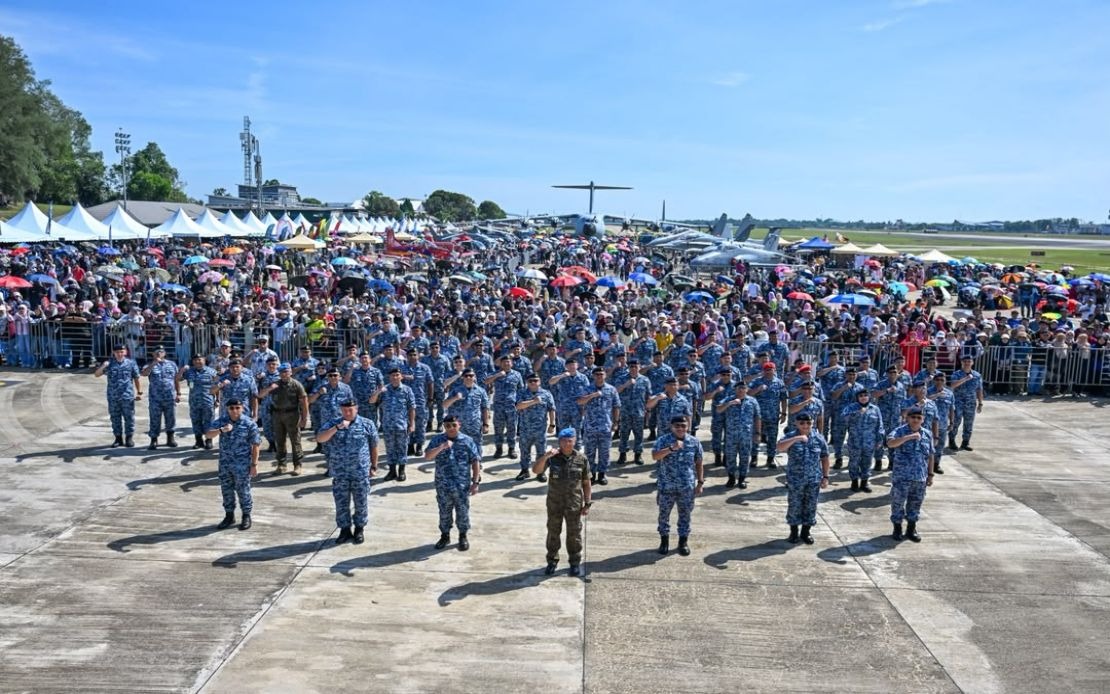
Sweltering heat failed to dampen public enthusiasm as thousands converged on the Kuantan Air Base for the Royal Malaysian Air Force's 68th Anniversary Open Day celebrations, a two-day showcase that combined military pageantry with direct community engagement. The sprawling event, which ran through June 21, 2026, attracted visitors spanning all age groups, each drawn by the promise of witnessing advanced defence capabilities and witnessing the nation's aerial forces in action. Despite the stifling tropical weather, the turnout demonstrated sustained public interest in Malaysia's military modernisation efforts and the RMAF's evolving operational landscape.
RMAF Chief General Tan Sri Muhamad Norazlan Aris framed this year's event as deliberately restrained in scope, reflecting broader government directives to exercise fiscal discipline across public institutions. Rather than viewing this as a limitation, however, he emphasised that the streamlined approach retained all essential elements: visitors retained full access to examine the RMAF's most significant platforms, exchange directly with service members, and absorb substantive information about the force's capabilities and strategic direction. This calibrated approach represents a deliberate recalibration of how defence forces communicate institutional priorities to civilian populations without extravagant expenditure.
The chief articulated a broader strategic objective underlying the open day initiative: strengthening institutional bonds between the RMAF and Malaysian society through transparent dialogue. He noted that while social media platforms proliferate, they often fail to convey nuanced information about military operations, equipment acquisition strategies, and personnel responsibilities. The open day format, by contrast, facilitates unfiltered conversation, enabling officers and enlisted personnel to discuss their professional roles, explain training methodologies, and clarify future equipment acquisitions—provided discussions remain within appropriate security parameters. This transparency agenda reflects growing recognition among defence establishments that public understanding directly correlates with institutional credibility and policy support.
The aerial displays constituted the programme's centrepiece, showcasing Malaysia's most sophisticated combat and transport aircraft. Spectators witnessed demonstrations by the Sukhoi Su-30MKM, the RMAF's primary multi-role fighter platform; the F/A-18D Hornet, inherited from earlier modernisation tranches; the massive Airbus A400M transport aircraft; the venerable Lockheed C-130H Hercules; and transport helicopters including the EC725AP/H225M and AW139 variants. Additionally, attendees observed elite airborne operations through Helicopter Insertion & Extraction (HIE) exercises and parachute demonstrations executed by the RMAF Special Forces (PASKAU), physically illustrating the inter-agency synergies essential to contemporary defence operations.
Stationary displays complemented the flying demonstrations, enabling visitors to examine equipment at close quarters. Beyond the fighter and transport aircraft visible in the sky, ground-based platforms included Hawk trainers, CN235 transport aircraft, and critical support infrastructure spanning Ground Based Air Defence systems, heavy plant equipment, and specialised fire response vehicles. This comprehensive exhibition strategy reinforced the message that air superiority demands integrated systems spanning combat platforms, logistics networks, and defensive architecture—a pedagogical approach that builds sophisticated public understanding of military complexity beyond the visceral appeal of fighter jets alone.
A particularly distinctive feature was the RMAF Runway Run 2026, scheduled for the second day and representing an extraordinarily rare opportunity for civilians. The RMAF invited members of the public to actually traverse an operational military runway—an experience virtually impossible during normal circumstances due to security protocols and operational requirements. With approximately 3,000 initial registrations and open invitations extended to additional participants, the initiative offered tangible, embodied engagement with the institution's physical infrastructure, transforming abstract military spaces into accessible community assets. This democratisation of previously restricted environments signals shifting attitudes toward civil-military relations in Malaysian society.
Personal testimonies underscored the profound impact such events generate. Mohd Al Muaimin Khairul Amir, a 24-year-old from Arau in Perlis, attended the open day for the first time and found the experience transformative, particularly having brought his 67-year-old mother Rosnani Itam, who navigates using a wheelchair. His account reveals how open days transcend their nominal military function, becoming family experiences that bridge generational divides and accommodate accessibility requirements. The young visitor emphasised the rarity of such opportunities, noting that direct exposure to operational military platforms remains profoundly uncommon for Malaysian civilians, rendering these events occasions of genuine cultural significance rather than routine public relations exercises.
Comprehensive programming extended well beyond aerial demonstrations and static displays. The RMAF Central Band performed throughout the proceedings, while the Air Force Arts Group delivered culturally inflected entertainment. A dedicated drumline contingent provided rhythmic accompaniment to the festivities. Weapons exhibitions enabled technical examination of systems, while sophisticated aircraft simulators offered hands-on opportunities for visitors to engage with flight dynamics and operational procedures. Career exhibition booths simultaneously served recruitment functions, identifying potential candidates for military service among the assembled crowd. This multifaceted approach transformed the occasion into cultural pageantry rather than narrow technical briefing, broadening appeal across demographic categories and generating positive institutional associations.
The open day's significance extends beyond immediate entertainment value into the realm of strategic communication. For a defence force navigating complex regional security environments—including maritime disputes, transnational terrorism threats, and equipment modernisation imperatives—public understanding represents essential political capital. When Malaysian civilians directly witness their air force's capabilities, interact with motivated personnel, and comprehend institutional challenges, they become informal ambassadors capable of articulating defence rationales within their communities. The RMAF's willingness to maintain public engagement despite budgetary constraints reflects mature understanding that institutional legitimacy depends upon transparent communication with the citizenry, particularly in democracies where defence budgets remain subject to parliamentary scrutiny and public opinion influences policy trajectories.
The juxtaposition of this open day against broader regional military modernisation trends illuminates Malaysia's evolving defence posture. Neighbouring nations pursue increasingly sophisticated platforms and operational capabilities, intensifying pressure on Malaysia's force structure planning. Yet rather than responding through purely technical acquisition strategies, the RMAF simultaneously invests in communicating existing capabilities and strategic direction to domestic audiences. This dual approach—simultaneous modernisation and public engagement—reflects sophisticated statecraft, building domestic political support for defence spending while simultaneously signalling capability to potential regional competitors. The Kuantan event thus functions as both civilian celebration and strategic messaging, addressing multiple audiences simultaneously.
Looking forward, the success of this 68th Anniversary open day likely ensures continuation of similar public engagement initiatives. The enthusiastic turnout across diverse age groups and the accessibility considerations incorporated into programming suggest institutional commitment to inclusive defence communication. As Malaysia navigates evolving regional security dynamics and contemplates future defence acquisitions, maintaining robust civilian understanding and support becomes increasingly consequential. Events like the Kuantan open day build the social foundations necessary for informed defence policy deliberation, transforming abstract military modernisation discussions into concrete, experiential understanding accessible to ordinary Malaysians. The thousands who ventured out despite oppressive heat evidenced genuine appetite for such opportunities, validating the institution's investment in transparent military-civil engagement.

