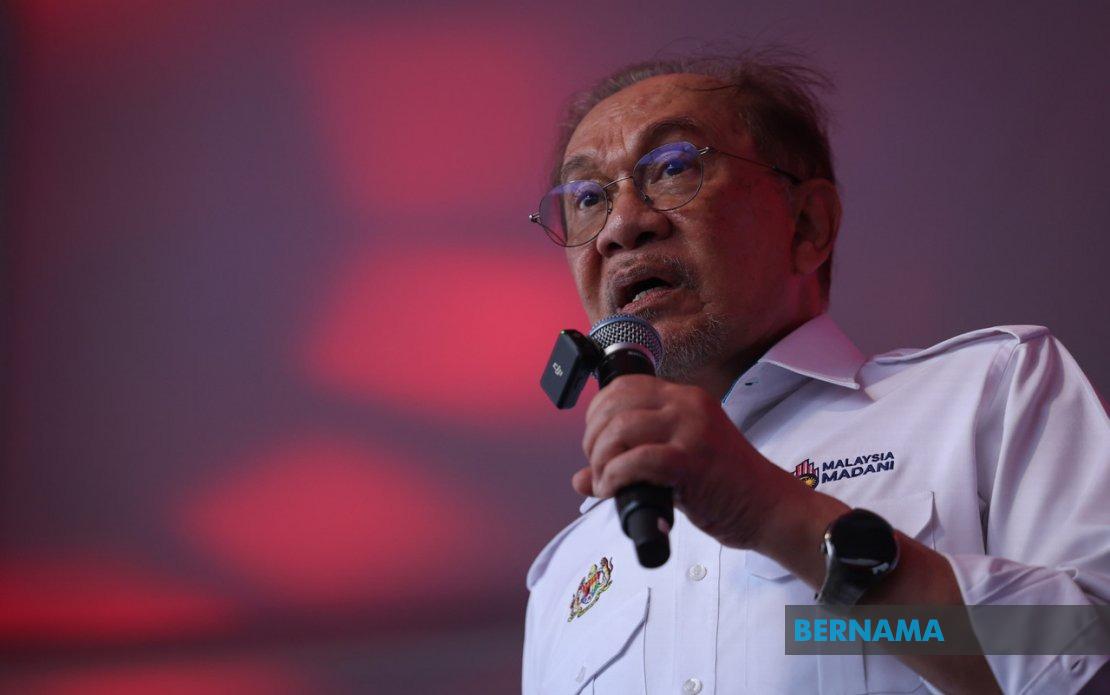
Prime Minister Datuk Seri Anwar Ibrahim has pledged that all individuals implicated in the financial losses suffered by Lembaga Tabung Haji will be prosecuted under the rule of law, following the public release of a Royal Commission of Inquiry report that detailed widespread misconduct within the Islamic pilgrimage fund. Speaking at an event in Jelebu, Negeri Sembilan, Anwar underscored the government's commitment to holding wrongdoers accountable regardless of their position or status, signalling a hardline stance against corruption that has long plagued the institution.
The RCI report, unveiled on July 29, exposed systemic failures and criminal conduct at Tabung Haji, identifying instances of misappropriation, fraudulent activities, and the abuse of authority by senior officials and board members. These findings have reignited public scrutiny of how the fund, which manages savings for Malaysian Muslims intending to perform the hajj pilgrimage, squandered billions of ringgit over the past decade. The report represents a culmination of investigative work aimed at establishing accountability for decisions that eroded the financial security of millions of ordinary Malaysians who had placed their trust in the institution.
Anwar's remarks underscore a broader pattern within the current administration to distance itself from the failures of previous governments and to demonstrate that no sector of public administration, however sensitive, remains above the law. By specifically naming the Royal Malaysia Police, the Malaysian Anti-Corruption Commission, and Bank Negara Malaysia as the lead investigative bodies, the Prime Minister has institutionalised the accountability process, ensuring that the probe cannot be easily dismissed as politically motivated or subject to executive interference. This multi-agency approach reflects international best practices in complex financial crime investigations where coordination between law enforcement, anti-corruption authorities, and financial regulators is essential.
The timing of Anwar's statement, delivered during a campaign visit for Transport Minister Anthony Loke Siew Fook who is contesting the Chennah state seat in the forthcoming 16th Negeri Sembilan state election, adds a political dimension to the announcement. The Pakatan Harapan coalition has sought to rebuild public confidence in institutional governance after years of financial scandals under the previous administration. By visibly reaffirming the government's commitment to justice in the TH case, Anwar attempts to reinforce the narrative that his administration represents a genuine departure from the corruption and impunity that characterised earlier regimes.
Tabung Haji's financial deterioration has become a litmus test for institutional reform in Malaysia. The fund, which began operations in 1963 with a straightforward mandate to facilitate hajj savings, accumulated losses partly through risky property investments, questionable real estate ventures, and decisions that failed to prioritise the protection of depositors' funds. The scale of mismanagement meant that individual pilgrims faced delays in receiving their accumulated savings and questioned whether their money had been prudently managed. For many ordinary Malaysians, the TH scandal represented a profound breach of faith by public institutions entrusted with their life savings.
The RCI's investigation has provided the factual foundation necessary for criminal prosecution. Without a comprehensive inquiry that establishes both the scope of misconduct and individual culpability, prosecutions would be vulnerable to legal challenge on grounds of insufficient evidence or procedural irregularities. By building cases on the RCI's findings, prosecutors can present detailed timelines of decisions, financial transactions, and the roles played by specific individuals. This approach significantly strengthens the evidentiary basis for charges and increases the likelihood of successful convictions that will withstand appellate scrutiny.
Anwar's explicit reference to imprisonment represents an important symbolic commitment. In Malaysian political discourse, promises of accountability are sometimes qualified by implicit understanding that persons of certain standing may receive lenient treatment or be allowed to escape consequences through legal technicalities. By stating unequivocally that those found guilty will go to prison, the Prime Minister signals that the government will not negotiate reduced sentences or pursue backdoor settlements that leave the public sense of injustice unresolved. Such clarity is necessary to restore public trust in institutions that have been damaged by historical patterns of selective justice.
The involvement of Bank Negara Malaysia in the investigation adds a regulatory dimension beyond simple criminal liability. The central bank can pursue administrative measures including the suspension or revocation of licences, the imposition of penalties on financial institutions that facilitated misconduct, and the implementation of structural reforms to prevent recurrence. These regulatory tools, while distinct from criminal prosecution, represent equally important mechanisms for accountability and institutional reform. They ensure that consequences extend beyond individual perpetrators to encompass the systems and organisations that enabled wrongdoing.
For Malaysian stakeholders in Tabung Haji, the Prime Minister's commitment represents the first phase of a longer process. Criminal investigations and prosecutions typically require months or years to complete, particularly in cases involving complex financial transactions spanning multiple years. Depositors will need to maintain patience while the legal system runs its course, and public attention must remain sufficiently focused to prevent political pressure from diluting the investigation's thoroughness. The credibility of Anwar's pledge ultimately rests on whether the investigative agencies produce prosecutions that convincingly demonstrate that accountability has been achieved.
The TH case also carries implications for Southeast Asian governance more broadly. Malaysia has positioned itself as a leader in fighting corruption within the region, with strengthened anti-corruption frameworks and a relatively independent judiciary. However, the scale of the TH losses and the ease with which officials apparently misappropriated funds demonstrate that institutional safeguards can be circumvented when individuals possess authority and weak oversight mechanisms fail to function. Other nations in the region facing their own governance challenges may study how Malaysia addresses institutional reform and individual accountability in the TH context.
Moving forward, the investigation will determine not only who bears criminal responsibility but also whether systemic weaknesses that permitted such extensive losses remain unaddressed. The government will need to simultaneously pursue justice for those responsible while implementing governance reforms that restore operational integrity to Tabung Haji. For millions of Malaysians depending on the fund for their hajj aspirations, Anwar's pledge of accountability represents the necessary first step toward institutional redemption, though much work remains to rebuild trust in an institution that has become synonymous with institutional failure and official misconduct.

