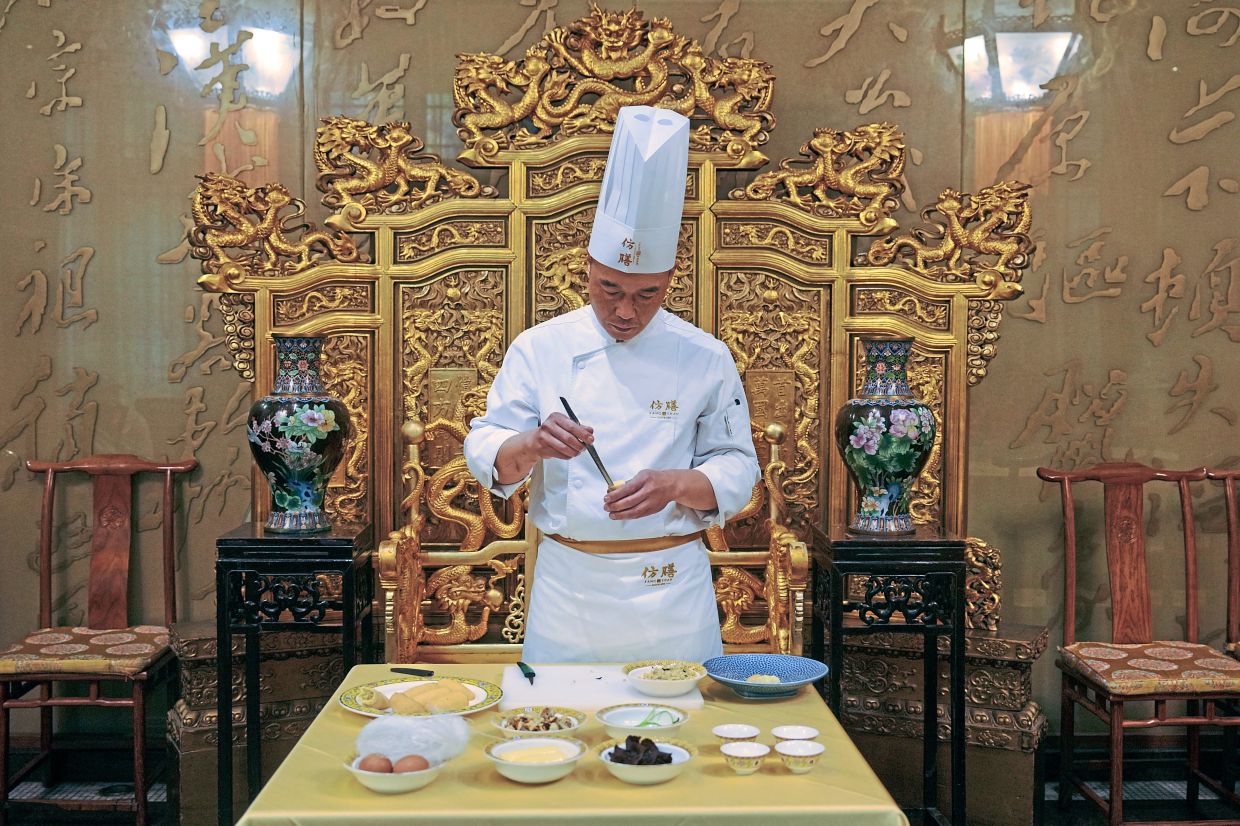
The story of a pastry that became legend encapsulates the intersection of culinary artistry and imperial power that defined court dining in late imperial China. According to culinary historians, Empress Dowager Cixi once dreamed of a particular pastry during China's final dynastic years, only to have it materialised on her breakfast table the next morning. Impressed by this apparent telepathic feat, she rewarded her chef with a silver ingot and renamed the dish from its prosaic original name—minced pork pancake—to "dream pastry" in recognition of its seemingly magical properties. This anecdote, recounted by contemporary chefs at Beijing's Fangshan Restaurant, illustrates how imperial cuisine transcended functionality to become an instrument of power, creativity, and cultural expression within the palace walls.
Fangshan Restaurant stands today as a living museum of this vanished culinary world. Established in 1925 by former imperial chefs from the Qing Dynasty and situated at Beihai Park—a palatial garden where successive dynasties' rulers conducted affairs of state and performed religious ceremonies—the restaurant remains the most prominent custodian of authentic imperial cooking practices in China. The establishment's very name carries philosophical weight: Fangshan translates as "imitating the imperial cuisine," acknowledging that contemporary practitioners are reproducing rather than creating anew, preserving rather than innovating. Though other Beijing establishments serve variations of imperial dishes, and the Palace Museum maintains artefacts from court kitchens including pastry moulds and serving vessels, Fangshan uniquely combines operational continuity with scholarly rigour in maintaining these traditions.
Imperial cuisine encompassed two distinct but interconnected spheres of court dining. The emperor's daily meals represented personal sustenance, yet prepared with ceremonial precision and quality standards inaccessible to ordinary subjects. Beyond these quotidian feasts lay elaborate banquets that marked seasonal transitions, diplomatic occasions, and dynastic celebrations. Each category operated within prescribed ritual frameworks that transformed eating into political theatre. At Qing Dynasty banquets, milk tea service initiated proceedings—a prerequisite ceremony establishing the formal nature of the gathering. What distinguished imperial banqueting from common dining was the emperor's role as absolute grantor of culinary favour. When sovereigns bestowed wine or food upon princes and officials, recipients performed elaborate prostrations and expressions of gratitude before consuming anything. This choreography of consumption reinforced hierarchical relationships and reinforced the emperor's position as the source of all benevolence and material blessing within the realm.
Sacrificial cuisine operated according to entirely separate protocols within this complex gastronomic ecosystem. These ritualistic meals accompanied religious ceremonies honouring heaven, earth, and ancestral spirits—ceremonies central to Qing imperial legitimacy and cosmic order maintenance. The Palace of Earthly Tranquility hosted one of the most significant sacrificial rites, during which officials consumed boiled pork prepared without salt seasoning. The deliberate absence of flavouring carried profound symbolic meaning: it connected contemporary court practices to ancient Chinese ritual traditions documented in classical texts like the "Book of Rites." Scholars observe that this unseasoned approach to sacrificial food evoked antiquity and simplicity, expressing reverence for cultural origins and earlier, less corrupted ways of preparing sustenance. Recipients of sacrificial meat experienced receiving such portions as extraordinary honours, elevating consumption from mere physical nourishment to a marker of imperial favour and spiritual significance.
The culinary techniques that produced imperial dishes represented craft knowledge transmitted across generations through intensive apprenticeship rather than written instruction. Zhou Tong, a contemporary pastry chef at Fangshan, learned his specialised methods from a master craftsperson who himself inherited knowledge from a preceding mentor, maintaining an unbroken chain of transmission extending back to the Qing court. This pedagogical approach fundamentally shapes the final product: imperial pastry-making explicitly forbids modern conveniences like electrical blenders or food processors. Instead, ingredients undergo hand-processing using traditional implements including metal sieves and custom-manufactured copper vessels. These labour-intensive methods produce textures impossible to achieve mechanically—a delicate graininess and sandy mouthfeel that distinguishes imperial pastries from industrially produced alternatives. Zhou emphasises that convenience-focused cooking sacrifices the subtle textural complexity that rendered imperial desserts distinctive, suggesting that the choice of production method carries cultural and aesthetic significance equivalent to ingredient selection itself.
The institutional structures supporting imperial cuisine within the Qing court reflected the complexity and scale of palace operations. A specialised institution devoted exclusively to pastry production supplied the imperial table with hundreds of distinct preparations, each requiring years of training to master. Contemporary bestsellers at Fangshan including pea flour cakes and red bean rolls generate extraordinary demand during peak seasons—more than two hundred orders daily for certain items—demonstrating that these historical recipes retain popular appeal beyond their ceremonial origins. When Fan Liangliang joined Fangshan as a kitchen apprentice after completing formal culinary school, he discovered that conventional training had actually hindered rather than prepared him for imperial culinary practice. He required complete retraining in methodologies prioritising labour-intensity and artisanal precision over efficiency metrics taught in contemporary culinary education.
Among the most distinctive imperial techniques is "Nizihuo," a labour-intensive process through which chefs mince delicate proteins including fish, shrimp, and poultry into smooth pastes, then meticulously reshape these preparations into decorative animal and floral forms. Fan identifies this technique as emblematic of imperial cuisine's governing philosophy: every plate simultaneously satisfied nutritional requirements, exhibited visual artistry, demonstrated technical mastery, and proved worthy of placement before dynastic rulers. This synthesis of function and aesthetics distinguished court cooking from common preparation. The standard principles governing imperial menu creation demanded constant innovation, ensuring that successive banquets presented novel creations rather than repetitive dishes, regardless of labour investments required.
Contemporary Fangshan operations navigate tensions between historical authenticity and practical sustainability. Certain ingredients once considered essential to imperial cuisine no longer appear on modern menus—bear paws exemplify provisions eliminated due to conservation imperatives and shifting ethical standards regarding animal exploitation. Rather than abandoning affected recipes entirely, chefs adapt preparations through ingredient substitution while endeavouring to preserve the essential character and nutritional profile of original dishes. This compromise between fidelity and pragmatism reflects how culinary traditions necessarily evolve in response to altered historical circumstances, even while maintaining spiritual continuity with ancestral practices.
Chinese culinary culture has historically transcended mere physical sustenance, functioning as a carrier of political messaging, aesthetic philosophy, and cultural identity. Literary figures including the celebrated Tang Dynasty poet Du Fu composed verses about cold noodles prepared with pagoda-tree leaves, yet these compositions operated simultaneously as descriptions of dishes and expressions of political loyalty, frustrated ambitions, and thwarted desires to serve imperial authority. Food thus became metaphor and medium through which poets and scholars articulated broader concerns about statecraft, virtue, and cosmic harmony. This tradition demonstrates how culinary heritage preserves not simply nutritional or preparation information about the past, but rather reveals how particular historical actors assigned meaning to material practices and transformed everyday activities into vehicles for expressing philosophical and political worldviews.
At its core, Fangshan's imperial cuisine represents a fusion of Manchu and Han culinary traditions, synthesizing the gastronomic preferences of the Qing Dynasty's Manchurian rulers with those of China's Han majority population. This blending reflects the complex cultural negotiations inherent to establishing legitimacy across ethnically diverse territorial domains. The restaurant's continued operation exemplifies how culinary traditions survive not through static preservation, but through living practice by committed practitioners who understand that maintaining heritage requires engaging seriously with historical contexts and meanings underlying ancestral foodways. Contemporary preservation efforts necessarily involve interpretive choices about which elements merit continuation, which require adaptation, and how ancient practices can remain relevant to present-day diners. Understanding this dynamic relationship between past and present through food offers Southeast Asian readers broader insights into how Asian societies negotiate tradition and modernity, maintaining cultural continuity while adapting to transformed circumstances.

