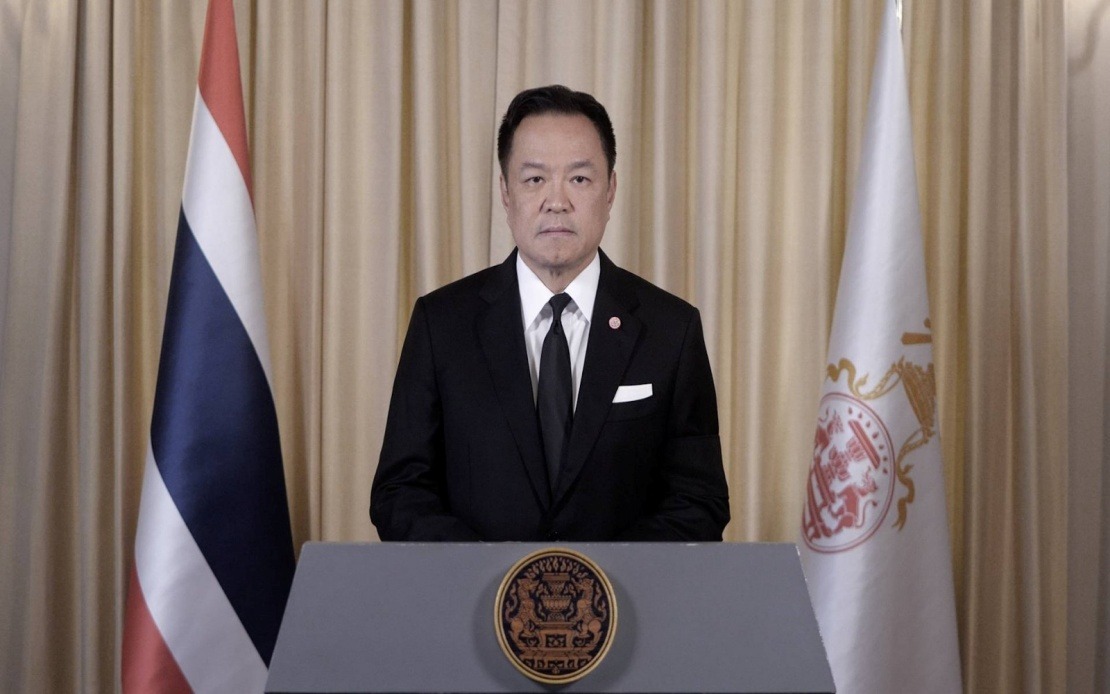
Thailand's leadership has responded positively to reports of a ceasefire agreement between the United States and Iran, viewing the potential resolution as a significant stabilizing force for regional and global economic conditions. Prime Minister Anutin Charnvirakul outlined his government's confidence in managing external pressures during a statement at Government House on Monday, while emphasizing that any breakthrough in West Asian tensions would constitute a meaningful positive development capable of easing multiple international crises simultaneously.
The reported agreement followed US President Donald Trump's announcement on Sunday that a finalized accord had been reached with Iran, which would involve reopening the Strait of Hormuz and lifting the US naval blockade that has constrained regional shipping and energy flows. These specific measures represent crucial steps toward normalizing commerce through one of the world's most strategically vital waterways, through which a substantial portion of global oil and liquefied natural gas shipments transit annually. For Thailand and other energy-importing nations, restoration of unrestricted passage through this corridor carries immediate implications for supply security and price stability.
Anutin characterized a West Asian resolution as instrumental in alleviating various interconnected crises affecting the global economy, suggesting that the Thai government perceives the geopolitical situation as having material consequences for national prosperity. His comments reflect a broader understanding within Southeast Asian policymaking circles that regional conflicts, particularly those involving major powers in strategically important zones, inevitably reverberate across supply chains and financial markets throughout Asia. Thailand's geographic position as a regional economic hub means that disruptions affecting global energy markets or shipping routes translate directly into pressure on manufacturing competitiveness and consumer purchasing power.
Deputy Prime Minister and Finance Minister Ekniti Nitithanprapas expanded on this analysis by articulating how conflict resolution could translate into concrete economic benefits for Thailand. He stressed that termination of hostilities would reduce energy price pressures and lower overall economic risk metrics, suggesting that current elevated uncertainty premiums embedded in commodity prices could be normalized through successful diplomatic settlement. The Minister's statements indicate confidence that improved global conditions stemming from reduced geopolitical tension could support stronger economic expansion than projections currently anticipate, offering potential upside to Thailand's growth trajectory.
Thailand's demonstrated capacity to navigate global supply chain disruptions forms part of the government's broader narrative about economic resilience. Rather than adopting reactive crisis management approaches, Thai officials have emphasized reliance on long-term strategic planning frameworks designed to absorb external shocks without compromising fundamental growth momentum. This institutional approach reflects lessons learned from previous periods of volatility, including pandemic-related disruptions and earlier energy price fluctuations that tested Thailand's economic flexibility.
The government has simultaneously committed to proceeding with its 200-billion-baht energy transition programme despite expectations that ceasefire developments might lower international oil prices. Ekniti defended this continued investment in energy transformation by highlighting Thailand's structural dependence on imported oil and natural gas, arguing that fuel price declines do not eliminate the strategic imperative for energy independence and diversification. This perspective acknowledges that temporary commodity price relief, however welcome for immediate household and business budgets, cannot substitute for comprehensive energy security measures addressing long-term supply vulnerabilities.
For Malaysian and broader Southeast Asian observers, Thailand's cautious optimism about the ceasefire carries several implications. The region remains vulnerable to energy price volatility and supply disruptions emanating from Middle Eastern tensions, meaning that any genuine reduction in geopolitical friction carries substantial value for regional economies. Thailand's relatively open economy makes it particularly sensitive to global commodity prices and shipping cost fluctuations, so stabilization in the Strait of Hormuz could provide meaningful relief to manufacturing sectors and import-dependent businesses throughout the kingdom.
The Finance Minister's emphasis on monitoring inflationary pressures and the differential impacts on households versus small businesses underscores how energy-driven price movements filter unevenly through economic structures. While large corporations may absorb cost increases through operational adjustments, smaller enterprises and lower-income households often face direct demand destruction when energy and transportation costs rise sharply. Ekniti's stated intention to track these distributional effects suggests government awareness that broad-based economic resilience requires attention to vulnerable segments that lack sophisticated hedging mechanisms.
Thailand's positioning on the ceasefire also reflects the strategic calculations of a nation deeply integrated into global supply networks yet maintaining independent energy concerns. The country cannot remain indifferent to Middle Eastern developments given energy reliance, yet also recognizes that sustainable economic advancement requires deliberate policies transcending commodity price cycles. This balancing act between leveraging geopolitical improvements and pursuing structural transformation characterizes contemporary policymaking in Southeast Asia's more sophisticated economies.
The broader context for Thailand's response involves recognition that energy transitions require sustained commitment regardless of near-term price movements. While lower oil prices create political space for governments to relax energy security investments, doing so would perpetuate dependency on volatile international markets. The 200-billion-baht commitment therefore represents institutional determination to advance long-term interests even when short-term incentives might suggest postponing such investments. This perspective carries relevance for Malaysia and other regional economies similarly attempting to balance immediate fiscal pressures against future energy security and sustainability imperatives.