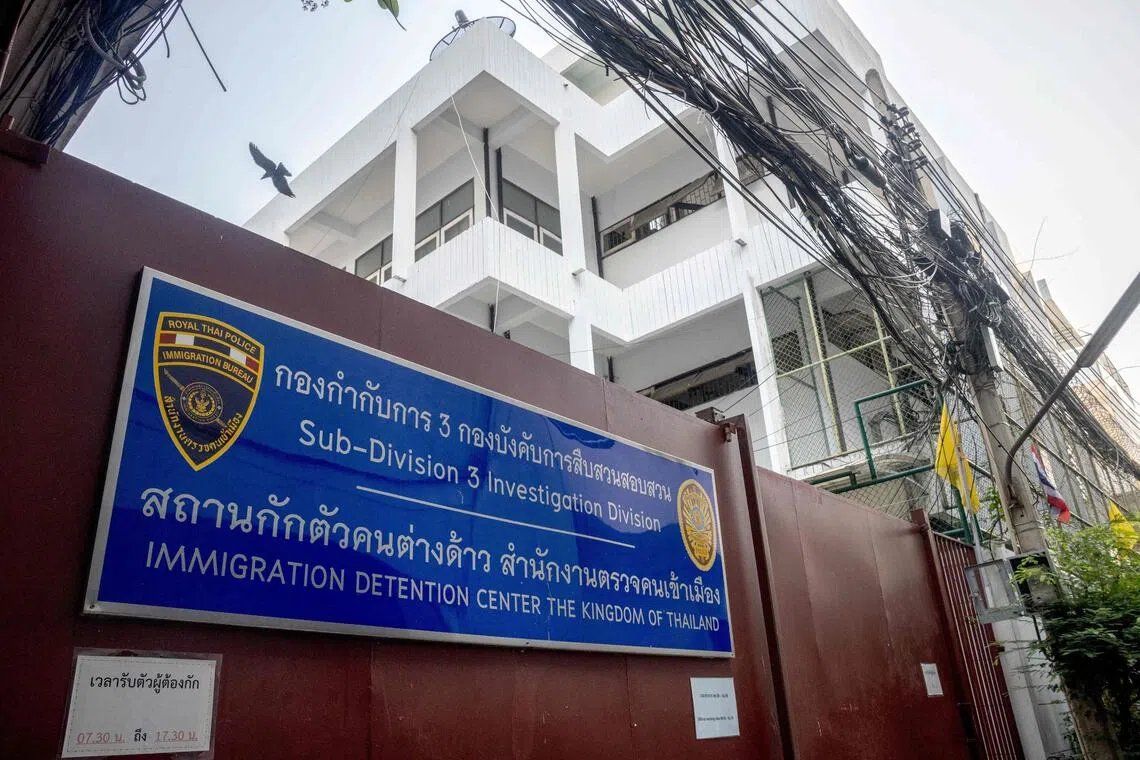
Thailand has formalized its approach to managing foreign nationals who violate domestic laws or threaten public order, with Prime Minister Anutin Charnvirakul signing the Prime Minister's Office Regulation on Deportation B.E. 2569 on August 26. The regulation entered the Royal Gazette on August 27 and took effect on August 28, establishing standardized procedures to accelerate deportation decisions and improve coordination among government agencies responsible for immigration enforcement.
The new framework reflects Bangkok's balancing act between maintaining Thailand's international reputation as a welcoming destination for legitimate travellers and investors, and addressing security concerns posed by foreign nationals engaged in criminal activity or disruptive behaviour. The regulation explicitly acknowledges that Thailand values visitors and expatriates who enter through proper legal channels for tourism, residence, employment or business purposes. However, it recognizes that some foreign residents abuse this welcome by flouting Thai law, compromising public morality and safety, or entering illegally to pursue illicit personal interests.
At the core of the regulation lies a significant streamlining of bureaucratic processes that previously complicated deportation actions. Rather than requiring multiple touchpoints and lengthy interdepartmental consultation, the new system empowers the Interior Ministry to move swiftly once a case meets specified criteria. The permanent secretary of the Interior Ministry or an authorized official can initiate deportation proceedings by reporting to the Interior Minister any foreigner whose conduct is deemed contrary to public order, good morals, or public welfare, whether as a direct perpetrator, instigator, or accomplice.
The regulation identifies six primary categories of offences that trigger deportation eligibility. These encompass unauthorized entry or residence under immigration statutes, unlawful employment in violation of foreign worker regulations, illegal business operations under the Foreign Business Act, document forgery or use of fraudulent official papers, committing crimes punishable by at least five years imprisonment, and participation as a principal, instigator or supporter in any of these five categories. This tiered approach allows authorities to address everything from visa violations to serious felonies under a unified framework.
A particularly noteworthy aspect concerns coordination between the Department of Corrections and the Interior Ministry. Correctional officials must provide detailed information including the prisoner's name, nationality and case records to the Interior Ministry's permanent secretary at least fifteen days before a foreign inmate's scheduled release. This advance notice enables officials to prepare deportation proceedings simultaneously with sentence completion, eliminating delays that previously allowed some foreign criminals to remain in Thailand after serving their time. Similarly, when courts suspend sentences or impose fines instead of incarceration, the Office of the Judiciary must immediately alert the Interior Ministry so cases can be evaluated without postponement.
The regulation also addresses repatriation logistics with practical flexibility. Normally, deportees return to their country of nationality or, if nationality remains unestablished, to the nation where they last resided before entering Thailand. However, the framework permits third countries or international organizations to formally request custody of the deportee through diplomatic channels within seven days of the deportation order. Such requests may be justified by humanitarian concerns, including risks of torture, cruel treatment, degrading conditions, human dignity violations, or enforced disappearance in the destination country.
When accepting a deportee transfer, the requesting nation or organization must assume all financial responsibilities and provide written consent from the deportee. The transfer period is capped at thirty days initially, with the Interior Minister authorized to grant no more than two additional thirty-day extensions. Should repatriation fail within this window, standard deportation procedures take precedence. This framework attempts to balance Thailand's humanitarian obligations under international conventions against the practical necessity of removing foreign offenders.
Implementation costs fall under Interior Ministry regulations endorsed by the Finance Ministry, ensuring budgetary transparency and accountability. Any interpretive disputes about the regulation's application rest ultimately with the Interior Minister, whose decision is binding and not subject to appeal. This concentrated authority streamlines resolution but also vests considerable power in a single official, reflecting the Thai administrative model's characteristic centralization.
For Malaysia and other Southeast Asian nations, Thailand's new deportation framework carries several implications. Regional governments may face increased returns of their nationals who have served sentences in Thai prisons, necessitating coordinated immigration and social reintegration protocols. The regulation also signals Thailand's intent to strengthen border security and criminal enforcement without sacrificing its tourism sector—a delicate calibration that other countries in the region attempt similarly. Additionally, the emphasis on document forgery and unlawful employment suggests Thai authorities are responding to organized networks facilitating illegal migration and labour trafficking, issues pervasive throughout Southeast Asia.
The timing and scope of this regulation also reflect broader regional trends toward stricter foreign national management. As Southeast Asian economies develop and urbanize, governments increasingly confront challenges posed by both legitimate expatriate populations and those exploiting regulatory gaps. Thailand's approach—creating faster deportation pathways while maintaining humanitarian safeguards—represents a model that policymakers across the region are likely studying as they refine their own immigration enforcement mechanisms.
For legitimate foreign residents in Thailand, the regulation should present minimal concern provided they maintain lawful status and behaviour. However, those operating in informal economies, holding unauthorized employment, or engaging in document fraud face substantially elevated deportation risk under the accelerated procedures. The clarity and formalization of these rules may paradoxically benefit rule-abiding expatriates by reducing arbitrary enforcement and ensuring consistent application across agencies. For Malaysian businesses and workers in Thailand, understanding these new procedures and ensuring full compliance with employment and business registration requirements has become more consequential than previously.

