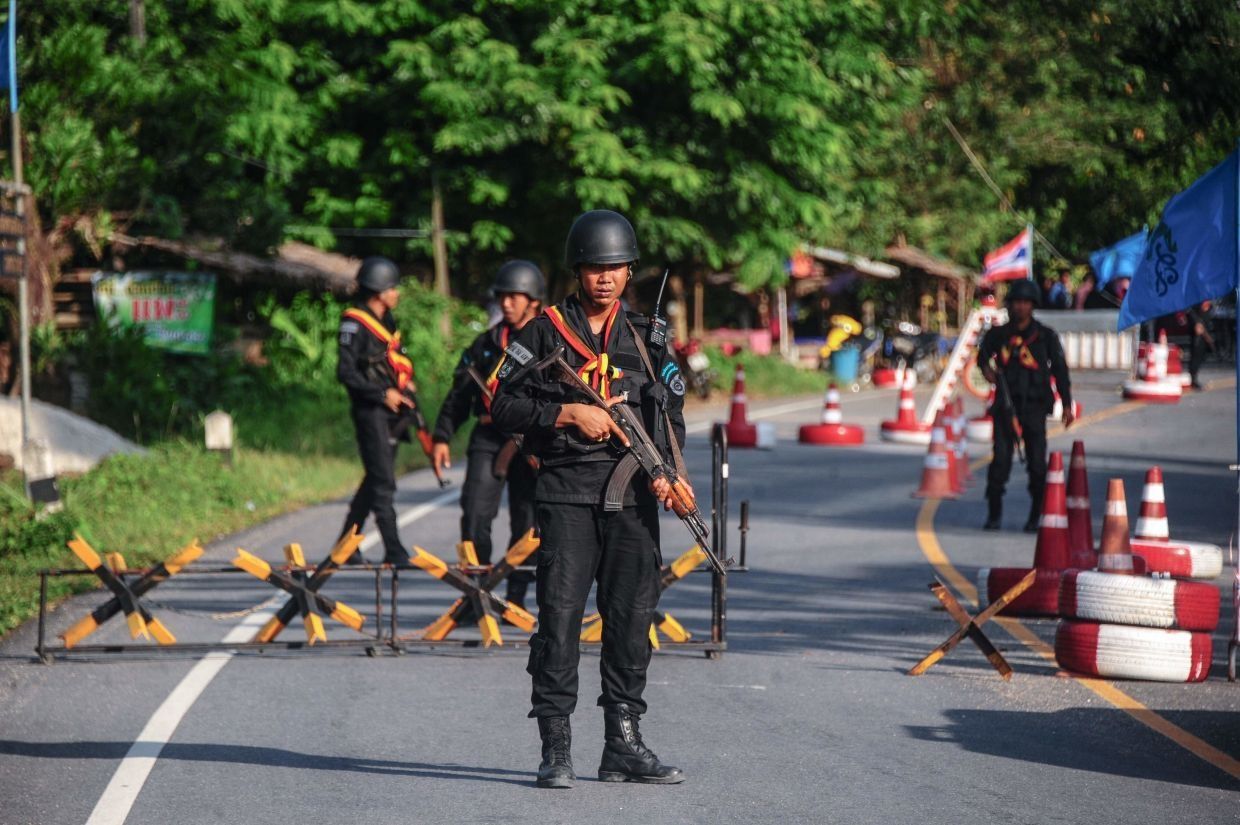
Thailand has put scheduled peace talks with southern insurgent groups on hold indefinitely, abandoning plans for September negotiations that were to take place in Malaysia. The suspension follows a coordinated assault in Narathiwat province that claimed five rangers' lives and prompted authorities to reassess their engagement strategy with the armed groups operating in the country's restive southern border region.
Thanachai Suwannanont, who directs Thailand's National Intelligence Agency and chairs the Southern Border Provinces Peace Dialogue Panel, confirmed the postponement this week while acknowledging the delicate position the government finds itself in. Prior to the attack, he indicated that the dialogue process had shown meaningful progress, suggesting that months of groundwork and diplomatic preparation had yielded tentative common ground between negotiators. However, the resumption of large-scale violence has disrupted this trajectory and forced Thailand to reconsider the viability of continuing talks at the planned time.
The incident that prompted the suspension occurred last Wednesday evening when six assailants, their faces covered and dressed in dark tactical clothing, launched an assault on a security checkpoint in Ban Bukit Sami, located in Rangae district. The attackers deployed both firearms and pipe bombs in what authorities characterised as a coordinated offensive, with the violence unfolding around 6:45 pm local time. Beyond the five rangers killed in the immediate aftermath, six civilians sustained injuries during the incident, including a young child aged three, highlighting the indiscriminate nature of the attack and the broader toll such violence exacts on local communities.
In explaining the rationale for the suspension, Suwannanont articulated a frustration evident in the Thai government's approach: the timing of the violence appeared deliberately calculated to undermine ongoing diplomatic efforts. He suggested that while fighters may act on tactical impulses and instinct, the assault represented a fundamental rejection of the negotiation framework that had been gradually taking shape. The resumption of hostilities essentially reset the peace process to an earlier stage, requiring both sides to rebuild trust and recommit to dialogue before substantive negotiations could resume.
Thailand's security response has been correspondingly robust. Authorities declared Martial Law across 13 districts of Narathiwat province in the immediate aftermath, expanding military authority to conduct searches, establish roadblocks, and intensify surveillance operations aimed at locating and apprehending those responsible. This security-centric reaction reflects the traditional Thai approach to southern insurgency, emphasising counter-insurgency operations when civilian oversight appears insufficient to protect state interests.
The Internal Security Operations Command for Region 4 has identified two suspects in connection with the attack, aged 45 and 43 respectively, and obtained arrest warrants from the Narathiwat Provincial Court. Investigators have linked both individuals to an armed assault that occurred on July 22, suggesting a pattern of escalating violence rather than isolated incidents. The formal charges filed against them encompass terrorism-related offences, premeditated murder of government personnel, armed robbery resulting in death, and weapons and explosives violations—a comprehensive indictment reflecting the state's determination to prosecute those involved.
Suwannanont's remarks underscore the government's awareness that suspending talks carries reputational and strategic costs. Prime Minister Anutin Charnvirakul has consistently positioned dialogue as a long-term strategic pillar for addressing the southern conflict, rather than as a reactive mechanism responsive to individual attacks. This framing suggests that Thai leadership views violence not as justification for abandoning negotiations but rather as evidence of their necessity. By pausing rather than terminating discussions, the government appears to be signalling that it remains committed to eventual engagement while also demonstrating to its security apparatus and the broader public that it will not appear weak or precipitous in returning to the negotiating table.
The suspension reflects the fundamental tension that has characterised Thailand's approach to the southern insurgency for decades. The conflict, rooted in historical grievances, ethnic and religious dimensions, and regional identity concerns in Pattani, Yala, and Narathiwat provinces, has resisted straightforward military solutions. Successive governments have alternated between intensified security operations and periods of tentative dialogue, with limited success in achieving durable peace. The current impasse demonstrates that even when progress appears tangible, the decentralised nature of armed opposition groups means that spoiler factions or hardline elements can disrupt diplomatic momentum through tactical violence.
For Malaysia, which was to host the suspended talks, the delay represents another setback in regional efforts to facilitate southern Thailand's stabilisation. Cross-border concerns—including spillover violence, refugee flows, and smuggling networks—make Thailand's internal security situation relevant to Malaysian policymakers. The suspension also underscores broader challenges in conflict resolution when multiple armed actors operate without unified command structures, making any single group's commitment to peace insufficient to guarantee security.
Suwannanont's acknowledgment that negotiations require time and must proceed through established processes suggests the government recognises that hasty returns to talks risk appearing to reward violence. Yet the indefinite suspension also risks hardening positions on both sides and creating space for escalation during the interval. The government's stated commitment to eventually resume dialogue, provided it can be reconciled with security operations, indicates that Thailand remains theoretically committed to negotiated settlement. Whether the security forces can apprehend those responsible for the Narathiwat attack, and whether that success might create conditions for renewed engagement, remains uncertain. The broader challenge facing Thai policymakers involves crafting an approach that addresses legitimate security concerns while maintaining sufficient diplomatic flexibility to pursue the long-term conflict resolution that leadership has identified as essential.

