Thailand's government has shelved peace negotiations with southern border insurgents that were originally planned for September in Malaysia, responding to a violent attack last week in Narathiwat province that resulted in the deaths of five rangers and injuries to six civilians, including a young child. The decision represents a significant setback to mediation efforts that had been gaining momentum before the assault, according to officials overseeing the delicate peace process.
Thanat Suwannanont, who leads both the National Intelligence Agency and chairs Thailand's Southern Border Provinces Peace Dialogue Panel, indicated that the suspended talks reflect the government's position that fundamental trust must be re-established before substantive negotiations can resume. Speaking to journalists on Tuesday, Suwannanont acknowledged that dialogue had been progressing positively until the incident fundamentally altered the calculus of engagement. The official stressed that restarting peace negotiations would require returning to foundational steps, effectively negating months of incremental progress.
The postponement underscores a recurring challenge in Thailand's two-decade conflict in its southernmost provinces: the difficulty of maintaining diplomatic momentum when armed violence erupts. Suwannanont explained that while individual combatants may act on tactical impulses, such incidents cannot be dismissed as isolated occurrences separate from the broader insurgent movement. The government's reasoning suggests that senior leadership within the insurgent organisation must exercise sufficient command and control to prevent offensive operations during negotiation periods—a precondition now questioned following last week's assault.
On Wednesday evening, six assailants wearing dark clothing and masks attacked a security checkpoint in Ban Bukit Sami, Rangae district, using automatic weapons and throwing pipe bombs at approximately 6:45 pm local time. Five rangers were killed instantly, while six civilians sustained injuries, among them a three-year-old girl caught in the crossfire. The brazen daytime assault against a fortified military position demonstrated tactical capability and determination to strike despite ongoing peace overtures.
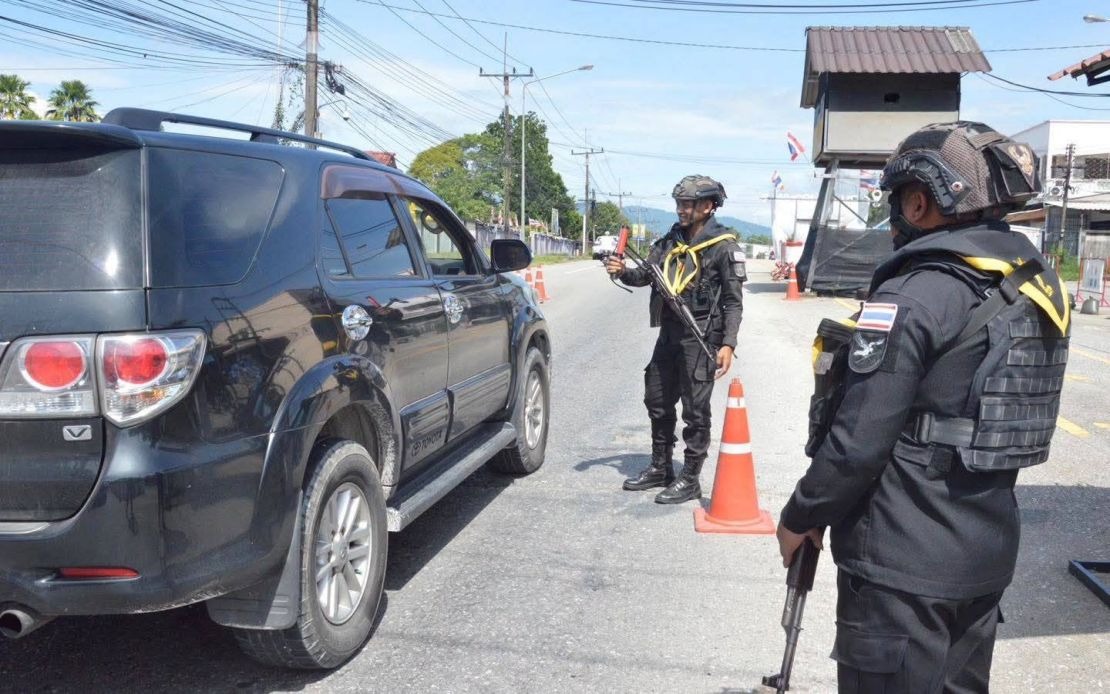
In response to the attack, Thai authorities activated Martial Law across 13 districts within Narathiwat, significantly expanding military prerogatives to conduct security operations and establish checkpoints throughout the province. This escalation of security measures represents the government's immediate tactical response, even as senior officials maintain that long-term resolution of the conflict requires sustained dialogue rather than military solutions alone. The apparent contradiction between suspending peace talks and emphasising their ultimate necessity reflects the governmental ambivalence about how to balance security imperatives with diplomatic efforts.
Prime Minister Anutin Charnvirakul has consistently positioned dialogue as a cornerstone of Thailand's southernmost policy framework, though acknowledging that talks cannot proceed without appropriate preconditions. Suwannanont reiterated this perspective when noting that negotiations must follow established protocols and cannot be rushed despite pressure from security incidents. This messaging appears designed to prevent the attacked rangers and their families from demanding immediate military retaliation that could irreparably damage peace prospects.
The Internal Security Operations Command Region 4 has taken investigative steps that may eventually enable renewed dialogue. Authorities have issued arrest warrants for two individuals, aged 45 and 43, suspected of direct involvement in the attack. These men face charges including terrorism, premeditated murder of government officials, armed robbery resulting in death, and weapons and explosives offences. Military personnel have received authorisation to establish roadblocks throughout Narathiwat and conduct extended search operations whenever intelligence suggests the suspects' presence.
For Malaysia and other Southeast Asian nations, Thailand's postponement of peace talks carries regional implications. Malaysia has historically hosted mediation efforts between Thai authorities and the southern insurgent movement, leveraging its diplomatic standing and geographic position. The suspension of scheduled September negotiations suggests that Malaysia's role as facilitator faces temporary constraint, though officials have not explicitly withdrawn from intermediary functions. Regional stability depends partly on Thailand managing its southern insurgency through negotiated settlement rather than indefinite military operations, making the suspension troubling for neighbouring governments.
The timing of the attack—occurring while peace preparations advanced—raises questions about coordination and command structures within the insurgent movement. Official statements carefully avoid suggesting that senior insurgent leadership authorised the assault, perhaps recognising that such conclusions would render future negotiations impossible. Suwannanont's observation that fighters may act on instinct rather than orders attempts to preserve a diplomatic interpretation, yet the sophistication and apparent coordination of the attack suggest some organisational involvement.
Thailand's government faces pressure from multiple directions as it navigates this setback. Security forces and affected communities expect decisive military responses to the attack, while international observers and regional partners recommend sustained engagement to prevent the conflict from intensifying. The suspension of talks represents an intermediate position: acknowledging security community demands for firmness while officially maintaining commitment to eventual negotiations, albeit on reset terms requiring trust reconstruction.
The path forward remains uncertain. Authorities have not specified conditions that would enable resumed dialogue or timeline expectations for their achievement. Officials emphasise that negotiations progress according to established procedures rather than incident-driven schedules, suggesting that even when arrests occur and investigations conclude, political will for resumed talks remains contingent on broader assessments of the insurgent movement's commitment to peaceful resolution. Until such confidence materialises, Thailand's southern conflict will remain characterised by episodic violence and suspended diplomatic engagement.

