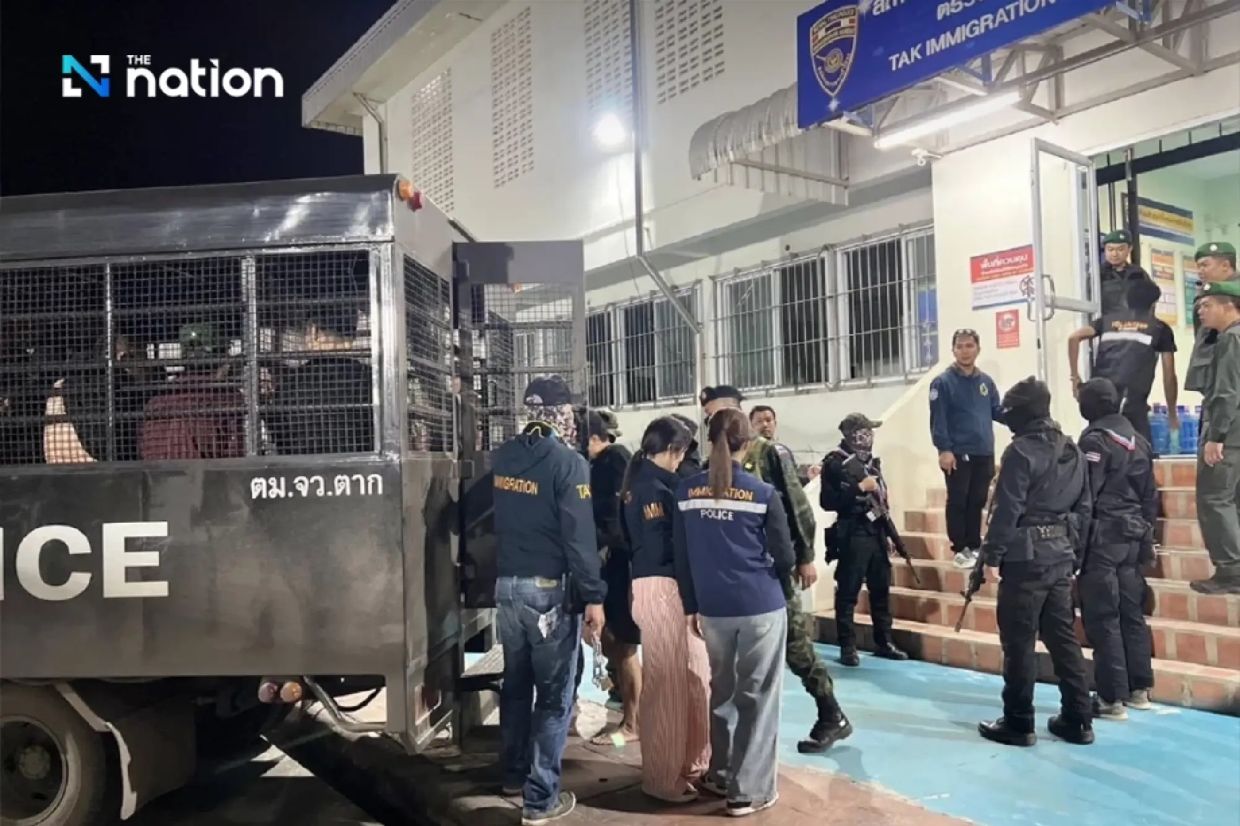
Thailand's government is moving decisively to reform its immigration framework, targeting legal procedures that have hampered the swift removal of foreign criminals from Thai soil. The revamp centres on streamlining the deportation process, which currently allows foreign nationals to lodge appeals and invoke human rights protections that can extend their stay by months or years whilst cases wind through the judicial system.
The impetus for this legislative overhaul stems from operational challenges encountered by authorities enforcing immigration rules. Currently, detainees awaiting removal often languish in state custody as their cases navigate bureaucratic and legal hurdles—embassy coordination delays, appeal processes, and court proceedings all conspire to slow removal. For some offenders, this extended limbo has paradoxically enabled continued unlawful activity or integration into Thai society, undermining law enforcement objectives and public confidence in immigration enforcement.
A significant catalyst for the crackdown has been the unintended consequences of Thailand's 60-day visa exemption scheme, rolled out under the Srettha Thavisin administration in July 2024. The programme extended visa-free entry to nationals from 93 countries and territories, ostensibly to boost tourism. However, the absence of advance visa applications meant Thai embassies could not conduct preliminary vetting of incoming travellers' criminal histories, financial backgrounds, or security profiles. This gap created an opening for bad actors—some foreign nationals leveraged the scheme to establish quasi-permanent residency through repeated border runs, circumventing conventional visa channels.
Security agencies have documented how foreign nationals exploited these regulatory gaps to engage in a spectrum of illicit activities across Thailand's major tourist destinations. Pai in Mae Hong Son, Pattaya in Chonburi, Koh Phangan in Surat Thani, and Bangkok have all emerged as focal points for transnational criminal operations. Foreign offenders have reportedly competed unfairly with Thai workers in hospitality sectors, operated businesses using Thai nominees to skirt ownership restrictions, orchestrated call-centre scams targeting overseas victims, facilitated money laundering, and channelled grey-market capital through informal networks. The concentration of such activities in tourist zones heightens reputational and economic damage to Thailand's premier revenue-generating sector.
Recognising these vulnerabilities, the current Anutin government elevated transnational crime suppression to a security priority, galvanising coordinated action across the Immigration Bureau, Royal Thai Police, and allied agencies. Four strategic initiatives were implemented: enhanced surveillance of travellers exhibiting unusual entry-exit patterns; intensified screening of high-risk jurisdictions; deeper integration of international criminal databases with Interpol and Thai security apparatus; and measures to eliminate redundancies in visa frameworks. The Cabinet subsequently approved cancellation of the 60-day exemption on May 19, 2026, reverting to bilateral country-by-country arrangements with standard 30-day tourist stays for most visitors.
Thailand's pivot away from the blanket exemption reflects a policy recalibration that prioritises security and visitor quality over sheer arrival volumes. Government analysis found that the 60-day scheme did not demonstrably elevate tourist numbers or spending levels whilst materially widening Thailand's exposure to security threats. This calculus—balancing tourism revenue against law enforcement and border integrity costs—represents a pragmatic acknowledgement that unrestricted access regimes can exact hidden tolls.
Despite intensified enforcement operations yielding numerous arrests of foreign offenders, the government confronts a persistent bottleneck: convicted or suspected foreign nationals remain ensnared in deportation limbo. Multiple structural impediments complicate removal. Some detainees lack financial resources to fund return transport and depend on Thai authorities to negotiate funding through diplomatic channels with their home countries. More substantially, the Immigration Act of 1979 extends significant procedural rights to deportees. Foreign nationals may lodge appeals to the Immigration Bureau within 48 hours of receiving deportation notices, furnishing evidence and arguments; during pendency, removal is typically suspended absent exceptional gravity. Additionally, the Immigration Commission retains discretion to defer removal or grant temporary stay extensions on humanitarian or legal grounds. These provisions, rooted in human rights commitments, afford due process but simultaneously enable protracted delays that undermine enforcement efficacy.
Prime Minister Anutin Charnvirakul has tasked Deputy Prime Minister Pakorn Nilprapunt, custodian of legal affairs, to spearhead a comprehensive review of immigration statutes in collaboration with the Royal Thai Police, Immigration Bureau, and Interior Ministry. The effort targets Sections 54 and 55 of the Immigration Act of 1979, which govern foreign national removal, seeking to craft expedited pathways that remain lawful and compatible with human rights obligations. Anutin has publicly articulated the government's philosophical stance: Thailand welcomes honest foreign investors, tourists, and business operators but demands swift, decisive legal consequences and removal for those who breach laws or inflict harm on the kingdom.
Key stakeholders acknowledge the complexity embedded in current procedures. Pol Lt Gen Trairong Phiwpan, Royal Thai Police spokesman, underscored that deportation and extradition involve multiple legal layers dependent on treaty frameworks. Nations with Thai extradition treaties require attorney-general review and court orders, whereas non-treaty countries necessitate Foreign Ministry coordination with the attorney-general and court proceedings. Human rights considerations permeate every stage—detainees retain rights to petition courts, contest removal, and invoke humanitarian grounds for temporary reprieve. Thailand's membership in the United Nations Human Rights Council and subscription to eight major international human rights treaties (covering children, women, civil and political rights, economic and social rights, racial discrimination, torture prevention, disability rights, and protection from enforced disappearance) institutionalise these protections within Thailand's legal architecture.
Trirong acknowledged that reform efforts should focus on compressing timelines, eliminating redundant procedural steps, and reducing unwarranted delays whilst preserving judicial deliberation on case severity. Deportation velocity increases when detainees forgo human rights challenges, yet legal strategists routinely counsel invocation of available defences, extending proceedings. The spokesman recognised that no universal timeframe suits all cases, given heterogeneous circumstances spanning illegal entry, visa overstay, transnational organised crime, and scam networks.
The forthcoming legislative and administrative review undertaken by Pakorn will demand granular assessment of impact dimensions across all relevant agencies. Policymakers must calibrate tighter deportation procedures against Thailand's international human rights commitments, treaty obligations, and obligations under extradition protocols. For Malaysia and broader Southeast Asia, Thailand's enforcement evolution signals mounting regional resolve against transnational criminal exploitation of border mobility and visa permissiveness. As Southeast Asian nations increasingly recognise how porous immigration regimes can incubate organised crime, money laundering, and scam infrastructure, Thailand's hardline recalibration may herald a wider regional trend toward enhanced screening, expedited removal protocols, and security-first tourism policies that counterbalance growth-at-all-costs mentalities.

