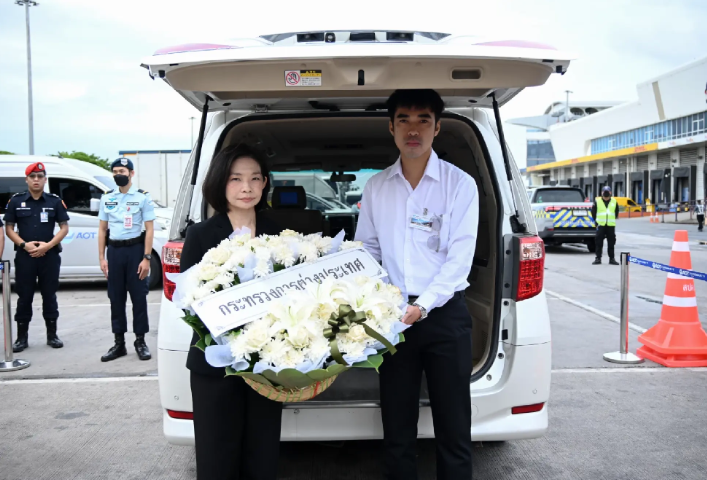
Thailand's Ministry of Foreign Affairs has successfully completed the repatriation of popular travel content creator Bavorntat Pengsuk, widely recognized online as 'Hlun Solo', following his unexpected death in Tbilisi, Georgia. The 27-year-old YouTuber passed away on 14 July 2026, prompting immediate diplomatic intervention from Thai authorities to bring his remains home for proper examination and funeral arrangements.
The coordinated repatriation effort reflects Thailand's consular response protocols when Thai nationals die abroad, particularly high-profile figures with significant social media followings. Jaithai Upakarnitikaset, the director-general of the Department of Information and spokesperson for the Foreign Affairs Ministry, announced the successful transfer of Bavorntat's remains on Thursday, 6 August. The operation underscores how Thai diplomatic missions mobilize resources to assist families facing the logistical and administrative complexities that accompany international deaths.
Deputy Prime Minister and Foreign Minister Sihasak Phuangketkeow delegated oversight of the repatriation to Prathuangtip Sirivithes, the acting director-general of the Department of Consular Affairs, ensuring high-level coordination throughout the process. This administrative designation highlights the significance Thailand's government attached to managing the situation professionally and expeditiously, particularly given Bavorntat's prominence within Thailand's digital content creation community and among international travel audiences.
The Royal Thai Embassy in Ankara maintained consistent engagement with multiple stakeholders throughout the repatriation process, including Bavorntat's family, Georgian government officials, and Thai diplomatic personnel stationed in the Caucasus region. This coordinated approach aimed to navigate the distinct legal and bureaucratic frameworks governing death investigations and body transfers between nations. The embassy's active involvement ensured that Thai interests were protected while facilitating cooperation with Georgian authorities conducting their own preliminary inquiries.
When notification of Bavorntat's death first reached Bangkok, embassy staff moved rapidly to dispatch representatives directly to Tbilisi, demonstrating the priority Thai authorities assigned to the case. These personnel undertook multiple critical functions simultaneously: they investigated the circumstances surrounding the death, managed procedural requirements for body release and transport, and reportedly pressed Georgian officials to accelerate administrative processes that had reportedly encountered delays. Such direct intervention reflects standard Thai diplomatic practice when nationals perish under unclear circumstances in foreign jurisdictions.
Bavorntat's family opted to conduct comprehensive forensic examinations once his remains arrived in Thailand, a decision that prioritizes clarity regarding the cause and circumstances of death. This choice allows Thai medical professionals operating within Thailand's legal framework to perform detailed investigations using procedures familiar to the family and their legal representatives. The forensic examination represents a critical step before final funeral arrangements proceed, potentially addressing any lingering questions about how the young vlogger came to die in Georgia.
Following completion of all medical and legal procedures, Bavorntat's body will be transported to his birthplace in Somdet district, Kalasin province, in Thailand's northeastern region. This final journey home carries deep cultural significance within Thai society, where returning to one's native province for funeral rites represents an important aspect of family tradition and community observance. His hometown community will thus have the opportunity to pay respects to a local resident whose international travel content had brought recognition and pride to his region.
The funeral arrangements will incorporate traditional Buddhist religious ceremonies, reflecting core practices within Thai funeral culture where spiritual observances accompany the handling of the deceased. These rituals serve not only to honor the departed but also to provide families with structured opportunities for collective mourning and remembrance. Bavorntat's case resonates particularly within Thailand's digital economy sector, where young content creators have become increasingly prominent income earners and cultural ambassadors, making his death a significant loss to the online community he helped build.
The incident highlights ongoing safety considerations for Southeast Asian travelers and content creators operating internationally, particularly those documenting their journeys through high-risk regions or less-developed tourism infrastructure. Travel vlogging has become a substantial career path for Thai young people seeking alternative income and lifestyle opportunities outside traditional employment, yet the profession carries inherent risks that families and aspiring creators must weigh carefully. Bavorntat's death serves as a sobering reminder that digital entrepreneurship, however rewarding, operates within real-world constraints and hazards.
For Malaysian and regional audiences, the case underscores how diplomatic missions work behind scenes to support nationals abroad and facilitate complex international procedures during crisis situations. Thailand's systematic approach to coordinating with foreign governments, managing forensic investigations, and ensuring dignified repatriation demonstrates protocols that most Southeast Asian nations maintain for similar circumstances. As regional travel and content creation communities expand, such consular support mechanisms become increasingly relevant for families across the ASEAN region facing comparable tragedies far from home.

