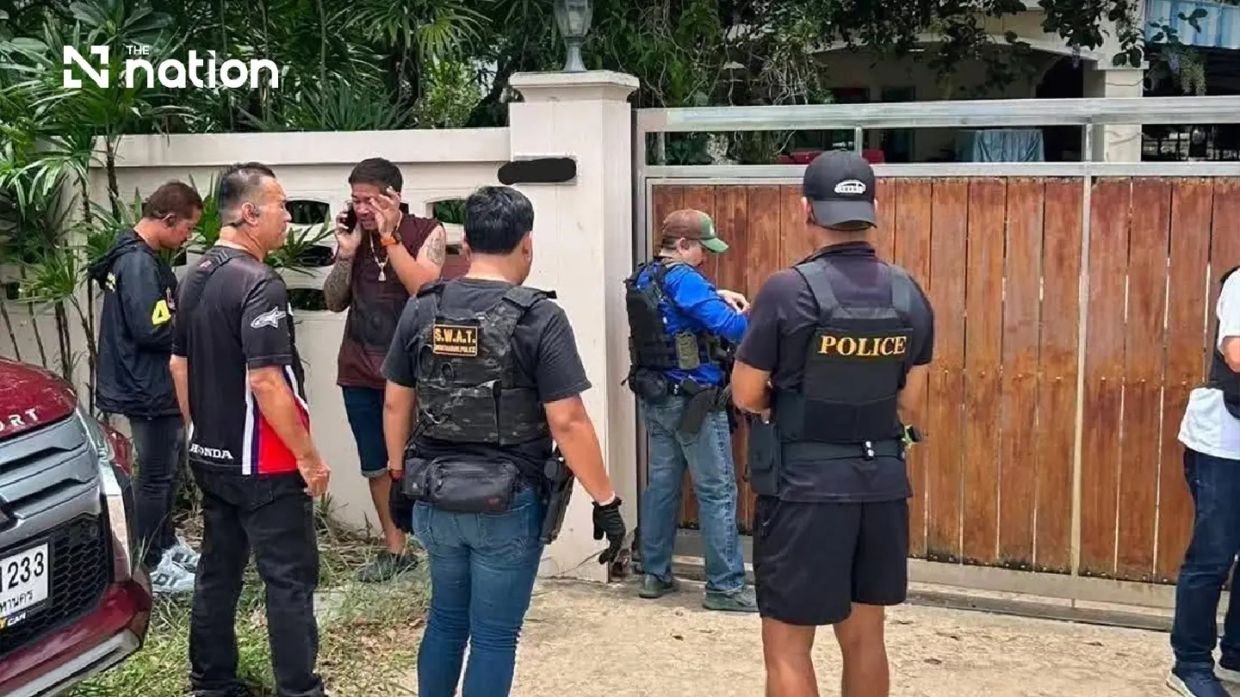
A secondary school student in Nonthaburi province has been identified as the suspected perpetrator of a deadly shooting at Debsirin Nonthaburi School that claimed seven lives, including his own, and wounded 15 others. Investigators say the boy, who was in Mathayom 2, first killed both of his paternal grandparents at their home in a residential estate on Bang Bua Thong district before proceeding to the school on Friday morning, August 7, where he opened fire on students and staff.
The sequence of events began when police discovered the bodies of the suspect's grandparents at their residence in Soi Wat Lat Pla Duk, Bang Khu Rat subdistrict. Forensic evidence suggests the elderly couple was killed with the same firearm that was later used in the school attack. Officers found that the weapon—a CZ 9mm handgun—was legally registered to the grandfather, establishing a crucial thread connecting the two locations and lending clarity to the immediate mechanics of what transpired, though not to the underlying motivations.
The casualty toll from the school shooting itself stands at significant proportions for a single-incident attack in Thailand. Seven individuals lost their lives at the campus, while another 15 sustained injuries of varying severity. All victims have been evacuated from the school grounds, and the Thai National Police have secured the scene for comprehensive forensic examination. Pol Lt Gen Trairong Phiwphan, official spokesman for the Royal Thai Police, confirmed that officers rapidly contained the situation and brought the violence to an end.
What remains opaque at this stage is the underlying motivation for the attacks. Police have acknowledged that determining a clear motive requires extensive investigation into the teenager's behavioural history, his social environment, and his personal circumstances. The suspect had been residing with his paternal grandparents rather than with parents, a living arrangement that investigators are scrutinising for potential sources of tension, instability, or psychological distress. Whether domestic conflict, school-related problems, or other factors precipitated the violence remains unknown.
A critical investigative focus concerns the mechanics of how the underage suspect accessed the firearm and ammunition. Although the handgun's registered ownership to the grandfather provides clarity on the weapon's provenance, police are examining how the teenager obtained possession of it, where the gun was stored within the house, and the source of the ammunition. Understanding the circumstances surrounding unsecured access to a registered firearm in a residential setting could yield insights into both responsibility and prevention measures. National Police Chief Pol Gen Kitrat Phanphet has directed comprehensive scene examination and evidence collection to reconstruct the sequence of events.
The incident raises pressing questions about firearm security in Thailand and access control measures for weapons registered in private homes. The fact that a Mathayom 2 student, equivalent to a fourteen or fifteen-year-old, was able to obtain a loaded handgun from a family member's possession suggests potential gaps in storage protocols and parental oversight. Thai authorities will likely face scrutiny regarding how registered firearms are stored and whether age-appropriate safeguards exist to prevent minors from accessing weapons.
For Southeast Asian observers, the incident represents a rare but alarming occurrence of mass shooting violence in the region. Thailand experiences far fewer incidents of this nature compared to countries with higher gun ownership rates, yet the occurrence underscores the potential for tragedy when firearms intersect with adolescent mental health crises or domestic conflict. The event will likely prompt regional discussions about youth mental health services, the warning signs of dangerous behaviour in teenagers, and prevention frameworks.
Police have made contact with the suspect's guardians and established that the boy had been living with his grandparents, possibly due to parental circumstances or family arrangement. However, specifics about the family structure, the reasons for this living arrangement, or any history of conflict remain under investigation. The involvement of extended family in child-rearing is common in Thai society, yet this case has raised awareness of the need for monitoring and support systems for teenagers in non-parental households.
The psychological aftermath of such an event extends far beyond immediate casualties. National authorities have deployed mental health professionals, psychologists, and counsellors to Debsirin Nonthaburi School and the surrounding community. These teams are tasked with providing trauma support to surviving students, teaching staff, and families affected by the shooting, with particular attention to mitigating long-term psychological consequences such as post-traumatic stress disorder and secondary trauma. School shootings, though uncommon in Thailand, carry profound psychological weight for entire communities.
Police investigations are ongoing into the complete timeline of events, the suspect's state of mind prior to the incident, and any warning signs that may have been overlooked. Detectives are interviewing witnesses, examining communications and social media accounts, and piecing together the hours and days leading up to the attack. Understanding whether there were discernible red flags—verbal threats, concerning behaviour, expressions of suicidal ideation—could inform future prevention and intervention protocols.
The legal framework surrounding the case will also be complex, given that the suspect is a minor. Thai law addresses juvenile offenders differently from adults, and questions about criminal responsibility, psychiatric evaluation, and detention will likely emerge as investigations conclude. Whether the teenager can be prosecuted as an adult, the role of mental health assessment in his case, and the appropriate legal and custodial response remain to be determined by the judicial system.
For Malaysian readers, the Nonthaburi incident serves as a sobering reminder that school violence and firearm access pose potential risks even in neighbouring countries with lower gun ownership rates than nations like the United States. It underscores the importance of comprehensive youth mental health services, early intervention for troubled adolescents, and robust oversight of registered firearms to prevent unauthorised access by minors. Regional cooperation on understanding and preventing such incidents may prove valuable as Southeast Asian societies grapple with the intersection of mental health, family structures, and access to weapons.

