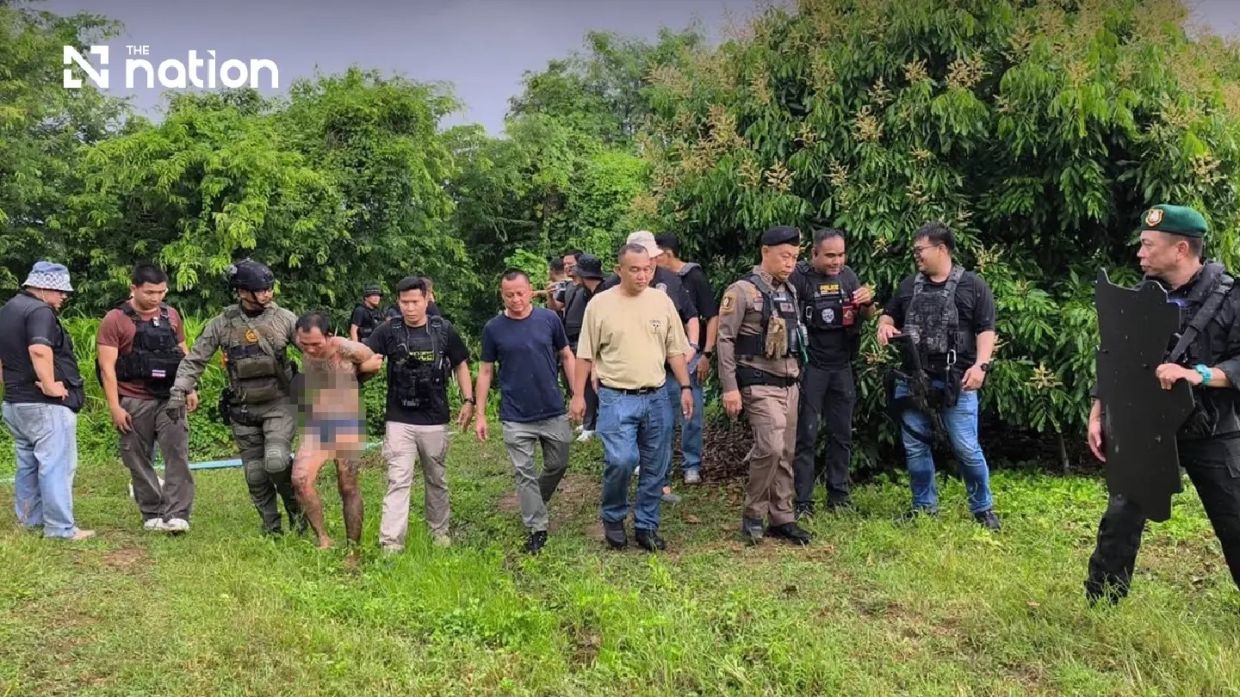
Police in Thailand's Chonburi province are pursuing a complex murder investigation spanning two separate incidents that have claimed five lives, with evidence pointing to an organised criminal network that posed as law enforcement to carry out killings and vehicle theft. The discovery of buried remains in woodland areas near Huai Yai has exposed a pattern of violence that authorities believe was perpetrated by a group of four men working in coordination, though only two suspects remain in custody while the other pair continues to evade capture.
Among the victims are Russian nationals Diana Nazimova, aged 22, and her 17-year-old brother Roman Nazimova, whose bodies were found buried together in a wooded section of Huai Yai subdistrict. Their discovery prompted deeper investigation that subsequently uncovered the remains of a Thai family—53-year-old Wichian, 50-year-old Chantana, and their 18-year-old daughter Nichapha—buried in a nearby coconut plantation. The family had been reported missing on June 27 after their relatives lost contact with them. This geographic clustering of graves suggests a deliberate disposal strategy and raises questions about the length of the perpetrators' criminal activity in the region.
The operational method employed by the suspects reveals a calculated approach to violent crime. According to police accounts, the group would arrive at targeted locations during late evening hours, announce themselves falsely as police conducting searches, then restrain the inhabitants before transporting them to secluded areas where the killings occurred. In the case of the Thai family, the suspects allegedly posed as officers at their residence, subdued the parents, and detained the daughter when she returned from a nearby convenience store. She was then taken away in the family's pickup truck, which the gang later used for their own purposes. This deception tactic proved effective because it exploited the presumption of lawfulness that civilians naturally accord to authority figures, allowing the perpetrators to immobilise victims without immediate resistance.
The apparent motivation for these murders centred on vehicle theft, suggesting the killings were secondary to an underlying property crime enterprise. Police believe the Russian siblings were killed primarily to steal their motorcycle, which was subsequently dismantled and its components concealed. When attempts to sell the parts attracted unwanted attention, the gang buried the components alongside evidence of their crime. The pickup truck belonging to the Thai family was marked for use in transporting illegal drugs, though investigators have not yet corroborated this claim independently. This mixture of vehicle theft and drug trafficking indicates the suspects may be operating within a broader criminal ecosystem rather than acting as isolated offenders.
Two men identified as Pong and Thong have been apprehended and are currently undergoing questioning. Pol Lt Gen Chatchai Surachetphong, commissioner of Provincial Police Region 2, indicated that several aspects of their statements align with physical evidence collected at the scenes and with the overall investigative direction. However, the suspects have offered conflicting accounts of events. Thong has asserted that Pong bore primary responsibility for the violence, while Pong has maintained that the male victim resisted arrest and that the female victim died during a struggle. These divergent narratives suggest either deliberate deception or genuine disagreement about the sequence of events—a discrepancy that investigators must resolve through forensic analysis and witness testimony.
The ongoing search for the remaining two alleged accomplices has become a priority for regional authorities. Police sources have named Ball and Fluke as individuals suspected of involvement in at least one of the cases, though neither has been formally apprehended or charged at this stage. Authorities believe these suspects remain within the immediate geographic area and are conducting close surveillance operations to locate them. The fact that these individuals have not yet fled the region suggests either overconfidence in their ability to evade detection or possible entanglement in local criminal networks that provide shelter and resources.
A particularly troubling aspect of the investigation involves Pong's recent release from incarceration. The suspect had been discharged from prison only two months prior to the alleged killings, raising concerns about whether the corrections system adequately monitored his activities or whether he had been rehabilitated. Investigators are now conducting thorough background reviews to determine whether Pong may be linked to other offences beyond the five homicides already documented. This retrospective examination could substantially increase the death toll if additional victims are discovered, and it underscores the risks posed when individuals with violent criminal histories are released without adequate supervision.
Thong has claimed he acted under duress, alleging that he feared Pong would harm his family if he refused to participate. This defence, if substantiated, raises complex questions about culpability and coercion within criminal groups. Whether duress negates criminal responsibility remains a matter for judicial determination, but the claim itself suggests internal hierarchies and power dynamics within the gang that may have compelled participation from less willing members. Understanding these dynamics could prove valuable for law enforcement in distinguishing primary perpetrators from secondary participants, though such distinctions may offer little consolation to victims' families.
The investigation's expansion to encompass multiple jurisdictions and cross-border implications—given the involvement of Russian nationals—may require coordination between Thai authorities and international law enforcement agencies. The deaths of foreign citizens on Thai soil could complicate diplomatic relations and raise questions about security gaps in tourist-frequented provinces. For Malaysian observers, the case serves as a sobering reminder of the transnational dimensions of organised crime in Southeast Asia and the vulnerability of foreign nationals to predatory criminal networks that operate across borders with relative impunity.
As forensic evidence continues to be analysed and compared against the suspects' statements, investigators face the challenging task of establishing a coherent narrative from conflicting accounts while pursuing fugitive accomplices. The case exemplifies how vehicle-related crimes can spiral into lethal violence and how impersonation of police authority creates vulnerabilities in community security. Police have not yet disclosed whether the remaining suspects have been formally charged in the reports provided, leaving significant uncertainties about the trajectory of prosecutions and whether additional charges may be forthcoming as the investigation deepens.

