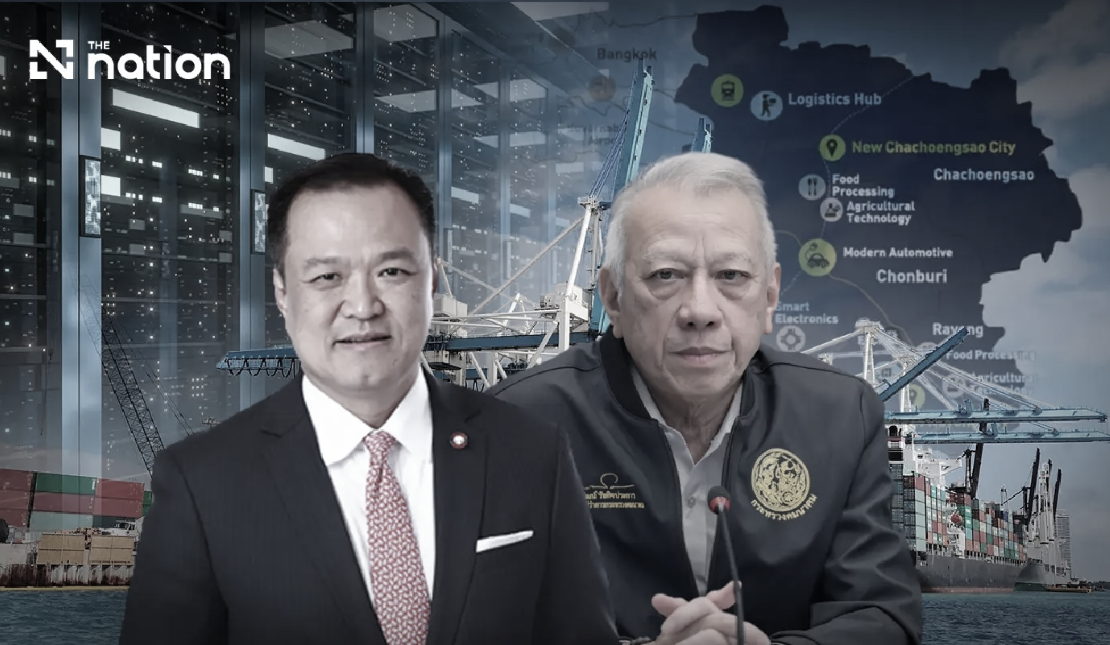
Thailand's Prime Minister Anutin Charnvirakul has reassumed direct supervision of the Eastern Economic Corridor, marking a significant repositioning of the country's flagship investment initiative. The decision, formalised through Cabinet orders signed on June 15, strips Deputy Prime Minister and Transport Minister Phiphat Ratchakitprakarn of his previous authority over the EEC Office and his chairmanship of the Eastern Economic Corridor Policy Committee. Government sources characterise the administrative shift as a strategic recalibration rather than a political confrontation, although the timing and circumstances suggest deeper shifts in Thailand's economic direction and internal power dynamics.
The reassignment reflects Anutin's intention to reposition himself as Thailand's primary architect of foreign investment attraction, personally leading what officials describe as the initiative to "sell Thailand projects" to international investors. This hands-on approach signals the administration's recognition that the EEC requires top-level attention and political capital to overcome accumulated challenges and attract the scale of foreign direct investment necessary to justify the corridor's decades-long development agenda. By centralising control, Anutin can ensure alignment across multiple government agencies and bypass the coordination friction that reportedly plagued Phiphat's tenure.
The substantive reorientation of the EEC's investment pitch addresses a fundamental constraint facing Thailand's industrial base: the eastern region's traditional heavy industry focus has become increasingly unsustainable given mounting pressures on electricity and water supplies. Both resources command escalating procurement costs that threaten the competitive advantage of conventional manufacturing in the corridor. Rather than persisting with an industrial model encountering resource scarcity, Bangkok has opted to emphasise sectors where Thailand possesses comparative strengths and where global demand shows robust growth trajectories.
Food security has emerged as the centrepiece of this repositioning strategy. Thailand's eastern provinces command considerable resources in livestock production, fisheries, agriculture, fruit cultivation, and horticultural development—sectors experiencing heightened international attention as countries worldwide recalibrate their supply chain vulnerabilities and food independence priorities. By marketing the EEC as a global food security hub, Bangkok can leverage these existing capabilities to attract investment from nations concerned about agricultural resilience and food system diversification. This framing converts what might otherwise appear as traditional agrarian activities into strategic infrastructure components addressing contemporary geopolitical concerns.
Data centres represent the second pillar of this strategic pivot, a sector gaining prominence across Southeast Asia as cloud computing, artificial intelligence, and digital infrastructure investments accelerate. However, developing data centres requires exceptional coordination across government departments, particularly energy and water authorities, given the sector's extraordinary consumption of both resources. These facilities operate continuously and demand substantial electrical capacity and cooling infrastructure, making them infrastructure-intensive investments that necessitate close government-private sector partnership and long-term reliability guarantees.
The Energy Ministry's preparation of a new Type 9 electricity user category specifically for data centres underscores the government's commitment to facilitating this sector's growth. By establishing a distinct tariff category that reflects the higher power consumption of these facilities, Thailand creates a transparent regulatory framework while potentially capturing additional revenue from high-value users. This mechanism demonstrates how sectoral reorientation requires coordinated regulatory innovation across multiple government bodies, precisely the kind of direction that concentrated prime ministerial authority facilitates more effectively than dispersed deputy ministerial portfolios.
Official accounts attribute the transfer to voluntary consultation between Anutin and Phiphat, claiming that Phiphat proposed the change himself after encountering persistent friction between the EEC Office and the Board of Investment. According to this narrative, Phiphat requested that Anutin assume direct control to eliminate the operational conflicts that characterised the previous arrangement. While such explanations serve important face-saving functions within Thai political culture, the underlying dynamics suggest broader recognition that the EEC requires more assertive government involvement to overcome institutional inertia and competing agency interests.
Phiphat's public statements, characterised by restrained acknowledgment rather than enthusiastic endorsement, suggest some discomfort with the arrangement despite official denials of internal conflict. He indicated that he learned of the Cabinet orders during the meeting itself rather than receiving advance notice, a detail implying limited consultation despite the government's claims of collegial discussion. His deflection of reporters' questions toward the Prime Minister, combined with his measured assertion that the transfer did not constitute a reduced role within his party, Bhumjaithai, reflects the careful navigation required when managing public narratives around administrative changes that might otherwise appear as diminishments of authority.
The government has explicitly distanced the EEC transfer from two other contentious issues: the long-delayed high-speed rail project linking Don Mueang, Suvarnabhumi, and U-Tapao airports, and proposed Disneyland development within the corridor. Regarding the airport rail project, sources confirm that Anutin himself ordered the contract remain unamended, aligning with Phiphat's previous opposition to converting from a build-then-pay model to a progressive build-and-pay arrangement. This consistency suggests the EEC reassignment reflects strategic divergence rather than personal rupture, though the rail project's ongoing paralysis—the concession with Asia Era One has remained unsigned since 2019 despite multiple extension cycles—indicates deeper governance challenges extending beyond any single administrator's portfolio.
Anutin's questioning of Phiphat regarding the proposed Disneyland project in the EEC illustrates the Prime Minister's intent to impose stricter investment evaluation standards. The Prime Minister reportedly questioned the feasibility timeline and requested evidence that projected returns would justify the investment outlays. This sceptical approach contrasts with previous enthusiasm for the project, signalling that the recalibrated EEC will pursue investments demonstrating clear economic rationale rather than pursuing headline-generating megaprojects with uncertain commercial foundations. For Malaysian and regional investors observing Thailand's investment climate, this disciplined approach may signal either welcome accountability or concerning hesitation depending on project characteristics and stakeholder interests.
The EEC repositioning carries significant implications for Southeast Asian economic dynamics and Malaysian investment strategies. Thailand's attempt to reframe itself around food security and digital infrastructure creates both competitive pressures and complementary opportunities for Malaysia, which possesses overlapping capabilities in agricultural processing, digital innovation, and data centre development. The regional recalibration of investment priorities around resource efficiency and supply chain resilience reflects broader post-pandemic trends affecting how governments across Southeast Asia conceptualise economic development and foreign investment attraction. Malaysia's investors should monitor whether Thailand's success in catalysing food security and data centre investment creates regional benchmarks that reshape capital allocation patterns and sectoral preferences across the broader region.