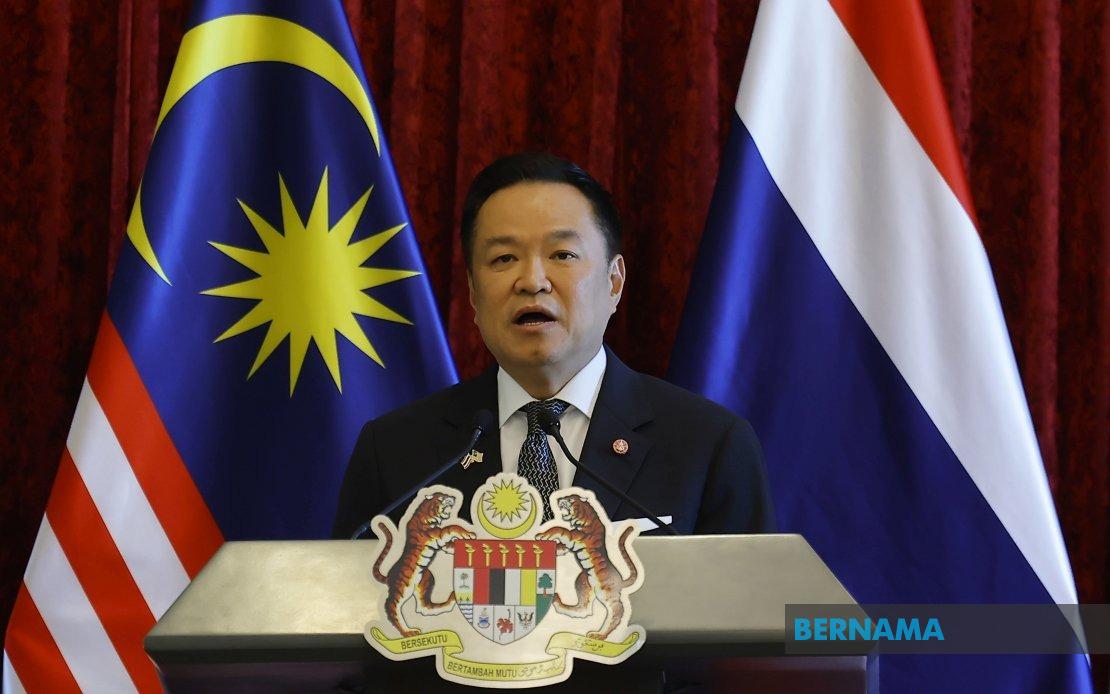
Thailand Prime Minister Anutin Charnvirakul offered his encouragement to Malaysian counterpart Datuk Seri Anwar Ibrahim on the eve of a significant state election in Johor, underscoring the warm relations between the two Southeast Asian neighbours. Speaking at a joint press conference in Putrajaya during his official visit, Anutin expressed hopes for Anwar's political fortunes in the upcoming poll, a gesture that reflects the personal rapport between the two leaders and the broader strengthening of bilateral ties in the region.
The Johor state election, scheduled for this Saturday, represents a critical electoral moment for Anwar's coalition government. Across 56 state constituencies, a total of 172 candidates are competing for seats, with Pakatan Harapan fielding contenders in every single constituency. This complete participation demonstrates the coalition's commitment to contesting the state vigorously, drawing on a mix of seasoned political figures and fresh political talent from its three constituent parties: PKR, DAP, and Amanah. The breadth of Pakatan Harapan's candidate slate signals confidence in the coalition's broader appeal and organisation at the state level.
Anwar's characterisation of his discussions with Anutin as warm and productive carries significance beyond diplomatic courtesy. In describing the encounter as resembling a gathering of longtime friends, Anwar highlighted a level of personal comfort and mutual understanding that transcends formal governmental relations. Such language typically indicates alignment on regional issues and confidence in the strength of the bilateral relationship, factors that matter considerably in Southeast Asian diplomacy where personal connections often facilitate substantive cooperation.
Anutin's visit to Malaysia marks his first trip to the country following his reappointment to the Thai premiership in March 2026. The timing of this journey, coinciding with Johor's election campaign period, carries symbolic weight. Rather than maintaining studied neutrality, Anutin's public well-wishes suggest Thailand's leadership views Anwar's coalition favourably and sees value in demonstrating solidarity with the Malaysian government. This openness reflects confidence in the stability and direction of Malaysian politics under current leadership.
The visit itself was organised as a two-day official engagement at Anwar's personal invitation, framing the trip as a deliberate effort to deepen Malaysia-Thailand cooperation. Beyond the election well-wishes, the visit aims to advance bilateral relations and explore expanded cooperation across sectors of mutual interest. For Malaysia and Thailand, strengthening ties carries practical implications for border security, trade facilitation, cross-border investment, and coordination on regional challenges ranging from maritime issues to labour migration.
For regional observers, Anutin's gesture underscores how elections in major Southeast Asian economies attract attention and commentary from neighbouring governments. Unlike some regions where electoral interference or undue comment from foreign leaders draws criticism, in Southeast Asia, public expressions of support between allied leaders and governments are generally viewed as natural extensions of friendship and shared interests. Thailand's willingness to offer explicit encouragement suggests confidence in Anwar's political standing and a desire to see continuity in the bilateral relationship.
The Johor election itself carries implications beyond the state level. As Malaysia's second-largest state by population and a significant economic engine, Johor's political complexion influences national politics and shapes perceptions of the Pakatan Harapan coalition's electoral viability. Strong performance in Johor would strengthen Anwar's position ahead of the next federal election, while a weaker showing could embolden opposition parties and create internal coalition tensions. Anutin's public backing, though symbolic, contributes to an international perception of the coalition as the governing force with regional backing.
The coalition's decision to field candidates across all 56 seats represents an ambitious strategy. Rather than conceding any ground or engaging in tactical withdrawals that some coalitions employ, Pakatan Harapan is making a comprehensive bid for control of the state assembly. This approach requires substantial organisational capacity and financial resources, but it also signals unwillingness to cede any constituency to rivals, potentially energising supporters who might otherwise perceive the coalition as defensive.
From a Malaysian perspective, the visit illustrates how regional partnerships enhance the country's diplomatic standing. Thailand's leadership treating Malaysia's electoral processes with recognition and respect, through Anutin's public comments, elevates Malaysia's profile as a stable democratic state where neighbouring leaders engage constructively. This stands in contrast to regions where electoral cycles generate friction or where neighbouring governments either ignore or meddle in elections. The quality of Malaysia-Thailand relations, reflected in visits like Anutin's, demonstrates the maturity of ASEAN diplomacy and the capacity of regional states to maintain strong bilateral bonds regardless of differing political systems or historical complexities.

