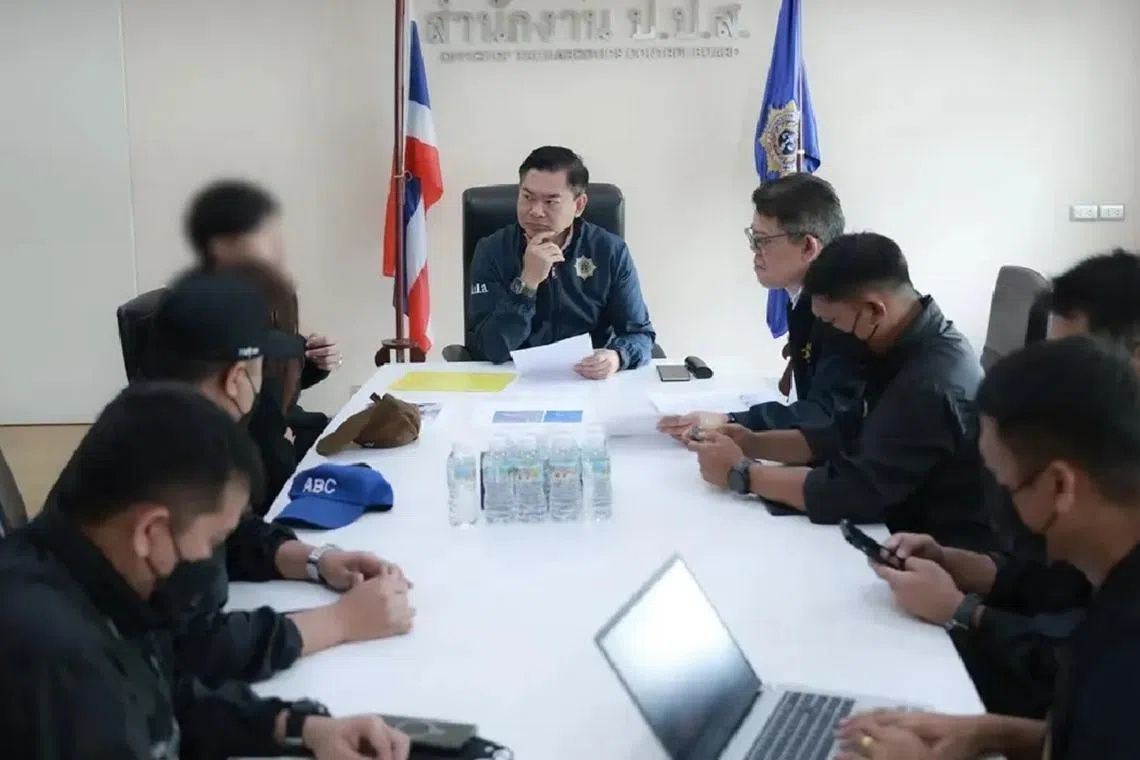
Thai drug enforcement officials have disclosed fresh details about a transnational heroin trafficking case centred on a female airline crew member detained by Australian authorities, revealing that traffickers employed a sophisticated concealment technique to evade detection. Police Major Suriya Singhakamol, who heads the Office of the Narcotics Control Board (ONCB), indicated on Wednesday that preliminary information from Australian counterparts showed the narcotic was secreted inside fabric layers of merely two bags within a shipment of twelve. Australian officials extracted and weighed one of these bags, establishing that it contained approximately 900 grams of suspected heroin, though Thai authorities emphasise they are awaiting comprehensive laboratory confirmation from overseas.
The revelation underscores how international drug networks have become increasingly inventive in their methods of concealing illegal substances during cross-border transport. Rather than distributing contraband evenly across all containers, which might trigger suspicion given the weight and consistency of a full shipment, the perpetrators opted to embed the drugs directly into the fibrous structure of specific bags. This approach represents a calculated attempt to reduce the likelihood of discovery during routine customs or baggage screening, a tactic that points towards an operation managed by experienced smugglers with knowledge of border security protocols. The preliminary assessment suggests the two bags together held no more than two kilograms of heroin, though confirmatory testing remains outstanding from Australian laboratories.
Coordination between Thai and Australian law enforcement has intensified as investigators work to dismantle what authorities characterise as an organised transnational network responsible for orchestrating the shipment. The ONCB has been collaborating extensively with the Australian Federal Police to trace the origins of the drugs, identify intermediaries, and apprehend senior figures allegedly directing the operation. This bilateral cooperation reflects growing recognition in Southeast Asia that drug trafficking networks operate without regard to national boundaries and require seamless information exchange and joint investigative action to be effectively countered.
A significant development emerged when a delivery rider voluntarily presented himself to the ONCB to clarify his innocence after becoming aware he might be under suspicion. Through meticulous examination of CCTV surveillance footage and comparative analysis of available evidence, investigators determined conclusively that this individual was not the person who delivered the parcel. The discrepancies proved substantial: the rider who came forward delivered his package on June 23 at approximately five in the afternoon, whereas the suspicious parcel containing the heroin arrived on June 22 shortly after midday. Additionally, the genuine suspect transported a large brown cardboard box, contrasting sharply with the black plastic box brought by the cooperating rider.
Physical appearance and apparel also diverged markedly. The rider who reported to authorities wore a yellow shirt paired with a white helmet, whereas surveillance imagery captured the actual courier wearing a black helmet. The ONCB has commended this individual for his voluntary cooperation and transparency, noting that his statement has been formally recorded and will assist in establishing a clearer baseline for identifying the genuine suspect. This episode illustrates how law enforcement agencies operating in an environment of uncertainty must balance investigative rigour with community engagement, encouraging potential witnesses and those who might unwittingly become implicated to come forward without fear of automatic culpability.
Authorities have now redirected their efforts towards locating the actual courier while simultaneously pursuing a parallel investigative thread targeting the person or persons who orchestrated the delivery logistics. At the centre of this secondary inquiry is an individual operating a Facebook account under the username "Rose", who allegedly recruited and coordinated the parcel delivery through a social media group. The ONCB has cautioned against assuming that identifying the Facebook profile will immediately lead to the perpetrator, as criminals frequently employ multiple layers of anonymity and use borrowed or compromised accounts to shield their true identities. Thai investigators are consequently deploying additional resources to trace the real individual behind the account, a process requiring extensive digital forensics and potentially collaboration with technology companies operating in the region.
The investigation has been subsumed into a broader regional operation termed Task Force Storm, which integrates the capabilities of Thailand's Customs Department, Department of Special Investigation, and Australian Federal Police. On the afternoon of July 1, senior ONCB officials convened with Australian Federal Police representatives to exchange comprehensive information and coordinate further investigative steps. This formalised structure ensures that intelligence flows systematically between agencies and that investigative leads are pursued with appropriate priority and resources, rather than fragmenting across uncoordinated efforts that might allow suspects to evade capture.
A contextual element relevant to understanding drug flows through Southeast Asia involves the geographic origin of the narcotics themselves. Suriya underscored that crystal methamphetamine, heroin, and methamphetamine pills are not manufactured within Thai territory but are trafficked into the country from source regions located in the broader Golden Triangle area encompassing portions of neighbouring Myanmar, Laos, and Cambodia. However, the specific concealment technique employed—embedding drugs within the fabric of bags—may have been executed either in a neighbouring country at the point of initial packaging or subsequently within Thailand by members of the distribution network. This uncertainty regarding the exact location of the preparation stage adds layers of complexity to the investigation, as it widens the geographic scope within which authorities must search for the clandestine operations facility.
The methodology of tracing the shipment's route represents a critical focus for investigators, as mapping the path from origin through intermediaries to the intended destination can reveal patterns, reveal additional players, and potentially identify other shipments or recipients connected to the same network. Thai and Australian authorities are investing considerable effort in reconstructing how the parcel moved through the supply chain, which logistics companies or couriers handled it, and which individuals or organisations stood to benefit from its delivery. For Malaysian observers and policymakers, this case serves as a sobering reminder that regional drug trafficking networks operate with sophistication and international reach, frequently exploiting porous border controls, lax shipping regulations, and legitimate commercial channels to move contraband. The expansion of e-commerce and parcel delivery services across Southeast Asia, while broadly beneficial for regional commerce, has inadvertently created vulnerabilities that criminal networks exploit with increasing frequency and cunning.

