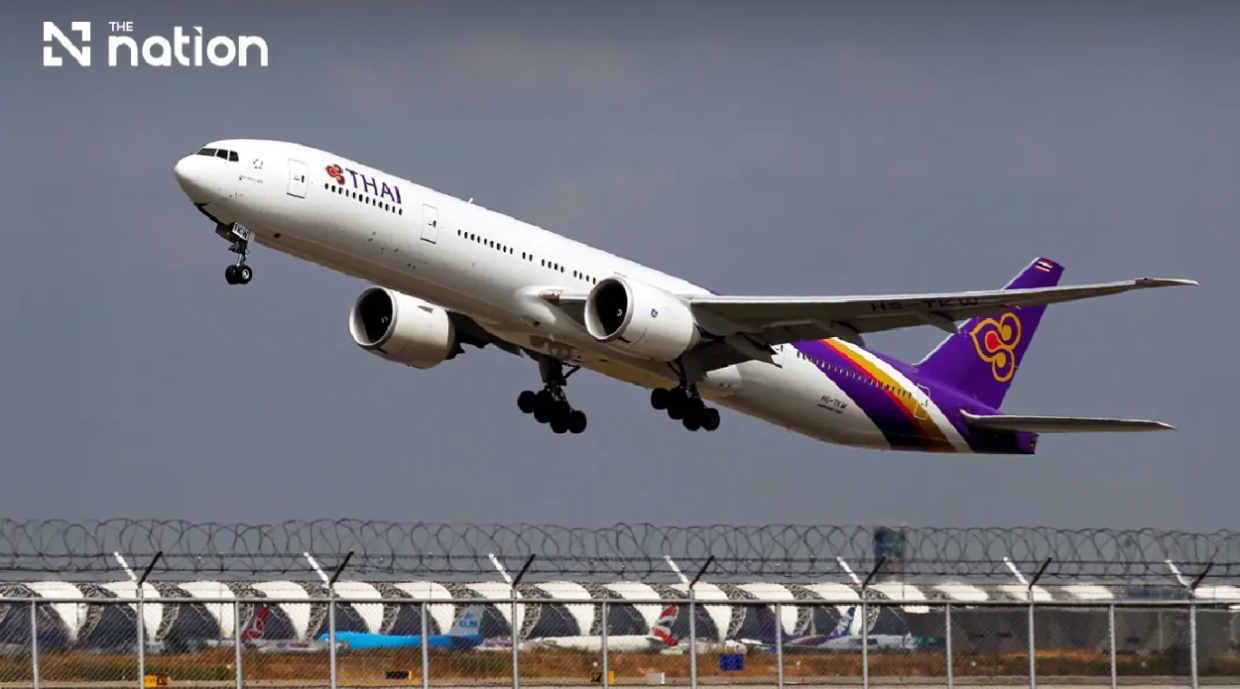
Thai Airways International has signalled its commitment to working closely with Australian law-enforcement authorities after one of its cabin crew members was arrested at Melbourne Airport with a substantial quantity of heroin. Chief Executive Chai Eamsiri made clear that the airline would not obstruct the criminal investigation process in Australia, positioning the carrier as a cooperative partner in the matter rather than a defendant seeking to shield its employee from scrutiny.
The incident unfolded when a 26-year-old Thai female crew member arriving on flight TG465 from Bangkok was intercepted by Australian authorities on June 25. Border officials discovered more than one kilogramme of heroin in her baggage, with police estimating the street value at approximately A$500,000 — equivalent to roughly 11.5 million baht. The severity of the alleged offence is reflected in the charges laid against her: importing a marketable quantity of a border-controlled drug and possessing a marketable quantity of a border-controlled drug, each carrying a maximum prison sentence of 25 years under Australian law. She was remanded in custody on June 26 and is scheduled to reappear before Melbourne Magistrates' Court on September 14.
Thailand's premier carrier has moved swiftly to distance itself from the alleged conduct through internal action. Chai announced that the airline had immediately suspended the crew member pending the outcome of investigations. More significantly, Thai Airways has assembled a fact-finding and disciplinary panel tasked with completing its review within seven days, with a preference for concluding sooner if possible. The message is unambiguous: should the internal inquiry substantiate wrongdoing, dismissal awaits — the maximum penalty available under company disciplinary procedures. This demonstrates a zero-tolerance stance that Thai Airways appears keen to communicate both to Australian authorities and to its own stakeholders.
Chairman Chai did not shy away from acknowledging the reputational cost of the episode. He recognised that the arrest has inflicted serious damage on Thai Airways' image and standing, particularly in a context where the airline operates internationally and relies on consumer confidence. He further expressed concern that the incident could complicate travel procedures for Thai crew members and Thai nationals seeking to enter Australia, potentially subjecting them to heightened scrutiny. However, he expressed cautious optimism that foreign law-enforcement and border agencies would assess cases individually rather than applying blanket suspicion to all travellers from Thailand based on a single criminal incident.
The airline has sought to underscore its existing compliance framework and training protocols. Chai pointed out that Thai Airways maintains rigorous rules and procedures governing the conduct of pilots, cabin crew, and other personnel. Staff members receive pre-flight briefings covering relevant regulations, prohibited items, and the legal boundaries governing what can and cannot be transported. Despite these measures, Chai acknowledged the inherent difficulty of monitoring all employee conduct across an organisation employing more than 4,000 cabin crew members and over 1,000 pilots. In response to the Melbourne case, he instructed relevant departments to intensify supervision protocols going forward, signalling an intent to tighten the already-existing oversight architecture.
Thailand's aviation regulator has engaged proactively with stakeholders to assess gaps in existing procedures. The Civil Aviation Authority of Thailand has contacted both the airport operator and Thai Airways to gather facts and undertake a procedural review. CAAT confirmed that passenger and baggage screening at Thai airport checkpoints operates in compliance with CAAT requirements and aligns with standards set by the International Civil Aviation Organization. The authority drew a distinction between aviation-security screening, which aims to prevent items that could endanger aircraft, passengers and crew, and narcotics enforcement, which falls within the remit of law-enforcement agencies operating across domestic and international boundaries.
CAAt has indicated it is monitoring the preliminary investigation and has notified the airline of this oversight. Should the internal disciplinary process confirm wrongdoing, CAAT signalled a willingness to consider action against the crew member's aviation certificate. Such regulatory intervention would serve a dual purpose: safeguarding aviation safety standards and reinforcing confidence in Thailand's civil aviation system. This demonstrates that the regulatory response extends beyond the criminal justice arena into the professional licensing domain, potentially rendering the consequences more career-limiting than imprisonment alone.
The Melbourne arrest occurs against a backdrop of ongoing tensions surrounding international drug smuggling, particularly along air routes linking Asia with Australia. The quantity seized — over one kilogramme — represents a significant seizure and indicates a deliberate attempt to move product across borders rather than a minor personal-use incident. The street value estimate of A$500,000 underscores the commercial scale of the alleged operation. For Australian authorities, the case exemplifies the kind of interdiction at point of entry that border enforcement agencies prioritise. For Thai Airways, it presents a challenge to institutional credibility at a time when aviation safety and security remain paramount concerns for regulators and passengers alike.
The case carries broader implications for how Southeast Asian carriers are perceived internationally. Thailand's tourism and aviation sectors are significant economic drivers, and high-profile drug arrests involving airline staff can affect consumer perception of travel safety and security protocols. By moving decisively and transparently, Thai Airways appears to be attempting to mitigate longer-term reputational fallout. The willingness to cooperate with foreign authorities, the speed of internal disciplinary action, and the public acknowledgement of systemic concerns all signal an effort to demonstrate institutional integrity and commitment to lawful operations. How Australian courts ultimately adjudicate the case, and whether CAAT takes action against the crew member's certificate, will shape the perception of Thai aviation oversight globally.

