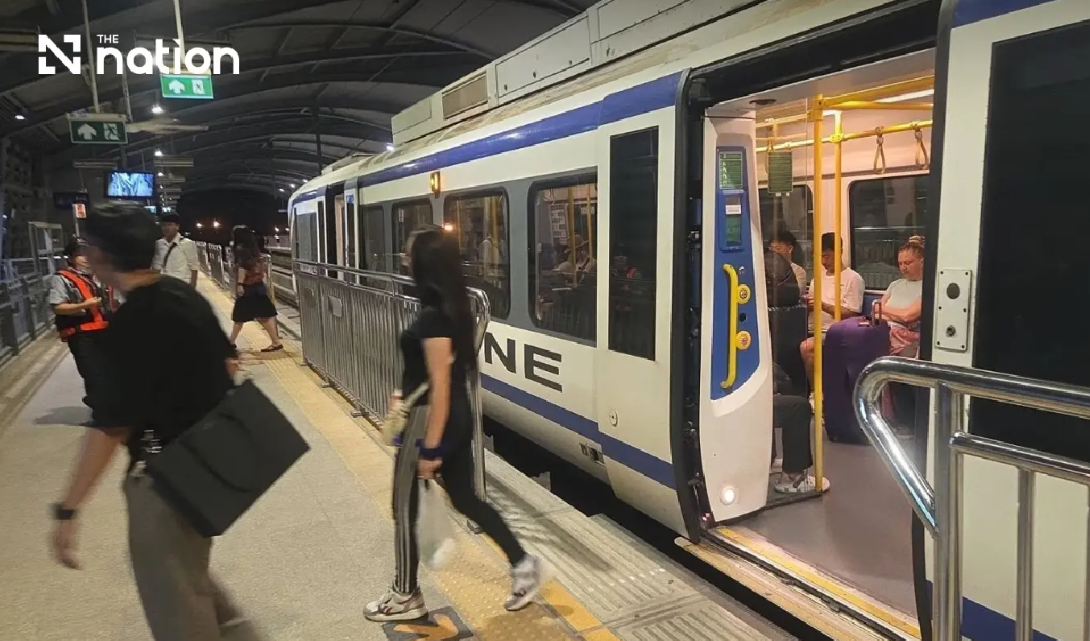
Commuters using Bangkok's critical airport transport link were finally able to resume normal journeys on Wednesday evening as the Airport Rail Link returned to full operations at 10.07pm, following an unscheduled service suspension that had disrupted travel throughout the day. The State Railway of Thailand, working in coordination with the SRT Electrified Train Company and Asia Era One, confirmed that engineers had successfully resolved a mechanical fault affecting the line connecting Phaya Thai station in the city centre to Suvarnabhumi Airport, one of Southeast Asia's busiest aviation hubs.
The disruption stemmed from a defective track switch mechanism located at the turnback point within the Khlong Tan maintenance depot, a critical facility where trains are serviced and repositioned for turnaround operations. Specialists conducting inspections throughout the day identified and rectified the faulty switch, which had prevented normal train movements and created cascading delays across the entire network. The technical teams also tackled a secondary operational challenge: a train that had become stuck obstructing the rail line was successfully cleared, restoring access to both the mainline and branch circuits that feed passenger services across the full route from the airport to the city.
State Railway of Thailand governor Anan Phonimdeang emphasized that the agency had received direct instructions from Thailand's deputy transport minister to prioritize rapid restoration of the line and coordinate seamlessly with all stakeholder organizations. This high-level directive reflected the criticality of the Airport Rail Link to Bangkok's transport infrastructure and the economic importance of maintaining reliable connections between the city and Suvarnabhumi Airport, which serves millions of international and domestic passengers annually. The speed and intensity of the response, mobilizing specialists from both government entities and private operators simultaneously, underscored the urgency with which authorities treated the disruption.
Despite the relatively swift resolution, Asia Era One and its partners have committed to a comprehensive technical investigation that will delve deeper into the root causes of the track switch failure. Understanding precisely what led to the malfunction is essential not only for addressing this specific incident but for preventing recurrence elsewhere on the system. The investigation will examine maintenance protocols, material degradation, design vulnerabilities, and operational factors that may have contributed to the fault, building a fuller picture of what went wrong.
As part of its remedial strategy, Asia Era One announced plans to replace the entire track switch assembly at the Khlong Tan depot's turnback point with a new unit installed according to strict operational safety standards overseen by the State Railway of Thailand. Beyond this targeted replacement, the operator intends to conduct a systematic vulnerability assessment of the depot facility and other locations on the line considered susceptible to similar mechanical failures. This proactive approach suggests management has recognized that the fault may reflect broader maintenance or design issues requiring attention across multiple sections of infrastructure.
The operator is also reviewing and strengthening its contingency protocols to minimize disruption if future equipment failures occur. This includes refining the backup timetable and alternative operating procedures that would allow partial or modified service to continue during maintenance or emergency situations. By enhancing these contingency frameworks, Asia Era One aims to absorb minor technical problems without requiring the kind of complete service suspension that stranded travellers on Wednesday. Such preparations are particularly important given Thailand's tourism economy and the flow of business travellers who depend on seamless airport connections.
A key assurance provided by Asia Era One was its statement that the track switch failure had posed no risk to passenger safety during the disruption. The fault appears to have been purely operational—preventing normal train movements rather than creating hazardous conditions for those aboard. This distinction matters for public confidence; while operational disruptions are frustrating and economically costly, passengers can be assured that the incident did not expose them to physical danger. The emphasis on safety standards in the repair and replacement processes further reinforces the operator's commitment to passenger wellbeing alongside service reliability.
Under normal circumstances, the Airport Rail Link operates from 5.30am until midnight, with the first trains departing both Phaya Thai and Suvarnabhumi stations at the early morning hour and the final services leaving at the stroke of midnight. The system typically maintains six trains in regular rotation, supplemented by two additional trains activated during peak passenger demand periods, particularly during morning and evening commute windows and busy tourist seasons. This scheduling architecture allows the operator to balance cost efficiency with capacity during quieter periods while maintaining responsiveness to traffic surges.
For travellers and the broader Bangkok business community, the Wednesday disruption served as a reminder of infrastructure dependencies in rapidly growing cities. The Airport Rail Link, which opened in 2006, has become an essential component of the capital's transport network, offering a faster and more reliable alternative to road-based airport transfers, especially during Bangkok's notorious traffic congestion. Any extended outage ripples through hotel operations, airline passenger processes, business meetings, and tourism flows. The incident also highlights the ongoing operational challenges facing Thailand's aging transport infrastructure, where equipment maintenance and replacement cycles must accelerate to keep pace with growing usage demands and the tropical climate's corrosive effects on mechanical systems.

